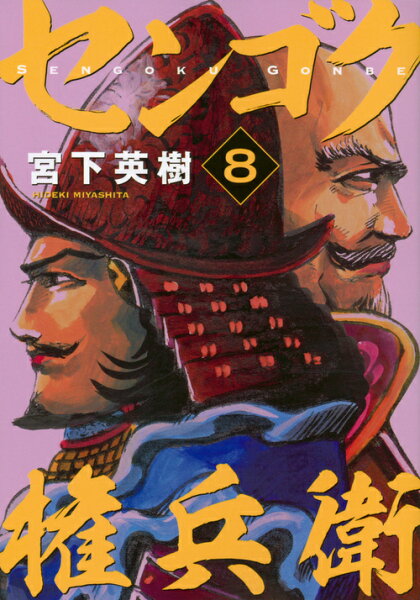
Sengoku Review: The Warring States Period Through the Eyes of a Foot Soldier
by Hideki Miyazaki
Read the first volume. If it doesn't hook you, put it down. It'll hook you.
Buy Sengoku on Amazon →*Affiliate link — I earn a small commission at no extra cost to you.
Quick Take
- The Sengoku period from the perspective of a common soldier rather than a warlord
- Rigorous historical research combined with compelling character drama
- A window into how ordinary people experienced Japan's century of civil war
Who Is This Manga For?
- Japanese history enthusiasts particularly interested in the Sengoku period
- Readers of Vinland Saga or Vagabond who want similarly grounded historical fiction
- Seinen manga readers who appreciate military drama with historical depth
- Anyone curious about Oda Nobunaga's campaigns from the foot soldier's perspective
Content Warnings & Age Rating
Age Rating: M (Mature) Content Warnings: Battlefield violence consistent with the period, death in combat, historical depictions of feudal social structures
Appropriate to its subject matter. The violence serves the historical narrative.
Yu's Rating
| Category | Score |
|---|---|
| Story Depth | ★★★★★ |
| Art Style | ★★★★☆ |
| Character Development | ★★★★☆ |
| Accessibility for Non-Japanese Readers | ★★★☆☆ |
| Reread Value | ★★★★☆ |
Story Overview
Sengoku Gonbei is not a great general or a famous warlord. He is a foot soldier — a spearman in the armies that are reshaping Japan during the late 16th century. His path brings him into service under Oda Nobunaga, one of the most consequential figures in Japanese history, and through his eyes we see the wars of unification from the ground up.
The series covers the major campaigns of the Sengoku period — the battles that determined who would eventually unify Japan — but its viewpoint is always Gonbei's. What does the Battle of Nagashino look like when you are not Nobunaga making strategic decisions but a soldier waiting with a spear? What does it feel like to serve a lord who is brilliant, merciless, and transforming Japan into something that has never existed before?
Miyazaki's research is meticulous. The military technology, the social structures, the politics of the period — all are rendered with accuracy. But the series earns its place beyond research through Gonbei himself, a character whose personal growth from unremarkable soldier to accomplished warrior carries genuine emotional weight.
Characters
Sengoku Gonbei: The protagonist whose ordinariness at the start becomes the series' greatest strength. He is not exceptional in the way that manga heroes usually are — he is competent, determined, and lucky in the specific way that survivors of extended warfare tend to be lucky. Watching him develop is watching someone made by the times they live through.
Oda Nobunaga: Rendered with historical fidelity — brilliant, visionary, and genuinely frightening. The series does not romanticize him. He is someone who is changing Japan in ways that cannot be undone, and the people around him are living inside that change without fully understanding it.
Supporting cast: The soldiers, generals, and historical figures who populate Gonbei's world are drawn with specificity. The series respects its secondary characters.
Art Style
Dynamic and detailed. Battle sequences are drawn with an understanding of period military tactics — formation fighting, the use of spears and firearms, the chaos of actual medieval warfare. Character designs distinguish clearly between individuals across a large cast. The historical settings — castles, battlefields, towns of the period — are rendered with visible research.
Cultural Context
The Sengoku period (roughly 1467–1615) is the most dramatized era in Japanese history — the century of civil war that ended with the Tokugawa unification of Japan. Oda Nobunaga, Toyotomi Hideyoshi, and Tokugawa Ieyasu are among the most famous figures in Japanese historical consciousness.
Sengoku distinguishes itself from the many other works in this setting by taking the foot soldier's perspective seriously. Most Sengoku fiction focuses on the great lords; this series focuses on the people who made their campaigns possible.
What I Love About It
I love how the series handles the experience of living through history without knowing you are living through history.
Gonbei does not know he is participating in the unification of Japan. He knows he is trying to survive the next battle, serve his lord well, and make something of himself in a world that does not guarantee ordinary people anything. The historical significance of the events he participates in exists from the reader's perspective, not his.
This creates a specific kind of dramatic tension that most historical fiction misses. When Gonbei fights at Nagashino, we know what that battle means for Japan. He does not. The gap between his experience and our knowledge of its historical weight is where the series lives — and it is a remarkable place to inhabit.
What English-Speaking Fans Say
Not well-known in English-speaking markets due to the lack of translation. Among Japanese history enthusiasts who have read it, it is highly regarded as one of the more historically serious treatments of the Sengoku period in manga. The foot soldier perspective is consistently cited as what distinguishes it from the crowded field of Sengoku fiction.
Memorable Scene ⚠️ Spoiler Warning
The sequence during the Battle of Nagashino — historically one of the first battles in Japan to make decisive use of firearms — where Gonbei experiences the new kind of warfare Nobunaga is inventing in real time. The confusion, the noise, the way the rules of battlefield behavior he has learned suddenly don't apply — it's history made visceral through a single character's experience.
Similar Manga
- Vagabond: Different era (early Edo period), same commitment to historical grounding
- Vinland Saga: Different culture (Viking Age), similar ground-level view of historical warfare
- Lone Wolf and Cub: Edo period Japan, comparable seriousness about historical detail
Reading Order / Where to Start
Volume 1. The series builds from Gonbei's introduction — context accumulates as he learns it.
Official English Translation Status
Sengoku has no official English translation. Available in Japanese only.
Pros & Cons
Pros
- Historically rigorous treatment of the Sengoku period
- The foot soldier perspective is genuinely unusual and valuable
- Complete at 15 volumes — a manageable commitment
- Gonbei develops into a compelling protagonist
Cons
- No English translation
- Requires some familiarity with Sengoku period figures to fully appreciate
- The dense historical detail can be demanding
Format Comparison
| Format | Notes |
|---|---|
| Physical | Japanese editions available |
| Digital | Available in Japanese |
| Omnibus | Not currently available |
Where to Buy
No English release yet. That just means you find it before everyone else does.
*Affiliate link — I earn a small commission at no extra cost to you.
More Manga You Might Like
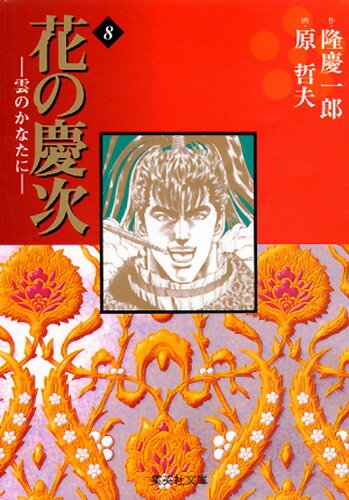
Historical / Action
Hana no Keiji
Hana no Keiji follows Keiji Maeda, the real historical figure known as the eccentric samurai who rejected the obligations of clan and hierarchy to live entirely by his own aesthetic code — and the manga is his story as historical action epic.
Historical / Action
Kamui Den
Kamui Den follows Kamui, a ninja born into the lowest social caste of feudal Japan, whose pursuit of freedom through the shinobi arts becomes a lens on the systematic brutality of the Edo period class system — one of manga's great radical political works.
Historical / Action
Kamui Gaiden
Kamui Gaiden follows the fugitive ninja Kamui after he abandons his clan — a man who fought for freedom and now runs to protect it, hunted by the people who want him dead and by a society that has no place for him.
Historical / Action
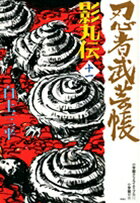
Ninja Bugeicho
Ninja Bugeicho is Sanpei Shirato's foundational work — a ninja story set in feudal Japan that established the template for politically engaged action manga and directly preceded Kamui Den as his mature masterwork.
Historical / Action
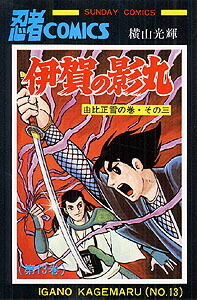
Iga no Kagemaru
Iga no Kagemaru follows Kagemaru, a ninja of the Iga clan in the Sengoku period, as he uses infiltration, disguise, and combat skills to navigate the political conflicts of feudal Japan — an early ninja manga that established visual conventions the genre still uses today.
Historical / Slice of Life
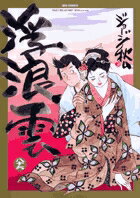
Hagure Kumo
Hagure Kumo follows a wandering Edo-period merchant who is actually a former samurai — free, unconventional, and deeply uninterested in the social obligations that constrain everyone around him — as he drifts through the streets of Edo dispensing accidental wisdom and deliberate chaos.
Written by
Yu
Manga Enthusiast from Japan
I grew up in Japan and manga literally saved me during a tough time in elementary school. My English isn't perfect, but my love for manga is real — and I want to share it with you.