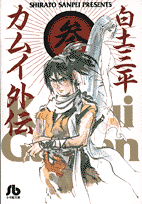
Kamui Gaiden Review: The Ninja Who Ran From Everything — Including Himself
by Sanpei Shirato
Read the first volume. If it doesn't hook you, put it down. It'll hook you.
Buy Kamui Gaiden on Amazon →*Affiliate link — I earn a small commission at no extra cost to you.
What if the man who won his freedom had nowhere to bring it?
Quick Take
- The sequel/spinoff to Kamui Den — Kamui as a fugitive ninja, hunted by shinobi assassins across feudal Japan
- More focused than the main series: a tighter, faster story built around chase, survival, and the cost of being free
- Shirato at his most technically brilliant — the action sequences are among the finest in all of historical manga
Who Is This Manga For?
- Readers who finished Kamui Den and want to follow Kamui's story after the main series
- Action manga fans who want historical ninja combat at its highest level
- Readers of Garo's tradition — Shirato is the foundational figure and this is his masterwork
- Anyone interested in what freedom actually costs when the society around you refuses to grant it
Content Warnings & Age Rating
Age Rating: M (Mature) Content Warnings: Graphic violence consistent with feudal ninja combat. Themes of class oppression and outlawry. Some content involving the brutal treatment of fugitives.
Mature content throughout.
Yu's Rating
| Category | Score |
|---|---|
| Story Depth | ★★★★★ |
| Art Style | ★★★★★ |
| Character Development | ★★★★★ |
| Accessibility for Non-Japanese Readers | ★★★☆☆ |
| Reread Value | ★★★★★ |
Story Overview
Kamui has escaped his ninja clan. In feudal Japan, this is not a clean break — a runaway shinobi is a target for life. His former clan sends assassins. The authorities want him dead as a dangerous fugitive. The farmers and fishermen he encounters don't know what to make of him.
Kamui Gaiden follows him through this fugitive existence: moving from place to place, forming temporary bonds with people he must eventually leave, and surviving through skill and cunning against enemies who want him dead for different and overlapping reasons.
The series is structured as interconnected arcs — each arc has its own location, characters, and conflict, but Kamui carries the weight of all of them. Unlike the main series, which was broad and panoramic, Kamui Gaiden is intimate: the camera stays close to Kamui and the people who enter his life.
What the series understands is that freedom is not an absence of constraint — it is a different kind of constraint, one that Kamui chose, and that he must maintain through constant effort against everyone who wants to end it.
Characters
Kamui: By this series, Kamui is already fully formed — the development has happened. What we get instead is a portrait of someone who knows who he is and must survive being that person in a world that would prefer he didn't exist.
The people he meets: Each arc introduces people whose lives intersect with Kamui's — farmers, fishermen, outcasts — and who are affected by his presence in ways they couldn't have anticipated. These encounters are the series' emotional core.
Art Style
Shirato's art in Kamui Gaiden reaches its technical peak. The ninja combat sequences are rendered with extraordinary precision — each technique is legible, each fight has spatial coherence, and the result is action that feels real in a way that most manga action doesn't.
The natural environments of feudal Japan are rendered with the same care. Shirato was a careful researcher of historical visual culture and it shows.
Cultural Context
Kamui Gaiden was serialized in Garo magazine alongside other alternative manga of the period. The "gaiden" (side story / spinoff) format allowed Shirato to explore Kamui's story in a more focused register than the sweeping social canvas of the main series.
The series was adapted into two live-action films in 2009 — which introduced Kamui to a new generation of viewers, though the manga remains the definitive version.
What I Love About It
I love the specific loneliness of Kamui's situation.
He is a man who won the thing he fought for — freedom from his clan — and discovered that winning it meant becoming a permanent outsider. He cannot stay anywhere. Every relationship he forms must eventually be severed or endangered. The freedom he chose is real and it costs him everything that freedom is supposed to make possible.
This is a profound observation about a specific kind of liberation. Shirato doesn't pretend the cost is small.
What English-Speaking Fans Say
Not known in English-speaking markets. Among readers of historical and alternative manga in Japan, Kamui Gaiden is considered one of the finest works in the ninja genre — the action is extraordinary and the emotional core is genuine. The combination of technical brilliance and political seriousness is unusual.
Memorable Scene ⚠️ Spoiler Warning
An arc involving a fishing village where Kamui spends longer than usual and forms connections he is not supposed to form — and the scene when those connections are threatened by the arrival of his pursuers. The scene makes visible the exact cost of the life Kamui has chosen: every person he cares about becomes a target.
Similar Manga
- Kamui Den: The main series — broader political canvas, same protagonist's origins
- Lone Wolf and Cub: Same era, similar fugitive structure — Ogami Itto instead of Kamui
- Blade of the Immortal: Later ninja manga, different tone — similar quality of action
Reading Order / Where to Start
Read Kamui Den first if possible — Kamui Gaiden makes more sense with that context. If starting with this series alone, Volume 1 establishes everything needed.
Official English Translation Status
Kamui Gaiden has no official English translation.
Pros & Cons
Pros
- Action sequences among the finest in historical manga
- Emotionally complex portrait of freedom and its costs
- More focused and accessible than the main series
- Shirato at his technical peak
Cons
- No English translation
- Better with Kamui Den context
- Mature content — not for all readers
Format Comparison
| Format | Notes |
|---|---|
| Physical | Japanese editions available |
| Digital | Available in Japanese |
| Omnibus | Collected editions available |
Where to Buy
No English release yet. That just means you find it before everyone else does.
*Affiliate link — I earn a small commission at no extra cost to you.
More Manga You Might Like
Historical / Action
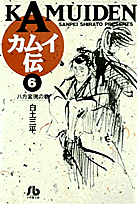
Kamui Den
Kamui Den follows Kamui, a ninja born into the lowest social caste of feudal Japan, whose pursuit of freedom through the shinobi arts becomes a lens on the systematic brutality of the Edo period class system — one of manga's great radical political works.
Historical / Action
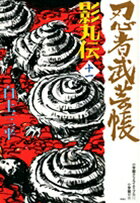
Ninja Bugeicho
Ninja Bugeicho is Sanpei Shirato's foundational work — a ninja story set in feudal Japan that established the template for politically engaged action manga and directly preceded Kamui Den as his mature masterwork.
Historical / Action
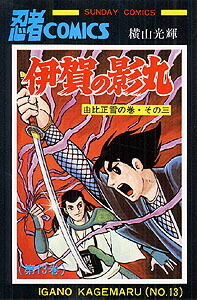
Iga no Kagemaru
Iga no Kagemaru follows Kagemaru, a ninja of the Iga clan in the Sengoku period, as he uses infiltration, disguise, and combat skills to navigate the political conflicts of feudal Japan — an early ninja manga that established visual conventions the genre still uses today.
Historical / Action
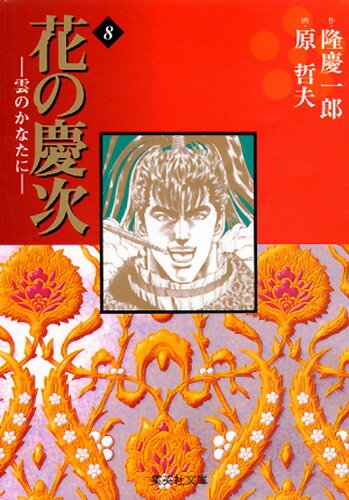
Hana no Keiji
Hana no Keiji follows Keiji Maeda, the real historical figure known as the eccentric samurai who rejected the obligations of clan and hierarchy to live entirely by his own aesthetic code — and the manga is his story as historical action epic.

Historical / Romance
Asaki Yumemishi
A review of Waki Yamato's Asaki Yumemishi — 13 volumes in Kodansha's Mimi from 1979 to 1993. The landmark manga adaptation of The Tale of Genji, available in English from Kodansha USA in 10 digital volumes.

Historical / Drama
Hidamari no Ki
Hidamari no Ki follows two real figures from the late Edo period — one a samurai, one a doctor — as Japan's encounter with Western medicine and Western power forces both of them to decide what they believe in and what they are willing to lose.
Written by
Yu
Manga Enthusiast from Japan
I grew up in Japan and manga literally saved me during a tough time in elementary school. My English isn't perfect, but my love for manga is real — and I want to share it with you.