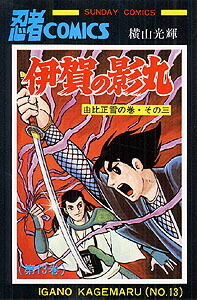
Iga no Kagemaru Review: The Ninja Who Moved Through History Like a Shadow
by Mitsuteru Yokoyama
Read the first volume. If it doesn't hook you, put it down. It'll hook you.
Buy Iga no Kagemaru on Amazon →*Affiliate link — I earn a small commission at no extra cost to you.
What if the most powerful figure in the room was the one nobody could see?
Quick Take
- Mitsuteru Yokoyama's early ninja manga — the work that established visual and narrative conventions for the entire genre
- Kagemaru operates through intelligence and deception rather than supernatural power, which grounds the action in historical plausibility
- 6 volumes of clean, purposeful storytelling from one of manga's foundational creators
Who Is This Manga For?
- Historical manga fans who want ninja storytelling grounded in Sengoku-period Japan
- Readers of Mitsuteru Yokoyama — creator of Tetsujin 28-go and Babel II — who want to see his range in historical action
- Ninja genre fans interested in where the visual conventions came from
- Anyone who prefers intelligence over power as the basis for action-hero storytelling
Content Warnings & Age Rating
Age Rating: T (Teen) Content Warnings: Action violence consistent with ninja combat. Historical themes from the Sengoku period. No graphic content.
Suitable for teen readers.
Yu's Rating
| Category | Score |
|---|---|
| Story Depth | ★★★★☆ |
| Art Style | ★★★★☆ |
| Character Development | ★★★★☆ |
| Accessibility for Non-Japanese Readers | ★★★★☆ |
| Reread Value | ★★★☆☆ |
Story Overview
Kagemaru is a young ninja of the Iga clan — the historical shinobi organization that served as intelligence agents and assassins for various warlords during Japan's Sengoku period. He operates in service of his clan's interests and the interests of the lords they serve, using infiltration, disguise, and combat to accomplish objectives that conventional military force cannot.
The series follows Kagemaru through various missions during the political conflicts of the era. Each arc presents a different situation requiring different applications of ninja skills — which keeps the storytelling fresh while building a consistent portrait of the character.
What makes the series distinctive in its historical context is Yokoyama's commitment to grounding the ninja abilities in plausible skill rather than supernatural power. Kagemaru is extraordinary because of his training and his intelligence, not because of magic. This choice gives the action historical weight that supernatural ninja stories lack.
Characters
Kagemaru: A protagonist whose defining qualities are intelligence and adaptability. He reads situations, adjusts his approach, and achieves objectives through the application of skill rather than force where possible. He is a professional — not a hero seeking glory but a professional performing a function.
The Iga clan: The context that gives Kagemaru's missions meaning — he is not an individual hero but a member of an organization with its own loyalties and obligations.
Art Style
Yokoyama's art from this period (early 1960s) has the clean efficiency of the era's best manga. Character designs are expressive and distinctive, action sequences are legible and dynamic, and the period setting is rendered with enough historical detail to be convincing without overwhelming the narrative.
Cultural Context
Iga no Kagemaru ran in Weekly Shonen Sunday from 1961 to 1966. Mitsuteru Yokoyama was one of the defining figures of early manga — his Tetsujin 28-go established the giant robot genre, and his work on historical and ninja manga helped establish those genres' visual languages.
Iga no Kagemaru in particular established many of the visual conventions for ninja depiction in manga — the dark costume, the specific arsenal of tools, the infiltration and disguise techniques — that later ninja manga would inherit.
What I Love About It
I love the intelligence-first approach to ninja storytelling.
Most ninja manga from any era features heroes who succeed because they are stronger, faster, or more magically gifted than their opponents. Kagemaru succeeds because he thinks better. He gathers information, identifies vulnerabilities, and constructs plans that accomplish the objective before force becomes necessary — and when force is necessary, he applies it precisely rather than overwhelmingly.
This approach requires more from both the character and the reader, and it produces more satisfying outcomes because the victory feels earned rather than inevitable.
What English-Speaking Fans Say
Not known in English-speaking markets. Among manga historians and fans of classic action manga, Iga no Kagemaru is recognized as a foundational ninja genre text — the work that established conventions later creators would build on.
Memorable Scene ⚠️ Spoiler Warning
A mission where Kagemaru must infiltrate a location that seems genuinely impenetrable — every conventional approach blocked. His solution uses a combination of prior information gathering, patient observation, and a single moment of action that makes the entire elaborate security arrangement irrelevant. The scene demonstrates why intelligence beats strength: the lock on the door doesn't matter if you know where they keep the key.
Similar Manga
| Title | Its Approach | How Iga no Kagemaru Differs |
|---|---|---|
| Kamui-den | Socially engaged ninja narrative with class themes | Intelligence-focused action narrative without political superstructure |
| Ninja Scroll (manga) | Supernatural ninja action | Historical grounding without supernatural elements |
| Basilisk | Rival ninja clan war with supernatural powers | Iga no Kagemaru's emphasis on skill over power is the contrast |
Reading Order / Where to Start
Volume 1. The series builds its world efficiently and each arc is relatively self-contained.
Official English Translation Status
Iga no Kagemaru has no official English translation.
Pros & Cons
Pros
- Historically foundational — established ninja manga's visual conventions
- Intelligence-first storytelling is rare and satisfying
- Yokoyama's art holds up well
- Complete and self-contained — 6 volumes
Cons
- No English translation
- The historical context of Sengoku Japan requires some background knowledge
- Pacing reflects its serialization era — modern readers may want more speed
- Less emotional depth than Yokoyama's later, more ambitious work
Is Iga no Kagemaru Worth Reading?
For historical manga fans and ninja genre enthusiasts, yes — this is where many of the genre's conventions come from, and it's a clean, intelligent action narrative that holds up on its own terms. For readers who want supernatural spectacle, the grounded approach will feel limiting. But for the intelligence-over-power approach to ninja storytelling, this remains one of the best examples.
Format Comparison
| Format | Notes |
|---|---|
| Physical | Japanese editions available |
| Digital | Limited digital availability in Japanese |
| Omnibus | Collected editions available |
Where to Buy
No English release yet. That just means you find it before everyone else does.
*Affiliate link — I earn a small commission at no extra cost to you.
More Manga You Might Like
Historical / Action
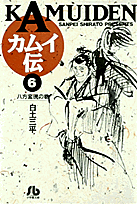
Kamui Den
Kamui Den follows Kamui, a ninja born into the lowest social caste of feudal Japan, whose pursuit of freedom through the shinobi arts becomes a lens on the systematic brutality of the Edo period class system — one of manga's great radical political works.
Historical / Action
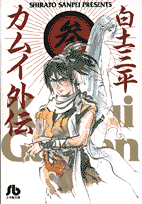
Kamui Gaiden
Kamui Gaiden follows the fugitive ninja Kamui after he abandons his clan — a man who fought for freedom and now runs to protect it, hunted by the people who want him dead and by a society that has no place for him.

Historical / Action
Ninja Bugeicho
Ninja Bugeicho is Sanpei Shirato's foundational work — a ninja story set in feudal Japan that established the template for politically engaged action manga and directly preceded Kamui Den as his mature masterwork.
Historical / Action
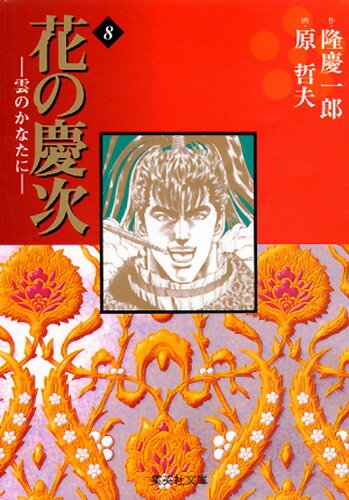
Hana no Keiji
Hana no Keiji follows Keiji Maeda, the real historical figure known as the eccentric samurai who rejected the obligations of clan and hierarchy to live entirely by his own aesthetic code — and the manga is his story as historical action epic.
Historical / Romance
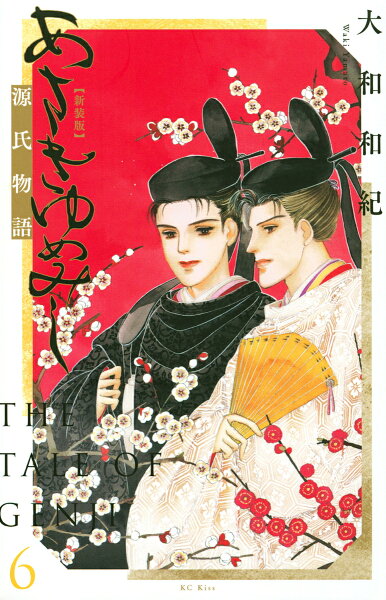
Asaki Yumemishi
A review of Waki Yamato's Asaki Yumemishi — 13 volumes in Kodansha's Mimi from 1979 to 1993. The landmark manga adaptation of The Tale of Genji, available in English from Kodansha USA in 10 digital volumes.
Historical / Drama
Hidamari no Ki
Hidamari no Ki follows two real figures from the late Edo period — one a samurai, one a doctor — as Japan's encounter with Western medicine and Western power forces both of them to decide what they believe in and what they are willing to lose.
Written by
Yu
Manga Enthusiast from Japan
I grew up in Japan and manga literally saved me during a tough time in elementary school. My English isn't perfect, but my love for manga is real — and I want to share it with you.