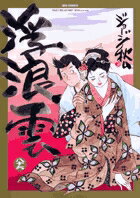
Hagure Kumo Review: The Samurai Who Had Already Decided He Didn't Care
by George Akiyama
Read the first volume. If it doesn't hook you, put it down. It'll hook you.
Buy Hagure Kumo on Amazon →*Affiliate link — I earn a small commission at no extra cost to you.
What if a samurai decided that freedom was worth more than every obligation society had ever invented?
Quick Take
- George Akiyama's long-running Edo-period manga about a man who chose to stop caring about social expectation
- The protagonist, known as "Kumo" (Cloud), drifts through situations that other characters find serious and finds them funny — because he has already decided that most of what people worry about doesn't matter
- 100 volumes spanning decades — one of Big Comic Original's defining long-runs
Who Is This Manga For?
- Historical manga fans who want Edo Japan rendered with warmth rather than violence
- Readers who enjoy philosophical wanderer protagonists — characters who are wise through distance rather than engagement
- Fans of George Akiyama who want to see his range beyond the darker works like Ashita no Joe's contemporaries
- Anyone who finds the "man outside society" premise genuinely interesting rather than just aesthetically cool
Content Warnings & Age Rating
Age Rating: T (Teen) Content Warnings: Historical themes. Adult life themes including drinking and loose morality. Philosophical content. Nothing graphic.
Suitable for teen readers and above.
Yu's Rating
| Category | Score |
|---|---|
| Story Depth | ★★★★☆ |
| Art Style | ★★★★☆ |
| Character Development | ★★★☆☆ |
| Accessibility for Non-Japanese Readers | ★★★☆☆ |
| Reread Value | ★★★★☆ |
Story Overview
Kumo is a man who works as a merchant in Edo but carries himself like no merchant anyone has ever met. He is, it becomes clear, a former samurai who walked away from that life — and from most of the obligations that accompanied it — in favor of something harder to define.
He drifts. He gets involved with people who have problems. He rarely solves those problems through cleverness or force — more often by being present in a way that allows others to solve their own problems. Sometimes he simply observes and moves on.
The series is episodic over its enormous length, but the accumulation of episodes creates something — a portrait of a way of being in the world that prioritizes freedom over security, presence over accumulation, genuine encounter over social performance.
Characters
Kumo: A protagonist whose wisdom is entirely passive. He doesn't teach. He doesn't intervene. He is simply himself, so consistently and so thoroughly that others find their own positions clarified by contrast.
The Edo world: Each episode introduces characters whose problems are rendered with enough specificity to matter — merchant disputes, family conflicts, samurai obligations — against which Kumo's freedom becomes legible as a choice rather than just a temperament.
Art Style
George Akiyama's art has a warmth and detail that make Edo Japan feel inhabited rather than just historical. The period settings are rendered with casual accuracy, and Kumo's character design — relaxed, slightly disheveled, perpetually amused — captures his relationship with the world without requiring explanation.
Cultural Context
Hagure Kumo ran in Big Comic Original from 1973 to 2008, making it one of the longest continuous manga runs in Japanese publishing. George Akiyama, known for his more intense work earlier in his career, used the series to explore a gentler but no less thoughtful register over decades.
What I Love About It
I love that Kumo is never trying to teach anyone anything.
The wandering wise man is a well-worn character type, and it usually goes wrong in the same way: the protagonist dispenses wisdom to grateful recipients, who are improved by the encounter. This is fundamentally condescending — it requires that the protagonist know something others don't.
Kumo doesn't operate this way. He doesn't know more than anyone else. He just wants less. The distinction matters more than it sounds.
What English-Speaking Fans Say
Not known in English-speaking markets. Among Big Comic Original readers and fans of historical manga, Hagure Kumo is recognized as one of the great long-form achievements of the manga medium — a work whose meaning accumulates over time in ways that shorter works cannot replicate.
Memorable Scene ⚠️ Spoiler Warning
A moment where someone asks Kumo what he wants from life — expecting a philosophical answer, some articulation of his wandering philosophy. His answer is practical and entirely specific to the immediate moment. The person asking expected depth. What they got was presence. That's the whole series.
Similar Manga
| Title | Its Approach | How Hagure Kumo Differs |
|---|---|---|
| Lone Wolf and Cub | Former samurai with a mission and a son | Former samurai with no mission and no destination |
| Vagabond | Young samurai seeking meaning through combat | Middle-aged former samurai who has already stopped seeking |
| Mugen no Juunin | Violent historical action | Quiet philosophical wandering with occasional action |
Reading Order / Where to Start
Volume 1. The series accumulates rather than builds — each volume adds to the portrait, and starting from the beginning gives you the full picture.
Official English Translation Status
Hagure Kumo has no official English translation.
Pros & Cons
Pros
- One of manga's great long-form character studies
- The wandering philosopher premise is executed with unusual restraint
- The Edo setting is rendered with warmth and historical accuracy
- 100 volumes of earned perspective
Cons
- No English translation
- 100 volumes is an enormous commitment
- The philosophical register may not appeal to readers wanting action or plot
- Cultural specificity of Edo Japan limits accessibility without context
Is Hagure Kumo Worth Reading?
For historical manga fans and long-form readers, yes — the patience of this manga produces something that shorter, more dramatic works cannot. For readers wanting narrative momentum, this is not the right choice. But as a portrait of a way of being in the world — free, present, unencumbered — it is genuinely rare.
Format Comparison
| Format | Notes |
|---|---|
| Physical | Japanese editions available |
| Digital | Available in Japanese |
| Omnibus | Collected editions available |
Where to Buy
No English release yet. That just means you find it before everyone else does.
*Affiliate link — I earn a small commission at no extra cost to you.
More Manga You Might Like
Historical / Action
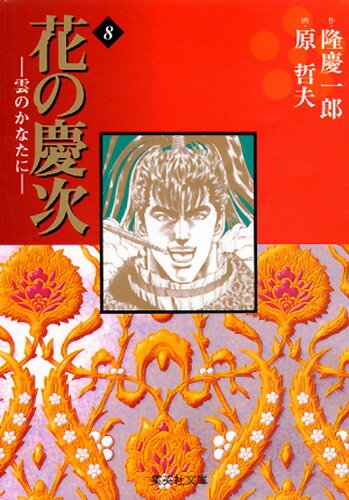
Hana no Keiji
Hana no Keiji follows Keiji Maeda, the real historical figure known as the eccentric samurai who rejected the obligations of clan and hierarchy to live entirely by his own aesthetic code — and the manga is his story as historical action epic.
Historical / Romance
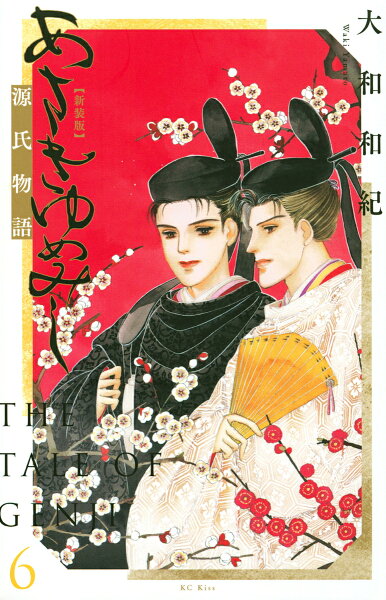
Asaki Yumemishi
A review of Waki Yamato's Asaki Yumemishi — 13 volumes in Kodansha's Mimi from 1979 to 1993. The landmark manga adaptation of The Tale of Genji, available in English from Kodansha USA in 10 digital volumes.
Historical / Drama
Hidamari no Ki
Hidamari no Ki follows two real figures from the late Edo period — one a samurai, one a doctor — as Japan's encounter with Western medicine and Western power forces both of them to decide what they believe in and what they are willing to lose.
Historical / Action
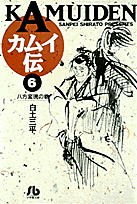
Kamui Den
Kamui Den follows Kamui, a ninja born into the lowest social caste of feudal Japan, whose pursuit of freedom through the shinobi arts becomes a lens on the systematic brutality of the Edo period class system — one of manga's great radical political works.
Historical / Action
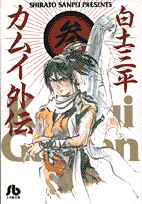
Kamui Gaiden
Kamui Gaiden follows the fugitive ninja Kamui after he abandons his clan — a man who fought for freedom and now runs to protect it, hunted by the people who want him dead and by a society that has no place for him.
Historical / Action
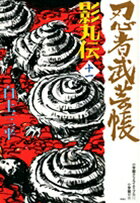
Ninja Bugeicho
Ninja Bugeicho is Sanpei Shirato's foundational work — a ninja story set in feudal Japan that established the template for politically engaged action manga and directly preceded Kamui Den as his mature masterwork.
Written by
Yu
Manga Enthusiast from Japan
I grew up in Japan and manga literally saved me during a tough time in elementary school. My English isn't perfect, but my love for manga is real — and I want to share it with you.