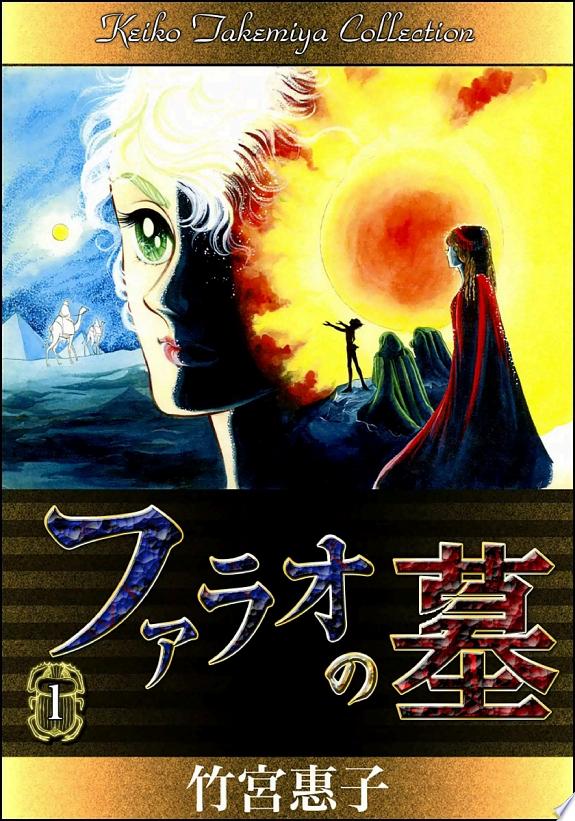
Farao no Haka Review: Ancient Egypt as a Stage for Timeless Human Obsession
by Keiko Takemiya
Read the first volume. If it doesn't hook you, put it down. It'll hook you.
Buy Farao no Haka on Amazon →*Affiliate link — I earn a small commission at no extra cost to you.
What if the most powerful civilization in the ancient world couldn't contain what two people felt for each other?
Quick Take
- Makoto Takahashi's 1974 ancient Egypt shojo — historically researched, emotionally ambitious
- The slave-and-princess premise is handled with more complexity than the setup suggests
- 11 volumes that use the Egyptian setting to make social barrier narratives feel genuinely dangerous
Who Is This Manga For?
- Historical manga fans who want an ancient setting treated with care and specificity
- Shojo readers who want romance with actual stakes — the barriers here have consequences
- Readers curious about 1970s shojo and how the decade's creators approached historical settings
- Anyone who finds ancient Egypt genuinely fascinating as a setting for human drama
Content Warnings & Age Rating
Age Rating: T (Teen) Content Warnings: Historical themes. Death — the setting makes mortality a constant presence. Obsession themes in some characters. Mild violence consistent with ancient Egyptian political drama.
Suitable for teen readers.
Yu's Rating
| Category | Score |
|---|---|
| Story Depth | ★★★★☆ |
| Art Style | ★★★★☆ |
| Character Development | ★★★★☆ |
| Accessibility for Non-Japanese Readers | ★★★★☆ |
| Reread Value | ★★★☆☆ |
Story Overview
In ancient Egypt, a slave boy named Suphoy catches the attention of the pharaoh's daughter, Semis, and their lives become entangled across the rigid hierarchy that the Egyptian court maintains. What begins as an unlikely encounter develops into something that the court's entire social structure is designed to prevent.
The manga is not naive about what it means to cross social barriers in this setting. Suphoy's slave status is not a romantic obstacle to be overcome through love — it is a system with enforcement mechanisms, and the story takes those mechanisms seriously. The danger is real. The consequences of transgression are real.
Against this, the emotional connection between the protagonists has to earn its importance — and Takahashi invests sufficiently in both characters that it does.
Characters
Suphoy: A slave protagonist whose intelligence and determination are presented without sentimentality — he is not special because destiny chose him but because he chooses himself, repeatedly, against circumstances that favor other outcomes.
Semis: The pharaoh's daughter whose position protects her from everything except the one thing she wants. Her privilege and her powerlessness occupy the same space.
The Egyptian court: A supporting cast whose various agendas — political, personal, religious — create the pressure that the protagonists must navigate.
Art Style
Makoto Takahashi's art has the elegant expressiveness of 1970s shojo at its best — flowing character designs, detailed historical settings, and facial expressions that carry the emotional weight the dialogue doesn't always state directly. The Egyptian architecture and costume are rendered with evident research.
Cultural Context
Farao no Haka ran in Shojo Friend from 1974 to 1977. It appeared during the period when shojo manga was expanding its historical ambitions — using ancient settings to explore social dynamics that contemporary settings couldn't accommodate as easily. The Egyptian setting allowed Takahashi to make the social barrier premise feel genuinely life-or-death rather than merely dramatic.
What I Love About It
I love the setting's brutality.
Most historical romance manga softens the setting to make the romance feel possible. Farao no Haka keeps the ancient Egyptian setting hard — the hierarchy is real, the danger is real, the consequences of transgression are not softened for comfort. The romance has to exist within that reality rather than despite it.
This is both more honest and more emotionally effective than the alternative. Love that exists in a world where it has no consequences costs the reader nothing. Love that exists in a world that actively opposes it costs something — which is why it's worth reading.
What English-Speaking Fans Say
Not known in English-speaking markets. Among readers of classic shojo and historical manga, Farao no Haka is recognized as one of the more carefully researched and emotionally ambitious historical shojo of its era.
Memorable Scene ⚠️ Spoiler Warning
A scene where Suphoy, having reached a moment that should feel like triumph, recognizes that the system he has navigated doesn't simply yield to being navigated — it generates new obstacles from the resolution of old ones. His response to this recognition reveals the difference between a character who fights because he expects to win and one who fights because he refuses to stop.
Similar Manga
| Title | Its Approach | How Farao no Haka Differs |
|---|---|---|
| Ouke no Monshou | Ancient Egypt with time-travel fantasy elements | Purely historical setting, no supernatural bypass of the setting's reality |
| Red River | Ancient Anatolia historical romance | Protagonist from the present who has modern knowledge; Farao no Haka stays inside the world |
| Haikara-san ga Tooru | Historical romance in Meiji Japan | Different era, same ambition — social barrier as genuine narrative force |
Reading Order / Where to Start
Volume 1. The character dynamic is established quickly and the story builds from there.
Official English Translation Status
Farao no Haka has no official English translation.
Pros & Cons
Pros
- The ancient Egyptian setting is taken seriously and researched carefully
- The social barrier premise has actual consequences rather than dramatic ones only
- Strong character work — both protagonists earn their positions
- Historical shojo at full 1970s ambition
Cons
- No English translation
- The pacing reflects 1970s serialization conventions
- The ending may not satisfy all readers — historical reality limits romantic resolution options
- Some aspects of the historical setting require context for full appreciation
Is Farao no Haka Worth Reading?
For historical manga and shojo readers, yes — the ancient Egyptian setting is used with genuine care, and the social barrier premise carries real stakes. For readers who want romance softened by reassurance that love conquers all, this is not that. But for the harder version — love that exists in a world that opposes it — this is one of the better examples.
Format Comparison
| Format | Notes |
|---|---|
| Physical | Japanese editions available |
| Digital | Limited availability in Japanese |
| Omnibus | Collected editions available |
Where to Buy
No English release yet. That just means you find it before everyone else does.
*Affiliate link — I earn a small commission at no extra cost to you.
More Manga You Might Like
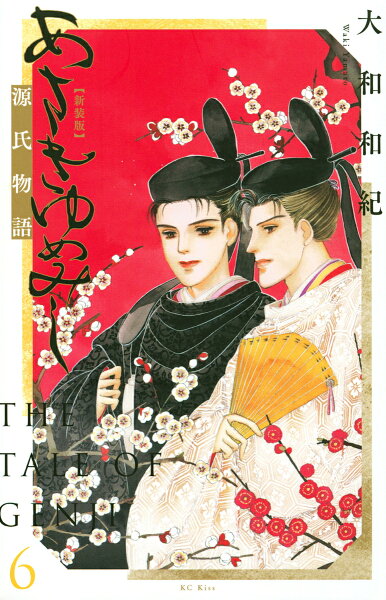
Historical / Romance
Asaki Yumemishi
A review of Waki Yamato's Asaki Yumemishi — 13 volumes in Kodansha's Mimi from 1979 to 1993. The landmark manga adaptation of The Tale of Genji, available in English from Kodansha USA in 10 digital volumes.

Historical / Romance
Crest of the Royal Family
Crest of the Royal Family follows Carol Reed, an American archaeology student transported back to ancient Egypt, where she becomes entangled with the young pharaoh Memphite and the political machinations of the ancient world.

Historical / Romance
The Prince in the Sunlight
Prince of the Dawn reimagines Prince Shotoku — one of Japan's most revered historical figures — as a powerful supernatural being with no capacity for ordinary human connection, obsessively in love with a man who cannot love him back.
Historical / Drama
Hidamari no Ki
Hidamari no Ki follows two real figures from the late Edo period — one a samurai, one a doctor — as Japan's encounter with Western medicine and Western power forces both of them to decide what they believe in and what they are willing to lose.
Historical / Action
Kamui Den
Kamui Den follows Kamui, a ninja born into the lowest social caste of feudal Japan, whose pursuit of freedom through the shinobi arts becomes a lens on the systematic brutality of the Edo period class system — one of manga's great radical political works.
Historical / Action
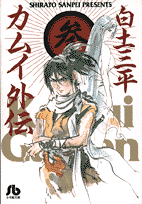
Kamui Gaiden
Kamui Gaiden follows the fugitive ninja Kamui after he abandons his clan — a man who fought for freedom and now runs to protect it, hunted by the people who want him dead and by a society that has no place for him.
Written by
Yu
Manga Enthusiast from Japan
I grew up in Japan and manga literally saved me during a tough time in elementary school. My English isn't perfect, but my love for manga is real — and I want to share it with you.