
Crest of the Royal Family Review: The Eternal Shoujo Manga That Has Been Running Since 1976
by Chieko Hosokawa
Read the first volume. If it doesn't hook you, put it down. It'll hook you.
Buy Crest of the Royal Family on Amazon →*Affiliate link — I earn a small commission at no extra cost to you.
Quick Take
- Running since 1976 — one of the longest-running shoujo manga in history, still ongoing
- Ancient Egypt rendered with dedicated passion by an artist who has spent fifty years in this world
- The time-travel-into-ancient-Egypt romance template that influenced an entire subgenre
Who Is This Manga For?
- Ancient Egypt enthusiasts who want the subject rendered with loving detail across decades
- Classic shoujo fans who appreciate the genre's connection to historical settings
- Readers interested in manga history — this is one of the few series still running from the 1970s
- Those who enjoy long-form commitment to a richly developed world
Content Warnings & Age Rating
Age Rating: T (Teen) Content Warnings: Historical violence, romance tropes of its era, depictions of ancient Egyptian slavery and politics
Appropriate for the rating — classic shoujo sensibility throughout.
Yu's Rating
| Category | Score |
|---|---|
| Story Depth | ★★★★☆ |
| Art Style | ★★★★☆ |
| Character Development | ★★★★☆ |
| Accessibility for Non-Japanese Readers | ★★★☆☆ |
| Reread Value | ★★★☆☆ |
Story Overview
Carol Reed is a young American woman on an archaeological dig in Egypt when she is somehow transported backward in time to ancient Egypt. The pharaoh Memphite — young, proud, beautiful — claims her. The struggle between them, the political intrigues of the ancient court, and the question of whether Carol will ever return to her own time form the series' backbone.
The premise sounds simple. What makes the series more than its premise is the depth of the Egyptian world Hosokawa has built — the political rivalries, the religious structures, the social hierarchies, the specific texture of ancient court life. After 50 years of working in this world, it is rendered with extraordinary specificity.
The romance between Carol and Memphite is the series' emotional engine, but the Egyptian world is what keeps readers returning.
Characters
Carol Reed: The displaced modern woman who must navigate an ancient world without the context to understand it. Her intelligence and adaptability are what keep her alive. Her relationship with her displacement — the grief and the strange belonging — develops with genuine complexity across many volumes.
Memphite: The young pharaoh whose relationship with Carol goes through every phase of attraction, antagonism, protection, and something harder to name. His arc across 50+ years of serialization is one of the longest character developments in manga history.
Art Style
Hosokawa's art has evolved across five decades — early volumes have the style of 1970s shoujo, later volumes reflect decades of refinement. The Egyptian setting is drawn with evident research and genuine love: architecture, clothing, ritual objects, court ceremonies rendered with accumulated specificity.
Cultural Context
Crest of the Royal Family is one of the pillars of the "historical fantasy romance" shoujo subgenre that was invented and developed in the 1970s and 1980s. Its time-travel-into-ancient-setting premise directly influenced countless subsequent works in manga, anime, and light novels.
At 68+ volumes across nearly five decades, it is a cultural institution — several generations of Japanese women have grown up with it, passed it to their daughters, and watched it continue.
What I Love About It
I love the stubborn continuity of it.
Chieko Hosokawa has been drawing this manga since 1976. She has spent fifty years of her life in ancient Egypt with Carol and Memphite and everyone in their world. That commitment — to a story, to characters, to a historical world — over the entire span of an adult life is something I find profound and moving.
The manga itself is its own kind of time travel: reading it now means reading the work of an artist across their entire professional life. The early volumes have the energy of beginning; the recent volumes have the assurance of mastery accumulated across thousands of pages.
There is something I love about long things that keep their promise. Crest of the Royal Family has been keeping its promise for fifty years.
What English-Speaking Fans Say
Limited awareness in English-speaking markets — the series was never translated and is largely unknown outside Japan. Among classic shoujo enthusiasts who know it, it is revered as a foundational text of its subgenre.
The length makes it daunting to new readers even in Japanese, but devoted fans describe beginning it as entering a world you will not want to leave.
Memorable Scene ⚠️ Spoiler Warning
There is a scene in the early volumes where Carol, having begun to understand the depth of what she has been taken from and what she has been placed into, asks a question about whether she belongs here — and the answer she receives is not comfort but truth. The ancient world does not accommodate modern longing for home. Her adaptation to this fact is the series' defining character moment.
Similar Manga
- Red River: Similar time-travel-into-ancient-world shoujo premise
- Anatolia Story: Same subgenre, same era influence
- Rose of Versailles: Different period, same willingness to take historical settings and women's stories seriously
Reading Order / Where to Start
Volume 1. The world builds from the beginning — no good entry point except the start.
Official English Translation Status
Crest of the Royal Family has no official English translation. Available in Japanese only.
Pros & Cons
Pros
- Foundational historical fantasy romance — genre-defining
- Ancient Egypt rendered with genuine depth across decades
- One of the longest continuous achievements in manga
- Complete reader investment rewarded across the series
Cons
- No English translation
- 68+ volumes is an enormous commitment
- Art varies significantly across decades
- Ongoing after nearly 50 years — no ending in sight
Format Comparison
| Format | Notes |
|---|---|
| Physical | Japanese editions available |
| Digital | Available in Japanese |
| Omnibus | Various compilation formats in Japan |
Where to Buy
No English release yet. That just means you find it before everyone else does.
*Affiliate link — I earn a small commission at no extra cost to you.
More Manga You Might Like
Historical / Romance
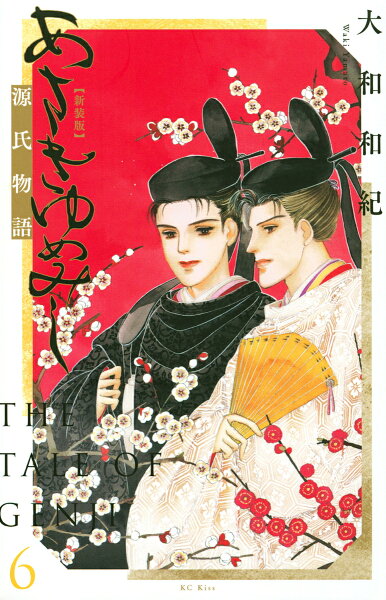
Asaki Yumemishi
A review of Waki Yamato's Asaki Yumemishi — 13 volumes in Kodansha's Mimi from 1979 to 1993. The landmark manga adaptation of The Tale of Genji, available in English from Kodansha USA in 10 digital volumes.
Historical / Shojo
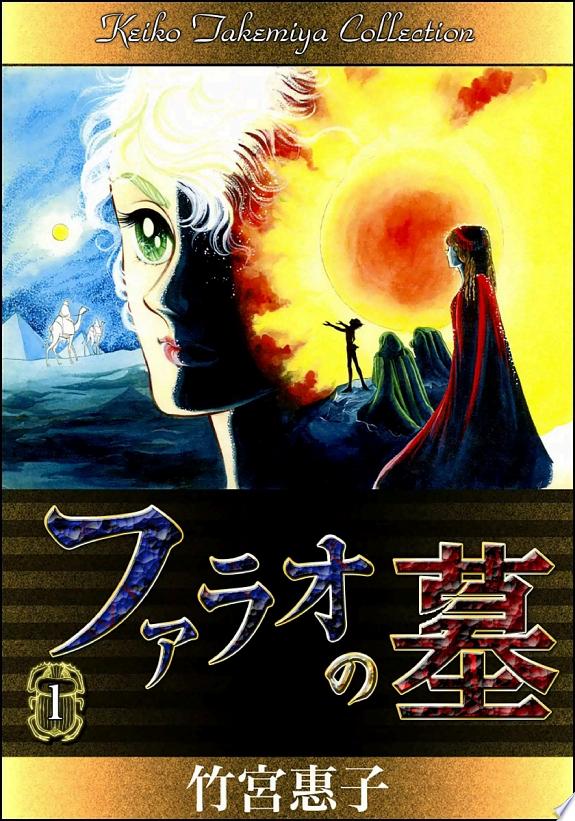
Farao no Haka
Farao no Haka follows two young people in ancient Egypt — a slave boy and the pharaoh's daughter — whose lives intertwine across years of political conflict, social barriers, and a love that the Egyptian court's rigid hierarchy is designed to prevent.

Historical / Romance
The Prince in the Sunlight
Prince of the Dawn reimagines Prince Shotoku — one of Japan's most revered historical figures — as a powerful supernatural being with no capacity for ordinary human connection, obsessively in love with a man who cannot love him back.
Historical / Romance
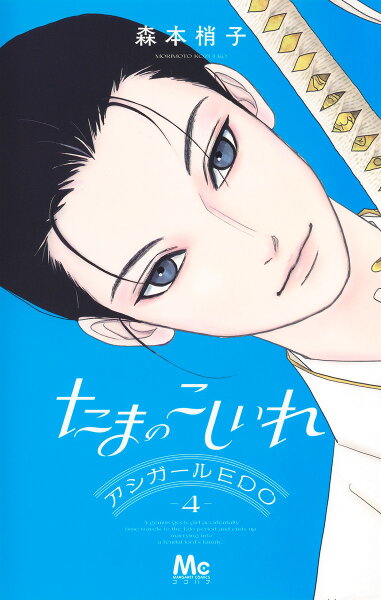
Ashi-Girl
Ashi-Girl follows Yui Hayakawa, a high school girl with extraordinary running speed who time-slips to the Sengoku era and falls for a young feudal lord — Hiroumi Morio's 16-volume Margaret time-travel romance that became a beloved drama adaptation.
Historical / Drama
Hidamari no Ki
Hidamari no Ki follows two real figures from the late Edo period — one a samurai, one a doctor — as Japan's encounter with Western medicine and Western power forces both of them to decide what they believe in and what they are willing to lose.
Historical / Action
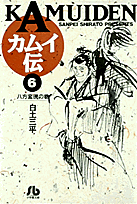
Kamui Den
Kamui Den follows Kamui, a ninja born into the lowest social caste of feudal Japan, whose pursuit of freedom through the shinobi arts becomes a lens on the systematic brutality of the Edo period class system — one of manga's great radical political works.
Written by
Yu
Manga Enthusiast from Japan
I grew up in Japan and manga literally saved me during a tough time in elementary school. My English isn't perfect, but my love for manga is real — and I want to share it with you.