
Cesare Review — Fuyumi Sōryō's Renaissance Italy Manga About the Young Cesare Borgia at Pisa University
by Fuyumi Sōryō
Read the first volume. If it doesn't hook you, put it down. It'll hook you.
Buy Cesare: Il Creatore che ha distrutto on Amazon →*Affiliate link — I earn a small commission at no extra cost to you.
I studied Italian history briefly in university. Niccolò Machiavelli's Il Principe (The Prince, 1513) describes the qualities of an ideal ruler using Cesare Borgia as the partial model. The Cesare in Machiavelli is the man as adult — already a political and military force, already feared. The Cesare in Fuyumi Sōryō's manga is the man before that: sixteen years old, at university, becoming what Machiavelli would eventually write about.
I read the Cesare manga the year I gave up on academic Italian history. The manga did what my textbooks could not: it made the period feel real.
Quick Take
- Fuyumi Sōryō's 13-volume Renaissance historical manga (2005–2021, Kodansha's Morning)
- Researched in collaboration with Italian historian Motoaki Hara of the University of Tokyo
- One of the most historically rigorous manga ever serialized
- Age rating: M (Mature) — historical violence, political conspiracy, some sexual content, religious-political conflict
What Is Cesare About?
November 1491. The University of Pisa.
Angelo Silvio Piccolomi is a fifteen-year-old Florentine student arriving at the University of Pisa to begin his studies in canon law. Angelo is the nephew of Cardinal Francesco Piccolomi (later Pope Pius III), and is expected to follow his uncle's ecclesiastical career. He is intelligent, well-mannered, and somewhat naive about the political realities of Renaissance Italy.
At Pisa, Angelo meets Cesare Borgia. Cesare is sixteen, a fellow student, and the son of the Spanish-born Roman cardinal Rodrigo Borgia (who will become Pope Alexander VI the following year). Cesare is brilliant — multilingual, exceptionally educated, trained in both military and diplomatic arts, gathering an entourage of equally talented students around him.
The next 13 volumes follow Angelo and Cesare across approximately the next decade. Specifically:
- The university years (1491–1492) at Pisa
- The political maneuvering around Cesare's father's election to the papacy in 1492
- The various factional conflicts within Renaissance Italy: the Borgia family vs. the Florentine Medici, the French invasion of 1494, the rivalry with the Della Rovere family
- Cesare's gradual transformation from a brilliant student into the political and military figure who would inspire Machiavelli's Il Principe
- Angelo's parallel journey from naive student to participant in Renaissance political life
Sōryō does not narrate the famous later years of Cesare's career (his military campaigns in Romagna, his sister Lucrezia's marriages, his eventual fall). The manga concentrates on the formative period — who Cesare was before he became famous, and how the people around him recognized and were changed by his potential.
The Historical Research
What distinguishes Cesare from other historical manga is Fuyumi Sōryō's research process. She collaborated extensively with Professor Motoaki Hara (原 基晶), a University of Tokyo historian specializing in Italian Renaissance political history. Hara provided historical consultation throughout the manga's 16-year run, including:
- Historical accuracy review of major plot beats
- Costume and material culture verification
- Latin and Italian dialogue authenticity
- Period-specific political and religious context
The result is one of the most historically rigorous works of historical manga ever serialized. Italian readers and historians have remarked on the manga's accuracy at a level rare for non-academic fiction.
The Italian-language edition of the manga, published by Star Comics, has had reception in Italy — including from Italian readers familiar with the historical Cesare Borgia.
Who Is This Manga For?
- Historical fiction readers wanting Renaissance-set drama with documentary accuracy
- Borgia-history enthusiasts — the manga is one of the best modern portrayals of the family
- Vinland Saga / Historie fans — same tradition of rigorous historical seinen
- Italian-language readers — the Italian edition is the most accessible non-Japanese version
- Not for: readers wanting action-driven manga (Cesare is political/character-focused)
Content Warnings & Age Rating
Age Rating: M (Mature) — 18+ Content Warnings: Period-accurate violence including assassination, dueling, and warfare (not graphic but present); religious-political conflict including depictions of Catholic Church corruption; some sexual content; depictions of historical homosexuality with care; recurring discussion of bastardy and legitimacy
The M rating reflects the manga's mature thematic content rather than visual extremity.
Characters
Cesare Borgia — The protagonist whose specific character Sōryō has constructed from historical sources. Brilliant, charismatic, calculating, capable of warmth toward those he chooses to trust, equally capable of ruthless political action. Sōryō refuses to flatten Cesare into either villain or hero. The manga is interested in him as a specific historical person whose actions have to be understood within their context.
Angelo Silvio Piccolomi — The viewpoint character. Naive at the manga's start; gradually educated by his proximity to Cesare. Angelo is partly historical (the real Angelo Piccolomi did attend Pisa) and partly Sōryō's creation. His perspective provides the manga's emotional access to Cesare.
Cesare's circle at Pisa — Including future major Renaissance figures (Niccolò Machiavelli himself appears briefly), various Spanish and Italian students, and the network that Cesare is building.
Rodrigo Borgia / Pope Alexander VI — Cesare's father. Politically formidable; emotionally complicated relationship with his son.
Lucrezia Borgia — Cesare's sister. Younger than Cesare; her presence in the early volumes is limited but builds.
Giovanni de' Medici (future Pope Leo X) — A young Medici contemporary; appears as part of the political backdrop.
Art Style
Sōryō's art is detailed, classical, and built for historical authenticity. Costumes, architecture, weapons, and household objects are rendered with research-based accuracy. Character designs lean toward realism with selective stylization for emotional emphasis.
The manga uses panel composition with the patience of classical narrative painting. Some pages are essentially still images held for reader contemplation. The Renaissance setting allows Sōryō to draw architecture, sculpture, and material culture that benefit from this slow visual pacing.
Cultural Context
Fuyumi Sōryō is a major Japanese josei/seinen manga creator. Her previous notable work is Mars (a 1996–2000 romance manga). Cesare is the work she has dedicated the second half of her career to.
Renaissance Italy is the setting. The manga's specific historical period — the years 1491–1503 — encompasses some of the most consequential political and religious events in European history. Sōryō's choice to focus on Cesare's formative years rather than his famous later career is deliberate: she is interested in the conditions that produced the historical Cesare, not in the legendary version.
The manga's title — Cesare: Il Creatore che ha distrutto (Italian: "Cesare: The Creator Who Destroyed") — references the historical Cesare's ambition to unify central Italy under Borgia control before his abrupt downfall.
The manga won the 2010 Cultural Affairs Agency Media Arts Festival Award for Manga.
What I Love About It
The scene where Cesare's father is elected Pope.
The 1492 papal conclave is one of the major political events of the Renaissance. Rodrigo Borgia's election to the papacy required massive bribery, political maneuvering, and the strategic deployment of family alliances. Sōryō spends multiple chapters on the conclave — depicting the cardinals' negotiations, the voting procedures, the specific maneuvers that allowed a Spanish cardinal to be elected to a position traditionally reserved for Italians.
What I love is what Sōryō refuses to do. She does not turn the election into a thriller plot. The election unfolds at its actual historical pace — slow, political, full of small specific moments where lesser cardinals had to choose what they were willing to be paid for. Sōryō shows the bribery. She shows the deals. She shows the cardinals counting votes in their private chambers.
Cesare, sixteen years old at Pisa, learns of his father's election. The manga depicts his reaction with care. Cesare is not surprised. He has been calibrating his life around the possibility for years. What he feels in the moment is something more complicated — pride, ambition, the specific weight of becoming, suddenly, the son of the most powerful Christian leader in Europe.
I love that sequence because it shows the Renaissance the way it actually was: political, contingent, full of specific human decisions that produced massive historical consequences. Cesare did not become Cesare Borgia in some inevitable historical sweep. He became Cesare Borgia because specific people made specific decisions, and his father's election was one of those decisions, and Sōryō makes you see the decision being made.
That documentary craft is the gift of the manga. It made Renaissance history feel real for me in a way that academic prose had not. I am still grateful for that.
What English-Speaking Fans Say
Cesare has very limited English-language reach because of the lack of license. The Italian-language edition (Star Comics) is the most accessible non-Japanese version. Among Japanese-language readers and historical-manga enthusiasts, the manga is widely praised as one of the best historical seinen works of its era.
Memorable Scene ⚠️ Light Spoiler
The Latin Mass scene early in the manga.
Without spoiling specifics: somewhere in the early volumes, Angelo attends a Mass with Cesare. The Mass is conducted in Latin (period-accurate). Sōryō draws the Latin text on the page — actual Latin, with translation footnotes for Japanese readers. The Mass takes several pages, drawn with the formal beauty of Renaissance liturgical art.
Angelo watches Cesare during the Mass. Cesare is performing Catholic devotion publicly while his face shows... something. Sōryō does not tell us what. The reader has to read Cesare's face. What Cesare is feeling about the Catholic Church his father will soon lead is one of the manga's central questions.
The scene is the manga's whole project in one sequence. Religious devotion as public performance. Political ambition as private interior. The Renaissance as a place where these tensions defined entire lives. Sōryō does not lecture about this. She shows it, in a Latin Mass, on a Pisa morning, in 1491.
Similar Manga
| Title | Its Approach | How Cesare Differs |
|---|---|---|
| Historie (Iwaaki) | Ancient Greek historical drama | Same rigorous-history register; Historie is on hiatus, Cesare is complete |
| Vinland Saga | Viking historical drama | Vinland is more violent; Cesare is more political |
| Innocent (Sakamoto) | French Revolution-era historical drama | Same level of historical research |
| Kingdom | Chinese Warring States | Kingdom is more action-driven; Cesare is more character-driven |
Reading Order / Where to Start
Volume 1. 13 volumes; substantial but rewarding commitment.
For Sōryō newcomers: Cesare is her most ambitious work; Mars is the alternative entry point if you prefer modern josei.
Official English Translation Status
Cesare has no official English manga release. Kodansha has not licensed it to an English publisher. The Japanese editions (13 volumes) are available; the Italian-language edition by Star Comics is the most accessible non-Japanese version.
Pros & Cons
Pros
- One of the most historically rigorous manga ever published
- Research collaboration with University of Tokyo historian is exceptional
- 13 volumes complete with a real ending
- Sōryō's art is exceptional
- The Renaissance setting is rendered with documentary care
Cons
- No English manga license
- Historical density requires reader engagement
- Some Italian/Latin language content
- The historical-political register is an acquired taste. It won't land for everyone, especially readers wanting more action-driven historical manga.
Is Cesare Worth Reading?
For historical fiction readers with Japanese ability or Italian access: yes, unconditionally. One of the great historical seinen works.
For English-only readers: skip until/unless licensed.
Format Comparison
| Format | Notes |
|---|---|
| Physical (Japanese) | All 13 volumes available in Japan |
| Digital (Japanese) | Available via Japanese ebook services |
| Italian (Star Comics) | Complete edition available in Italy |
| English | None — unlicensed |
Where to Buy
No English release yet. That just means you find it before everyone else does.
*Affiliate link — I earn a small commission at no extra cost to you.
More Manga You Might Like
Historical / Action
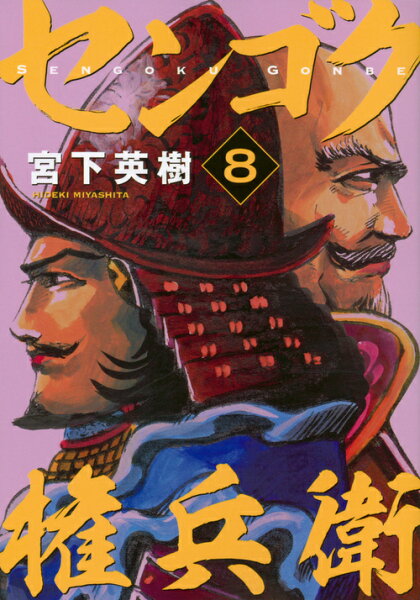
Sengoku
Sengoku follows Sengoku Gonbei, a foot soldier who rises through the ranks during Japan's Warring States period, serving under Oda Nobunaga and later Toyotomi Hideyoshi — a ground-level view of one of Japanese history's most turbulent eras.

Historical / Romance
The Prince in the Sunlight
Prince of the Dawn reimagines Prince Shotoku — one of Japan's most revered historical figures — as a powerful supernatural being with no capacity for ordinary human connection, obsessively in love with a man who cannot love him back.
Historical / Romance
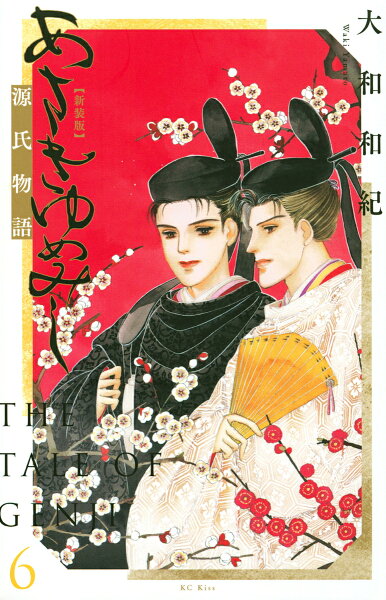
Asaki Yumemishi
A review of Waki Yamato's Asaki Yumemishi — 13 volumes in Kodansha's Mimi from 1979 to 1993. The landmark manga adaptation of The Tale of Genji, available in English from Kodansha USA in 10 digital volumes.
Historical / Drama
Hidamari no Ki
Hidamari no Ki follows two real figures from the late Edo period — one a samurai, one a doctor — as Japan's encounter with Western medicine and Western power forces both of them to decide what they believe in and what they are willing to lose.
Historical / Action
Kamui Den
Kamui Den follows Kamui, a ninja born into the lowest social caste of feudal Japan, whose pursuit of freedom through the shinobi arts becomes a lens on the systematic brutality of the Edo period class system — one of manga's great radical political works.
Historical / Action
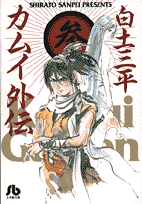
Kamui Gaiden
Kamui Gaiden follows the fugitive ninja Kamui after he abandons his clan — a man who fought for freedom and now runs to protect it, hunted by the people who want him dead and by a society that has no place for him.
Written by
Yu
Manga Enthusiast from Japan
I grew up in Japan and manga literally saved me during a tough time in elementary school. My English isn't perfect, but my love for manga is real — and I want to share it with you.