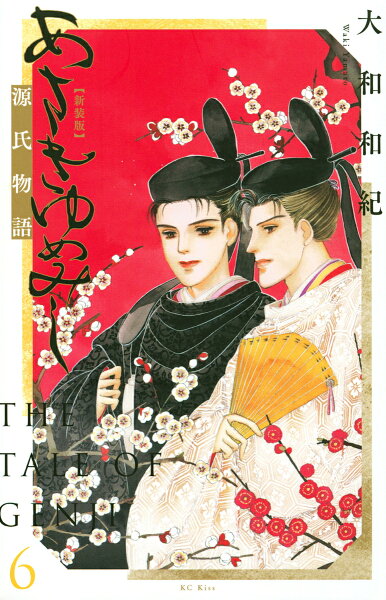
Asaki Yumemishi Review: The Tale of Genji as the Greatest Shoujo Manga Ever Drawn
by Waki Yamato
Read the first volume. If it doesn't hook you, put it down. It'll hook you.
Buy Asaki Yumemishi on Amazon →*Affiliate link — I earn a small commission at no extra cost to you.
Quick Take
- The manga adaptation of The Tale of Genji — the world's oldest novel, written in 11th-century Japan
- Waki Yamato renders Heian court life with extraordinary beauty and emotional depth
- Essential reading for anyone interested in the foundations of Japanese literature and culture
Who Is This Manga For?
- Japanese literature enthusiasts who want Genji accessible without reading the original
- Historical romance readers drawn to the elaborate world of Heian court culture
- Serious shoujo fans who appreciate the genre at its most literary and ambitious
- Anyone studying Japanese culture — Genji permeates everything; this is the source
Content Warnings & Age Rating
Age Rating: T (Teen) Content Warnings: Heian court power dynamics, relationships with significant age and power imbalances, themes of obsession, historical depictions of arranged marriage
Handled with the gravity the source material demands.
Yu's Rating
| Category | Score |
|---|---|
| Story Depth | ★★★★★ |
| Art Style | ★★★★★ |
| Character Development | ★★★★★ |
| Accessibility for Non-Japanese Readers | ★★★☆☆ |
| Reread Value | ★★★★★ |
Story Overview
The Tale of Genji, written by Murasaki Shikibu around 1000 CE, is considered the world's first novel. It follows Hikaru Genji — the radiant son of an ancient Japanese emperor, stripped of imperial status and given to the court — through a life defined by beauty, achievement, heartbreak, and the particular tragedy of a man whose gifts cannot protect him from loss.
Waki Yamato's adaptation condenses and renders the novel's fifty-four chapters into thirteen volumes of sublime visual storytelling. Genji moves through the world of Heian court life — its elaborate hierarchies, its poetry-driven romance, its political maneuvering — with a grace that is simultaneously his greatest gift and the quality that makes him destructive to those who love him.
The second half of the series — following the next generation after Genji's era ends — has the quality of great tragedy. The author does not soften what the original does not soften.
Characters
Hikaru Genji: The radiant prince at the story's center. He is brilliant, beautiful, artistically gifted, politically capable, and capable of genuine tenderness — and also capable of actions that the modern reader will find deeply troubling. Yamato renders him with this complexity intact.
Lady Murasaki: Genji's great love, raised by him from childhood into the role he desired. Her story is the series' emotional center and its most painful thread.
The supporting court: The women and men of Heian court — their poetic exchanges, their careful negotiations of status and desire — are rendered with extraordinary specificity.
Art Style
Among the most beautiful in shoujo manga. Yamato's art has the quality of classical Japanese illustration brought into the manga medium — flowing robes, layered garments, architecture and garden spaces rendered with architectural detail, characters whose expressions carry entire emotional landscapes. The dreamlike quality of the title is earned by every page.
Cultural Context
The Tale of Genji is not simply Japan's most important literary work — it is a foundation of Japanese aesthetic culture. The concepts it embodies — mono no aware (the bittersweet awareness of transience), the specific texture of Heian refinement, the relationship between beauty and grief — run through Japanese art, literature, and culture to the present day.
Reading Asaki Yumemishi is reading the origin of many things.
What I Love About It
I came to this manga not knowing how much it would matter to me.
The Tale of Genji has a reputation for difficulty — it's a long, complex, ancient text, and the cultural world it depicts requires considerable context to understand. Yamato's genius is to make this world emotionally immediate without simplifying it. The Heian court is not a fairy tale in this adaptation. It is a real place, with real power structures and real consequences, and the people in it have real inner lives.
What I love most is how Yamato handles time. Genji's world is beautiful, and the series allows you to inhabit that beauty fully. And then it shows you what time does to beauty — to people, to relationships, to the specific qualities that made Genji what he was. The second half of the series is one of the most moving things I have read about aging, loss, and the cost of a life lived in pursuit of an ideal.
Memorable Scene ⚠️ Spoiler Warning
The scene following Lady Murasaki's death — Genji alone with what he has lost, understanding at last what the cost of his way of loving was — is rendered without melodrama and all the more devastating for it. The spare beauty of the pages is the grief made visual.
Similar Manga
Pros & Cons
Pros:
- Access to the world's first novel in full visual form — 13 Japanese volumes condensed to 10 English digital volumes.
- Yamato's art is among the finest in all of shoujo manga — a visual argument for the medium.
- Complete — finite commitment, satisfying ending.
- Essential reading for anyone who wants to understand the foundations of Japanese literary and aesthetic culture.
Cons:
- The Heian cultural context benefits from some prior knowledge; the reader who has read any translation of the novel will get more.
- The digital-only English format means no physical edition from Kodansha USA.
- Some readers find the second-generation arc (the final three volumes) less compelling than the Genji volumes; the shift is deliberate and earned, but it is a different kind of story.
Is Asaki Yumemishi Worth Reading?
Yes — unconditionally. This is the landmark adaptation of the world's oldest novel, drawn by an artist working at the height of her abilities, and it is now accessible in English. There is no other manga like it.
Who Is This Manga For?
- Readers interested in Japanese literary classics who want visual access to The Tale of Genji.
- Shoujo manga readers who want the genre at its most ambitious and most beautiful.
- Historical romance readers willing to engage with Heian Japan on its own terms.
- Anyone who has read any English translation of The Tale of Genji and wants to see it rendered visually.
Official English Translation Status
Kodansha USA released Asaki Yumemishi in English as The Tale of Genji: Dreams at Dawn — 10 digital volumes published between February 2019 and February 2020. Available on Kindle and through Kodansha's digital platforms. (A separate bilingual print edition of selected volumes was published by Kodansha International in 2000–2001; the Kodansha USA digital edition is the complete modern English version.)
Where to Buy
Kodansha USA's 10-volume digital English edition is the recommended version.
Browse The Tale of Genji: Dreams at Dawn on Amazon →
This post contains affiliate links. If you purchase through these links, I may earn a small commission at no extra cost to you. As an Amazon Associate, I earn from qualifying purchases.
*Affiliate link — I earn a small commission at no extra cost to you.
More Manga You Might Like

Historical / Romance
Crest of the Royal Family
Crest of the Royal Family follows Carol Reed, an American archaeology student transported back to ancient Egypt, where she becomes entangled with the young pharaoh Memphite and the political machinations of the ancient world.
Historical / Shojo
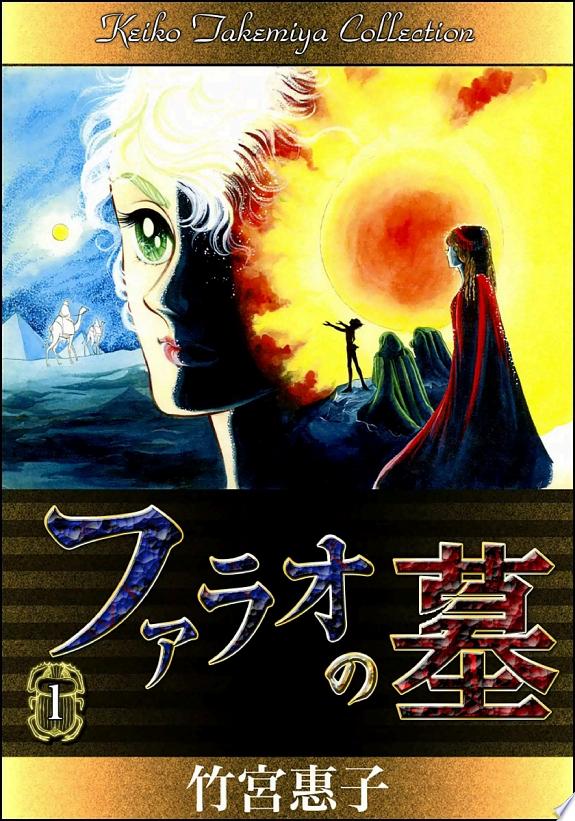
Farao no Haka
Farao no Haka follows two young people in ancient Egypt — a slave boy and the pharaoh's daughter — whose lives intertwine across years of political conflict, social barriers, and a love that the Egyptian court's rigid hierarchy is designed to prevent.

Historical / Romance
The Prince in the Sunlight
Prince of the Dawn reimagines Prince Shotoku — one of Japan's most revered historical figures — as a powerful supernatural being with no capacity for ordinary human connection, obsessively in love with a man who cannot love him back.
Historical / Drama
Hidamari no Ki
Hidamari no Ki follows two real figures from the late Edo period — one a samurai, one a doctor — as Japan's encounter with Western medicine and Western power forces both of them to decide what they believe in and what they are willing to lose.
Historical / Action
Kamui Den
Kamui Den follows Kamui, a ninja born into the lowest social caste of feudal Japan, whose pursuit of freedom through the shinobi arts becomes a lens on the systematic brutality of the Edo period class system — one of manga's great radical political works.
Historical / Action
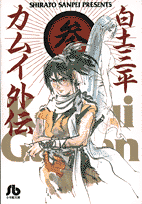
Kamui Gaiden
Kamui Gaiden follows the fugitive ninja Kamui after he abandons his clan — a man who fought for freedom and now runs to protect it, hunted by the people who want him dead and by a society that has no place for him.
Written by
Yu
Manga Enthusiast from Japan
I grew up in Japan and manga literally saved me during a tough time in elementary school. My English isn't perfect, but my love for manga is real — and I want to share it with you.
Disclosure: This post contains affiliate links. As an Amazon Associate, I earn from qualifying purchases at no extra cost to you.