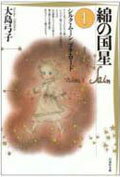
The Star of Cottonland Review: The Shojo Classic Where the Cat Believed She Was Human and the Reader Believed Her Too
by Yumiko Oshima
Read the first volume. If it doesn't hook you, put it down. It'll hook you.
Buy The Star of Cottonland on Amazon →*Affiliate link — I earn a small commission at no extra cost to you.
She wasn't a cat who thought she was a human. She was a human who happened to be a cat. There's a difference, and she knew it perfectly.
Quick Take
- Yumiko Oshima's 1978 LaLa shojo classic — Chi, a kitten who sincerely believes she is a human child in cat form
- 8 volumes, complete, one of the most beloved cat manga and one of the finest shojo manga of any era
- A work that reads differently depending on how old you are — which is the mark of something genuinely rare
Who Is This Manga For?
- Cat lovers who want cats depicted with psychological specificity rather than cute generality
- Classic shojo readers who want LaLa's peak creative period represented in full
- Readers who want fantasy handled with restraint — the fantasy is Chi's perspective, not the world's magic
- Anyone who has ever been completely certain of something that everyone around them found impossible to accept
Content Warnings & Age Rating
Age Rating: All Ages Content Warnings: Gentle fantasy, kitten perspective, occasional sadness. Nothing concerning.
Appropriate for all readers.
Yu's Rating
| Category | Score |
|---|---|
| Story Depth | ★★★★★ |
| Art Style | ★★★★★ |
| Character Development | ★★★★☆ |
| Accessibility for Non-Japanese Readers | ★★★★★ |
| Reread Value | ★★★★★ |
Story Overview
Chi is a kitten found by a young man named Hiragi. She is small, she is striped, she is unmistakably a cat. She does not know this. In Chi's understanding, she is a human child, currently in a temporary cat shape — the adult humans simply haven't explained the situation yet.
The series follows Chi's life: the home she's adopted into, the neighborhood she explores, the cats and humans she encounters, the gradual discovery of what it means to be a cat when you believe you are not one. Chi's perspective is maintained with extraordinary consistency — she interprets everything through the framework of her self-understanding, which generates both comedy and something more poignant.
Oshima's achievement is that Chi's perspective is never played purely for comedy or purely for pathos. Chi's conviction that she is human is presented with the same narrative sincerity Chi herself has. The reader simultaneously knows the truth (she's a cat) and accepts her perspective (she experiences herself as she does). Both things are true at once.
The series develops into a meditation on belonging, on what "home" means, on the question of identity when your sense of yourself and others' sense of you don't match.
Characters
Chi: A cat who is also, genuinely, the person she believes herself to be — the series' central achievement is making both of these statements true.
Hiragi: The young man who takes Chi in — his relationship with her is warm and careful, which makes it one of the better human-animal relationships in manga.
The neighborhood cats: Each has a distinct personality and relationship to Chi — the community of cats who see her clearly while she sees herself differently.
Art Style
Oshima's art is among the most distinctive in shojo manga — the style is immediately recognizable, with elongated figures, careful attention to space and silence, and a way of rendering emotional states through visual composition rather than just expression. Chi is drawn with the precise observation of someone who has watched cats carefully.
Cultural Context
The Star of Cottonland ran in LaLa from 1978 to 1987. LaLa was among the most creatively adventurous shojo magazines of the late 1970s and 1980s, and Oshima was one of its defining creators — her work pushed at the genre's conventions while remaining unmistakably shojo in its emotional register.
The series is now considered a landmark of both cat manga and shojo manga history.
What I Love About It
I love that Chi is right.
She's not deluded. She's not a cat playing at being human. She is who she is — a particular consciousness with a particular sense of herself — and the series takes that seriously. The fact that her self-perception doesn't match others' perception of her is the condition, not the joke. That is deeply human, regardless of species.
What English-Speaking Fans Say
Beloved among readers who have found it — the lack of an English translation limits its reach, but the readers who seek it out in the original or through fan translations consistently describe it as one of the finest things they've read. The art and the Chi character are the most commonly cited reasons. Often discussed alongside works like Nausicaa as examples of what shojo manga can achieve at its best.
Memorable Scene ⚠️ Spoiler Warning
A scene late in the series where Chi encounters a mirror for the first time and sees what others see when they look at her. Her response — not denial, not transformation, but a particular kind of continued self-possession — is the series' clearest statement of what it's actually about. The scene is quiet and devastating.
Similar Manga
| Title | Its Approach | How The Star of Cottonland Differs |
|---|---|---|
| Chi's Sweet Home | Cat manga from cat perspective, warm and episodic | More philosophically ambitious — Chi's identity belief gives the series a different weight |
| Aria | Slice-of-life with gentle philosophy in a fantasy setting | LaLa shojo register and cat protagonist — Cat rather than human protagonist questioning belonging |
| Natsume's Book of Friends | Fantasy with supernatural perspective on belonging | Cat's perspective rather than boy's perspective — the otherness is more fundamental |
Reading Order / Where to Start
Volume 1. The series develops Chi's world gradually and the early volumes establish the neighborhood and the relationships that the later volumes depend on.
Official English Translation Status
The Star of Cottonland has no official English translation.
Pros & Cons
Pros
- One of the finest shojo manga of any era — the acclaim is earned
- Chi's perspective is maintained with extraordinary consistency
- The art is unmistakably distinctive and beautiful
- Complete at 8 volumes — a perfect, contained experience
Cons
- No English translation
- The quiet pacing may not hold readers who want narrative events
- The series' depth is easy to miss on a first reading — it rewards patience
- The style is an acquired taste. It won't land for everyone
Is The Star of Cottonland Worth Reading?
Yes. This is a genuine classic — a manga that asks something real through the simplest possible premise and answers it with extraordinary care. The lack of an English translation is the only barrier. If you read Japanese or can access fan translations, do not miss this one.
Format Comparison
| Format | Notes |
|---|---|
| Physical | Japanese editions available |
| Digital | Available in Japanese |
| Omnibus | Complete collection available |
Where to Buy
No English release yet. That just means you find it before everyone else does.
*Affiliate link — I earn a small commission at no extra cost to you.
More Manga You Might Like
Fantasy / Magical Girl
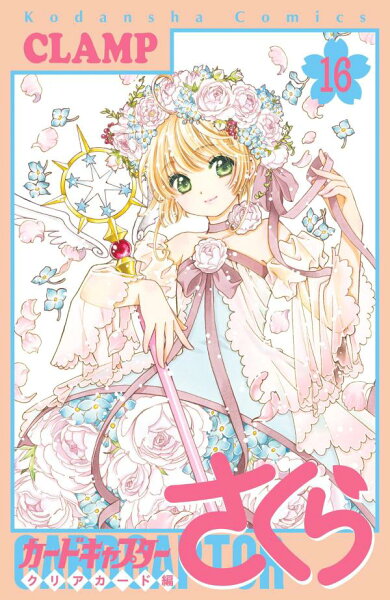
Cardcaptor Sakura
Yu's review of Cardcaptor Sakura — a ten-year-old girl accidentally releases the Clow Cards, has to capture them all, transforms them into her own, and along the way the manga quietly becomes one of CLAMP's warmest, most generous stories about love.
Fantasy / Romance
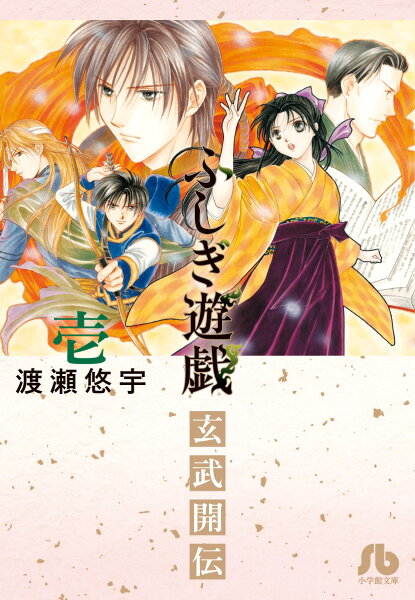
Fushigi Yugi: The Mysterious Play
Yu's review of Fushigi Yugi — a middle school girl is pulled into a historical Chinese fantasy book and becomes the Priestess of Suzaku, destined to gather seven celestial warriors and summon a god.
Fantasy
Unico
Unico is a small unicorn with the power to make anyone who meets him happy — which is why the gods condemn him to be carried across time by the West Wind, stripped of all memories and relationships, forbidden to stay anywhere long enough to be loved.

Sci-Fi / Mystery
11 Robots
11 Robots follows a group of ten students who enter the final examination of a prestigious space academy — only to find that they are eleven when they should be ten, and that one of them may be there to make sure none of them pass.
Fantasy / Action
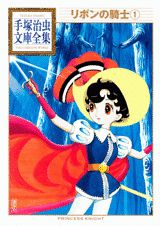
Princess Knight
Tezuka's foundational work that gave shojo manga its template — a princess raised as a prince, fighting for her kingdom and her heart.
Fantasy / Shoujo
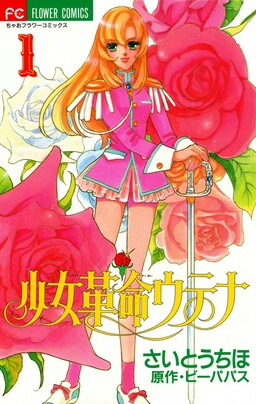
Revolutionary Girl Utena
Yu's review of Revolutionary Girl Utena — Utena Tenjou, who decided as a child to become a prince rather than a princess, attends Ohtori Academy and becomes drawn into its secret dueling system; the winner of the duels wins possession of Anthy Himemiya, the Rose Bride; a surrealist fairy tale manga about power, freedom, and who gets to be the subject of a story.
Written by
Yu
Manga Enthusiast from Japan
I grew up in Japan and manga literally saved me during a tough time in elementary school. My English isn't perfect, but my love for manga is real — and I want to share it with you.