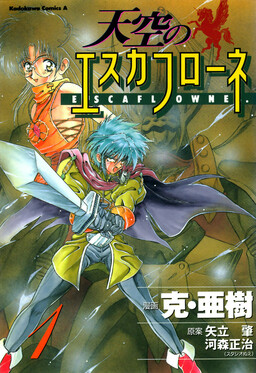
The Vision of Escaflowne Review: A Girl From Earth Falls Into a World of Giant Armored Dragons and Prophecy
by Katsu Aki
Read the first volume. If it doesn't hook you, put it down. It'll hook you.
Buy The Vision of Escaflowne on Amazon →*Affiliate link — I earn a small commission at no extra cost to you.
Quick Take
- The manga adaptation of the beloved 1996 Sunrise anime — significantly different from the anime in plot and character emphasis, with more focus on the romance between Hitomi and Van and less on the war/political content
- An isekai before isekai was a genre term, with a female protagonist from Earth transported to a fantasy world; the mecha-dragon armor concept (Escaflowne) is one of anime/manga's distinctive visual ideas
- 8 volumes complete; best approached knowing it differs from the anime adaptation
Who Is This Manga For?
- Fans of the Escaflowne anime who want the alternate take on the story
- Readers who enjoy fantasy romance with unique world-building (the double-moon world of Gaea)
- Anyone interested in isekai manga from the early era of the genre's development
- Readers who want complete fantasy manga in a shorter length
Content Warnings & Age Rating
Age Rating: T+ (Older Teen) Content Warnings: Fantasy violence and war themes; romance content; mild fanservice; the manga includes content different from the all-ages anime adaptation
The T+ rating is appropriate for the manga specifically.
Yu's Rating
| Category | Score |
|---|---|
| Story Depth | ★★★☆☆ |
| Art Style | ★★★★☆ |
| Character Development | ★★★☆☆ |
| Accessibility for Non-Japanese Readers | ★★★★☆ |
| Reread Value | ★★★☆☆ |
Story Overview
Hitomi Kanzaki is a high school girl with fortune-telling abilities who is transported to Gaea — a world where Earth's moon is visible alongside another moon, where kingdoms fight for control using giant armored mechs called Guymelefs, and where a prophecy centers on a girl from Earth.
She becomes connected to Van Fanel, the young king of Fanelia, whose kingdom possesses the legendary Escaflowne — a Guymelef powered by Van's own life force that is both the most powerful weapon in Gaea and the most dangerous one to use.
The series follows Hitomi and Van across the war between nations, the pursuit by the Zaibach Empire, and the developing relationship that the prophecy seems to demand.
Characters
Hitomi Kanzaki — Her fortune-telling ability creates the series' connection to fate and prophecy. The manga's Hitomi is more romantic-focus than the anime's version, which changes how the fantasy elements read.
Van Fanel — The young king whose connection to Escaflowne and to Hitomi drives the plot. The manga Van is more consistently devoted than the anime version.
Art Style
Katsu Aki's art is detailed shounen-adjacent fantasy with strong mech design sensibility — Escaflowne's visual design translates well to manga, and the battle sequences communicate scale effectively. Character designs follow the anime closely enough to be immediately recognizable.
Cultural Context
Escaflowne was a landmark 1996 anime that combined mecha and fantasy in ways that hadn't been done before, aiming specifically at female audiences with a fantasy romance framework. The manga adaptation was published simultaneously with the anime and diverges significantly — it is not an adaptation but a parallel interpretation of the same premise.
What I Love About It
Escaflowne as a concept — armor that is simultaneously a machine and a living thing powered by its pilot's life — is one of fantasy's more interesting mechanical ideas. The manga doesn't develop it as thoroughly as the anime but preserves the visual concept and its implications for what Van risks when he fights.
What English-Speaking Fans Say
Western readers who come to the manga from the anime consistently note the differences — more romance-heavy, different plot developments, different character emphases. Both versions are appreciated as different interpretations. Readers who haven't seen the anime find the manga a self-contained fantasy romance.
Memorable Scene ⚠️ Spoiler Warning
The activation of Escaflowne in battle — when Van accepts the cost of using it fully — is the series' most visually and emotionally complete moment. It makes the machine's nature and the pilot's sacrifice concrete in a way that the rest of the series has been building toward.
Similar Manga
- Magic Knight Rayearth — Girls transported to fantasy world, similar era
- Fushigi Yugi — Female protagonist in historical fantasy world, similar romance weight
- Berserk — Dark fantasy mecha-adjacent, very different tone
- Record of Lodoss War — Classic fantasy with similar visual aesthetics
Reading Order / Where to Start
Volume 1 — The series establishes its world and characters immediately. Best approached as its own interpretation rather than as a faithful anime adaptation.
Official English Translation Status
Tokyopop published all 8 volumes. Complete; older publication, available in secondary market.
Pros & Cons
Pros
- Unique fantasy world design
- Escaflowne's visual concept is distinctive and well-executed
- Complete 8-volume run
- Romance focus may appeal to readers who found the anime too action-heavy
Cons
- Significantly different from the anime — both better and worse in different areas
- Older publication; physical copies require secondary market
- Shorter than the story benefits from
Format Comparison
| Format | Notes |
|---|---|
| Individual Volumes | Tokyopop; complete, secondary market |
| Digital | Available |
Where to Buy
Read the first volume. If it doesn't hook you, put it down. It'll hook you.
This post contains affiliate links. If you purchase through these links, I may earn a small commission at no extra cost to you. As an Amazon Associate, I earn from qualifying purchases.
*Affiliate link — I earn a small commission at no extra cost to you.
More Manga You Might Like
Fantasy / Shoujo
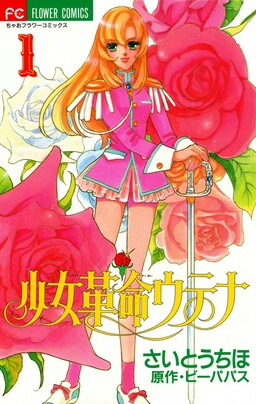
Revolutionary Girl Utena
Yu's review of Revolutionary Girl Utena — Utena Tenjou, who decided as a child to become a prince rather than a princess, attends Ohtori Academy and becomes drawn into its secret dueling system; the winner of the duels wins possession of Anthy Himemiya, the Rose Bride; a surrealist fairy tale manga about power, freedom, and who gets to be the subject of a story.
Fantasy
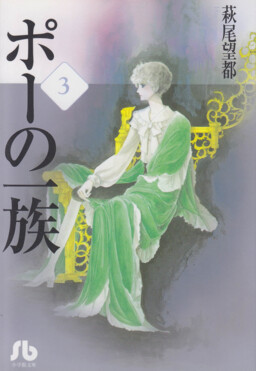
Poe Clan
Yu's review of Poe Clan — Edgar is a vampire child, eternally young, moving through European history across several centuries; his vampire existence means watching everyone he cares for age and die while he remains unchanged; Moto Hagio's foundational vampire manga, originally published in 1972.

Fantasy
Spice and Wolf (Manga)
Yu's review of the Spice and Wolf manga — traveling merchant Kraft Lawrence finds Holo the Wise Wolf hidden in his cart; she is a wolf deity who was the harvest god of a village for centuries; she wants to go north to her homeland; Koume's adaptation of Hasekura's beloved light novel about economics, religion, and two people who are good at pretending they don't need each other.

Romance / Fantasy
Maou no Ore ga Dorei Elf wo Yome ni Shitanda ga, Dou Medatte mo Rabukome ni Natteshimau
Yu's review of Maou no Ore ga Dorei Elf — the Demon Lord Zagan acquires the elf Nephy through a slave auction not because he wants a slave but because he cannot stand to watch someone beautiful be mistreated; the series is genuinely a love comedy about two socially incompetent people figuring out their feelings across 9 volumes.

Romance / Fantasy
Fushigi Yugi
A review of Fushigi Yugi, the classic isekai romance manga about a girl transported to ancient China who becomes the Priestess of Suzaku.

Fantasy / Romance
Esper Mami
Esper Mami follows Mami Sakura, a middle school girl who develops psychic powers — telekinesis, ESP, teleportation — and uses them not to become a hero or save the world but to navigate daily life, help her artist father, and exist in the complicated territory of early romance.
Written by
Yu
Manga Enthusiast from Japan
I grew up in Japan and manga literally saved me during a tough time in elementary school. My English isn't perfect, but my love for manga is real — and I want to share it with you.
Disclosure: This post contains affiliate links. As an Amazon Associate, I earn from qualifying purchases at no extra cost to you.