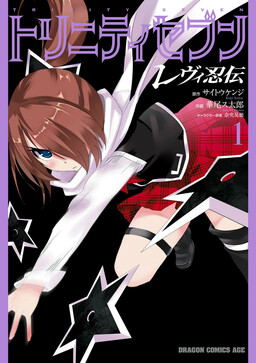
Trinity Seven Review: Seven Magical Girls and One Boy at the Academy That Teaches the World's Most Dangerous Magic
by Kenji Saito (Story) / Akinari Nao (Art)
Read the first volume. If it doesn't hook you, put it down. It'll hook you.
Buy Trinity Seven on Amazon →*Affiliate link — I earn a small commission at no extra cost to you.
Quick Take
- The magic school fantasy that takes its magic system seriously — the seven sins-based Archive system has specific rules and tactical applications that the series develops with genuine interest
- Arata's character is unusual for this genre: he is cheerful and direct about his feelings in a way that makes the harem dynamic less uncomfortable than similar series
- Ongoing; one of the most consistently developed magic system manga in the harem fantasy genre
Who Is This Manga For?
- Readers who want magic school fantasy with a detailed magic system and tactical combat
- Anyone interested in the seven sins as a structural framework for magical classification
- Fans of harem fantasy manga where the male protagonist is actually likable
- Readers comfortable with ongoing series in the magic school genre
Content Warnings & Age Rating
Age Rating: T+ (Older Teen) Content Warnings: Fan service including clothing damage in magical combat; harem dynamics; magic violence with world-scale stakes
The T+ rating is accurate.
Yu's Rating
| Category | Score |
|---|---|
| Story Depth | ★★★★☆ |
| Art Style | ★★★★☆ |
| Character Development | ★★★★☆ |
| Accessibility for Non-Japanese Readers | ★★★★☆ |
| Reread Value | ★★★☆☆ |
Story Overview
The Breakdown Phenomenon — a catastrophic magical event that destroys reality in a localized area — erased Arata Kasuga's town and took his cousin Hijiri. Arata survived because he instinctively activated a magical grimoire that maintained a fictional version of the town around him, allowing him to live inside a lie for some time.
At Royal Biblia Academy, he encounters the Trinity Seven — seven female mages who represent and study the seven sins of the magical Archive system: Pride, Envy, Wrath, Sloth, Greed, Gluttony, and Lust. His own magic, the Archive of Acedia (Sloth), works differently from conventional Archives — it observes and learns rather than depletes and recovers.
The series follows Arata's training at the Academy alongside the larger investigation of Breakdown Phenomena and what took Hijiri.
Characters
Arata Kasuga — His specific quality is an honesty about his feelings that the genre typically avoids. He tells the Trinity Seven what he thinks of them directly, including his attraction, which produces different dynamics than the typical harem obliviousness. His actual goal — finding Hijiri — provides motivation beyond the Academy setting.
The Trinity Seven — Each of the seven has a distinct personality anchored to her sin category, and each develops beyond the archetype as the series progresses. Lilith, who manages Arata's induction, is the most developed of the seven and functions as the series' primary relationship.
Art Style
Nao's art handles both the magic combat and the fan service sequences with consistent skill. The magical Archive visualizations are distinctive and the character designs are immediately recognizable across a large cast.
Cultural Context
Trinity Seven uses the seven deadly sins as a structural system for magic classification — an unusual choice that draws on Western theological tradition through a Japanese fantasy framework. The series adapts this with its own internal logic rather than strict theological correspondence.
What I Love About It
The magic combat sequences where Arata's observation-based Archive learns something from an opponent's technique and immediately applies it — the specific tactical advantage of an Archive that grows through encounter — are the series' most satisfying content.
What English-Speaking Fans Say
Western readers describe Trinity Seven as the harem fantasy manga they recommend to people who have given up on the genre — Arata's directness and the magic system's genuine development distinguish it from similar series. The Trinity Seven's individual characterization is consistently cited as the series' primary strength.
Memorable Scene ⚠️ Spoiler Warning
The revelation of what Arata's Archive actually is — the nature of Acedia as the sin of not acting, and what this means for a magic that observes and learns — reframes the series' power system in ways that make subsequent combat sequences more interesting.
Similar Manga
- The Irregular at Magic High School — Magic school with detailed magic system, different tone
- Fairy Tail — Magic guild, ensemble cast, lighter tone
- Mahou Sensei Negima — Magic school harem, similar genre approach
- Wise Man's Grandchild — Magic in an isekai context, similar protagonist directness
Reading Order / Where to Start
Volume 1 — Arata's enrollment and his first encounters with the Trinity Seven.
Official English Translation Status
Yen Press publishes the English edition. Ongoing; check current volume count.
Pros & Cons
Pros
- The seven sins magic system is genuinely developed
- Arata's directness makes the harem dynamic more comfortable than typical
- The Trinity Seven are individually characterized
- Consistent quality across its run
Cons
- Ongoing — no complete ending
- The T+ fan service content
- The harem premise is what it is
Format Comparison
| Format | Notes |
|---|---|
| Individual Volumes | Yen Press; ongoing |
| Digital | Available |
Where to Buy
Read the first volume. If it doesn't hook you, put it down. It'll hook you.
This post contains affiliate links. If you purchase through these links, I may earn a small commission at no extra cost to you. As an Amazon Associate, I earn from qualifying purchases.
*Affiliate link — I earn a small commission at no extra cost to you.
More Manga You Might Like
Fantasy / Action
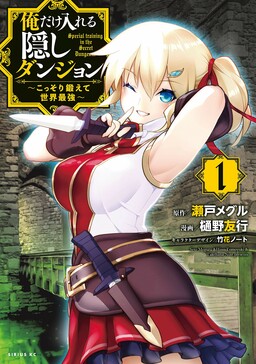
The Hidden Dungeon Only I Can Enter
Yu's review of The Hidden Dungeon Only I Can Enter — Noir discovers a hidden dungeon accessible only to him; inside he finds a Great Sage who grants him the ability to create, edit, and bestow skills; but using these powers costs him Life Points, which can only be restored by experiencing pleasure.
Fantasy / Isekai
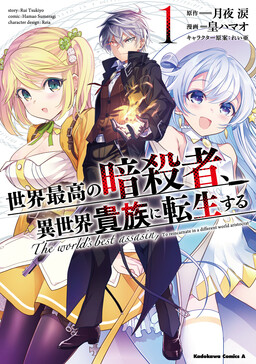
The World's Finest Assassin Gets Reincarnated in Another World as an Aristocrat
Yu's review of The World's Finest Assassin Gets Reincarnated — the world's greatest assassin is betrayed and killed by his organization; given a second chance by a goddess, he reincarnates as Lugh Tuatha Dé, a young nobleman in a fantasy world; he is assigned to assassinate the Hero who will destroy the world; he applies his assassin skills to this new life.

Fantasy / Action
The Wrong Way to Use Healing Magic
Yu's review of The Wrong Way to Use Healing Magic — Usato is accidentally summoned to another world along with two heroes; the kingdom's healer Rose assigns herself to train him personally, using methods that include physical conditioning so extreme it would hospitalize a normal person.
Fantasy / Action
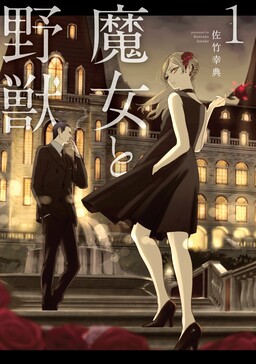
The Witch and the Beast
Yu's review of The Witch and the Beast — Guideau is a woman cursed into the body of a beast; she travels with Phanora, a man who carries a coffin, hunting the witch responsible; witches in this world are immensely powerful and largely above human law; the series follows their encounters with witches and the magic system that makes each encounter unique.
Fantasy / Action
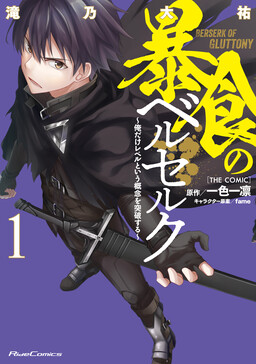
Berserk of Gluttony
Yu's review of Berserk of Gluttony — Fate Graphite is born with the Gluttony skill, mocked as useless because it only does anything when he kills something. He works a humiliating gatekeeper job until the night he finally kills, and learns that Gluttony devours the souls and abilities of whatever it takes. The catch: once awakened, the skill is always hungry, and starvation turns him into something that eats everyone around him.

Fantasy
Rewrite
Yu's review of the Rewrite manga — Kotarou Tennouji can rewrite his body's capabilities but each use consumes his lifespan; in Kazamatsuri, a city committed to coexisting with nature, he encounters supernatural organizations with opposing views on humanity's future; manga adaptation of Key's most action-focused visual novel.
Written by
Yu
Manga Enthusiast from Japan
I grew up in Japan and manga literally saved me during a tough time in elementary school. My English isn't perfect, but my love for manga is real — and I want to share it with you.
Disclosure: This post contains affiliate links. As an Amazon Associate, I earn from qualifying purchases at no extra cost to you.