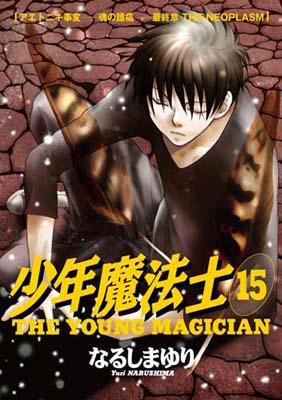
The Young Magician Review: A Boy With Extraordinary Power and No Understanding of What It Will Cost Him
by Narumi Kakinouchi
Read the first volume. If it doesn't hook you, put it down. It'll hook you.
Buy The Young Magician on Amazon →*Affiliate link — I earn a small commission at no extra cost to you.
He has the power. He doesn't have the understanding of what power like that means. That gap is the story.
Quick Take
- A ten-volume fantasy manga about a boy whose exceptional magical ability draws him into conflicts and responsibilities he grows into across the series
- Kakinouchi (Vampire Princess Miyu) brings distinctive visual sensibility and atmospheric fantasy craft
- For readers who want classic fantasy manga with an artist whose work has its own visual signature
Who Is This Manga For?
- Fans of Narumi Kakinouchi (Vampire Princess Miyu) who want her complete long-form fantasy work
- Readers who enjoy magical-power coming-of-age stories in fantasy settings
- People interested in classic 1990s-2000s shojo-adjacent fantasy manga
- Anyone who wants a complete ten-volume fantasy series
Content Warnings & Age Rating
Age Rating: T (Teen) Content Warnings: Fantasy combat, supernatural power themes, magical conflict
Age-appropriate throughout.
Yu's Rating
| Category | Score |
|---|---|
| Story Depth | ★★★☆☆ |
| Art Style | ★★★★☆ |
| Character Development | ★★★☆☆ |
| Accessibility for Non-Japanese Readers | ★★★☆☆ |
| Reread Value | ★★★☆☆ |
Story Overview
Carlo is a young boy who discovers — or rather, it becomes impossible to ignore — that he has magical ability well beyond what anyone around him possesses. This discovery brings him into contact with the broader world of sorcerers: people with power who have been managing that power within a structured (and conflicted) magical society.
The ten volumes follow Carlo as he moves through that world: learning what his power is, what its origins might mean, and what the people who want to use it are willing to do to get access. Kakinouchi structures the series as a coming-of-age within a magical society — Carlo's development from someone reacting to events toward someone with enough understanding to make real choices is the central arc.
The world-building draws on European fantasy tradition — the visual and thematic language is more medieval European magic than Japanese supernatural, which distinguishes it from much of Kakinouchi's other work.
Characters
Carlo — A protagonist whose power is established quickly and whose development is about understanding rather than accumulation. His growth is measured in comprehension rather than just additional ability.
Supporting cast — The sorcerers Carlo encounters each represent a different relationship to power: wielding it, fearing it, seeking it, hoarding it. The ensemble serves as a map of what power in this world does to people.
Art Style
Kakinouchi's art is atmospheric and stylized — distinctive in the way that Vampire Princess Miyu is distinctive. Character designs are elegant, the fantasy environments have visual specificity, and the magic sequences are drawn with visual imagination. The art is the series' strongest element and the main reason to seek it out.
Cultural Context
Narumi Kakinouchi is known primarily for Vampire Princess Miyu, one of the iconic dark fantasy manga of the 1980s-90s. The Young Magician represents her engagement with a different fantasy tradition — more overtly magical, less horror-inflected, with a male protagonist rather than her more typical atmospheric female leads.
ADV Manga's publication of The Young Magician made it available to English readers during ADV's active manga publishing period.
What I Love About It
The visual design of the magic system — the way Kakinouchi draws spells and power as visual events with their own distinctive look. Each magic user has a visual signature that communicates their character and power type simultaneously. This is the craft of a visual artist who understands that magic in manga has to look like something.
What English-Speaking Fans Say
A cult series among Kakinouchi fans — readers who found it through Vampire Princess Miyu and sought out her other work. The art is universally praised. ADV Manga's publication meant it reached an English audience, but ADV's exit from publishing means the series is less widely remembered than it deserves. Availability has become an issue.
Memorable Scene ⚠️ Spoiler Warning
The chapter where Carlo faces the full implication of what his power's origin means — not just what he can do, but what the existence of that power implies about who put it there and why — is the revelation that gives the ten volumes their weight.
Similar Manga
| Title | Its Approach | How The Young Magician Differs |
|---|---|---|
| Vampire Princess Miyu | Same artist; atmospheric supernatural | Miyu is horror-focused; The Young Magician is more classical fantasy |
| Magic Knight Rayearth | Girl protagonists in magical world | Rayearth is more team-focused and comedic; Young Magician is more solitary and dramatic |
| Fullmetal Alchemist | Magical system, coming-of-age, consequences | FMA is much longer and more complex; Young Magician is more classical fantasy register |
Reading Order / Where to Start
Volume 1, straight through.
Official English Translation Status
ADV Manga published the complete series in English. ADV's closure means availability varies.
Pros & Cons
Pros
- Kakinouchi's art is distinctive and atmospheric
- Complete ten-volume story
- The European fantasy setting is unusual in the shojo-adjacent landscape
- The magic system has visual specificity
Cons
- ADV Manga's closure makes finding volumes difficult
- The world-building requires patience to develop fully
- Character depth outside Carlo is limited in the shorter arcs
- Less accessible without familiarity with 1990s shojo fantasy conventions
Is The Young Magician Worth Reading?
For Kakinouchi fans and classic fantasy manga readers — yes. The art alone justifies the search.
Format Comparison
| Format | Pros | Cons |
|---|---|---|
| Physical | Complete 10-volume set | ADV closure; availability difficult |
| Digital | More accessible if available | Limited digital availability |
| Omnibus | No omnibus available | — |
Where to Buy
Read the first volume. If it doesn't hook you, put it down. It'll hook you.
This post contains affiliate links. If you purchase through these links, I may earn a small commission at no extra cost to you. As an Amazon Associate, I earn from qualifying purchases.
*Affiliate link — I earn a small commission at no extra cost to you.
More Manga You Might Like

Fantasy / Action
Shakugan no Shana
Yuji Sakai discovers he is already dead — a 'Torch,' a fading remnant kept briefly burning by a Flame Haze named Shana who hunts the supernatural beings consuming human existence. He should disappear. He refuses to.
Fantasy / Action
The Witch and the Beast
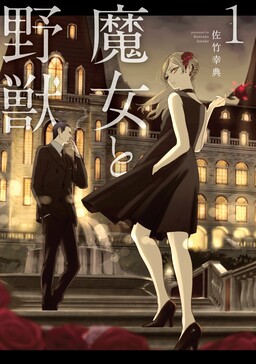
Yu's review of The Witch and the Beast — Guideau is a woman cursed into the body of a beast; she travels with Phanora, a man who carries a coffin, hunting the witch responsible; witches in this world are immensely powerful and largely above human law; the series follows their encounters with witches and the magic system that makes each encounter unique.
Fantasy / Action
Trinity Seven
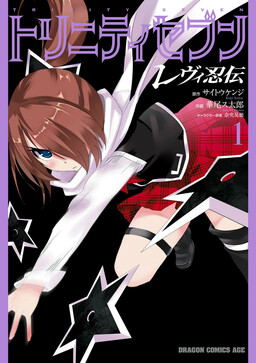
Yu's review of Trinity Seven — Arata Kasuga's town is destroyed by a Breakdown Phenomenon, his cousin Hijiri disappears, and he ends up at Royal Biblia Academy, a school that trains mages in the seven sins-based magic system; he meets the seven most powerful female mages at the academy and his inherited Archive magic, which works differently from conventional magic, makes him both their problem and their potential key.
Fantasy
A Returner's Magic Should Be Special
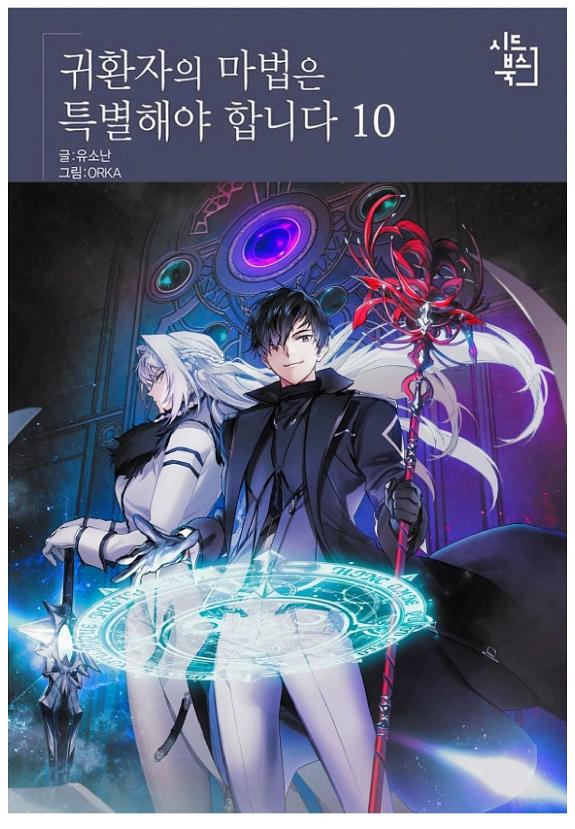
A review of A Returner's Magic Should Be Special — the Korean manhwa about Desir Herrman, the sole survivor of a deadly Shadow World dungeon who wakes up 13 years in the past, and uses his foreknowledge of who will die to try to change everything.
Fantasy / Adventure
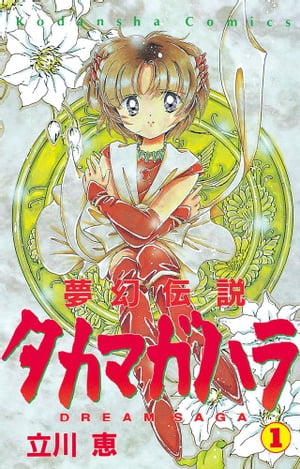
Dream Saga
A review of Dream Saga — Megumi Tachikawa's five-volume fantasy manga about an ordinary girl who discovers she can travel to Takamagahara, the realm of Japanese gods, by sleeping with a special acorn.
Fantasy / Romance
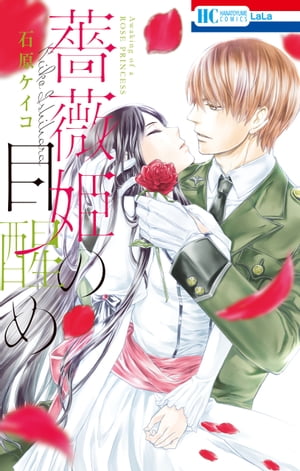
Kiss of the Rose Princess
A review of Kiss of the Rose Princess — Aya Shouoto's nine-volume shojo fantasy about Anise Yamamoto, who receives four magical knight cards and must kiss each knight to summon their power to fight supernatural threats.
Written by
Yu
Manga Enthusiast from Japan
I grew up in Japan and manga literally saved me during a tough time in elementary school. My English isn't perfect, but my love for manga is real — and I want to share it with you.
Disclosure: This post contains affiliate links. As an Amazon Associate, I earn from qualifying purchases at no extra cost to you.