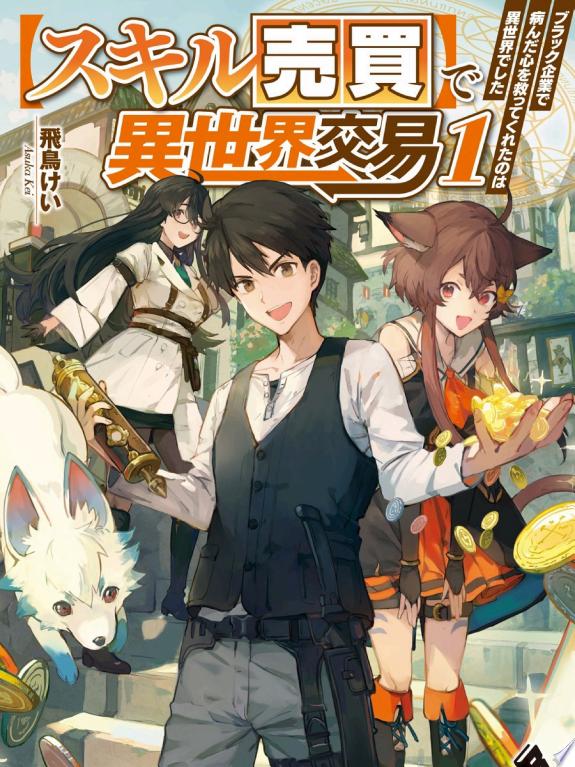
The Dungeon of Black Company Review: Corporate Hell, But Underground
by Youhei Yasumura
Read the first volume. If it doesn't hook you, put it down. It'll hook you.
Buy The Dungeon of Black Company on Amazon →*Affiliate link — I earn a small commission at no extra cost to you.
Kinji Ninomiya used financial schemes to build a life of comfortable leisure without ever doing actual work. Then he gets transported to a fantasy world — not as a chosen hero, not as someone with special powers, but as a new employee of a dungeon mining company, working brutal hours for terrible pay.
I'm Yu. The Dungeon of Black Company is the rare isekai where the protagonist deserves his misfortune — and it is funnier for it.
Quick Take
- Youhei Yasumura's The Dungeon of Black Company (異世界ブラック企業) ran in Comic Newtype — collected in 14 volumes, complete.
- Seven Seas Entertainment published the complete 14-volume English edition.
- Rated T (Teen) — labor exploitation satire; cartoon dungeon violence; no heavy content.
Story Overview
Kinji Ninomiya arrives in a fantasy world to find himself immediately processed as a worker for the Rim Dark Company — a dungeon mining operation that extracts resources using labor that includes monsters, demi-humans, and, now, one unwilling human schemer.
His goal: escape the corporate dungeon hell. His method: exploit every system loophole, outmaneuver management, and apply his real-world knowledge of financial schemes and corporate manipulation to a context where nobody has seen these tactics before.
The series draws directly on Japan's "black company" (ブラック企業) phenomenon — workplaces notorious for overwork, exploitation, and psychological pressure — and translates that satire into fantasy comedy. Kinji is not a hero trying to save the world. He is a schemer trying to avoid work. The distinction generates fourteen volumes of escalating consequences.
Characters
Kinji Ninomiya — A protagonist whose consistent selfishness is the series' running premise and, eventually, its most surprising element. He does not suddenly become a good person. He becomes more capable, more connected, sometimes more empathetic — but he remains a schemer whose primary motivation is his own comfort. The moments where the satire sharpens into something genuinely critical of labor exploitation are when the series is at its best.
Rim (the demi-human girl) — Kinji's reluctant ally whose competence and integrity contrast with his scheming in ways that generate both comedy and genuine warmth.
Wanibe — Kinji's fellow laborer whose cheerful acceptance of terrible working conditions is one of the series' sharpest satirical observations.
What I Love About It
Kinji doesn't suddenly become a good person. This is unusual. Most isekai protagonists who start morally compromised undergo a redemption arc that softens everything about them. Kinji remains himself — ambitious, self-interested, fundamentally opposed to doing honest work — while still finding himself genuinely caring about the people around him. The growth is real; the character doesn't become someone else.
The satire of Japanese labor culture is genuinely sharp. The fantasy trappings don't soften the observation that systems designed to extract maximum effort from workers while providing minimum benefit exist everywhere, including worlds with magic.
Memorable Scene ⚠️ Spoiler Warning
The first time Kinji uses a genuinely illegal labor practice counter-strategy — the exact moment when his knowledge of real-world exploitation becomes the tool for fighting back against fantasy-world exploitation — is the series' most satisfying conceptual payoff. It is also the moment when the series reveals it has been building toward something more substantive than pure comedy.
Pros & Cons
Pros:
- Sharp satire of labor exploitation that lands because the fantasy framing doesn't defang it.
- Kinji's consistent selfishness is more interesting than instant heroism.
- Complete at 14 volumes — satisfying start to finish.
- Comedy is consistently energetic.
Cons:
- Kinji's selfishness can make him grating before the series earns the warmth underneath it.
- Comedy can feel repetitive in middle volumes.
- Art is functional but not particularly distinctive.
Is The Dungeon of Black Company Worth Reading?
Yes — particularly for readers who are tired of overpowered isekai protagonists and want something where the scheming is the whole point. Fourteen volumes of complete, resolved satire comedy.
Who Is This Manga For?
- Isekai readers who want an antihero protagonist who earns his eventual warmth rather than starting warm.
- Readers who enjoy workplace satire applied to genre fiction.
- Anyone who wants complete isekai comedy with genuine satirical bite.
- Fans of KonoSuba who want similar energy in a dungeon labor setting.
Official English Translation Status
Seven Seas Entertainment published all 14 volumes in English. Complete and available in print and digital.
Where to Buy
Seven Seas Entertainment's complete 14-volume English edition.
Browse The Dungeon of Black Company on Amazon →
This post contains affiliate links. If you purchase through these links, I may earn a small commission at no extra cost to you. As an Amazon Associate, I earn from qualifying purchases.
*Affiliate link — I earn a small commission at no extra cost to you.
More Manga You Might Like
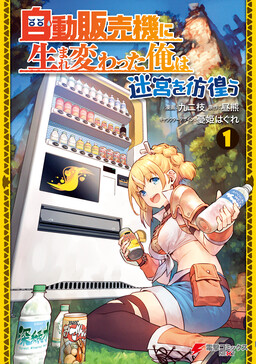
Fantasy / Isekai
Reborn as a Vending Machine, I Now Wander the Dungeon
Yu's review of Reborn as a Vending Machine, I Now Wander the Dungeon — a vending machine enthusiast who dies in a vending machine accident is reborn as an actual vending machine in a dungeon-layered fantasy world; unable to speak except through vending machine phrases, he must survive, help those who find him, and slowly build a new life from the most absurd starting position in isekai fiction.
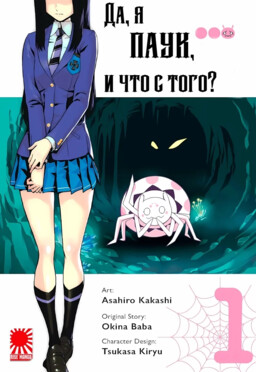
Fantasy / Isekai
So I'm a Spider, So What?
Yu's review of So I'm a Spider, So What? — the unnamed protagonist reincarnates as the weakest possible monster in a dangerous dungeon; she survives through strategy, obsessive skill development, and a determination to stay alive through whatever the dungeon throws at her.

Fantasy / Comedy
Do You Love Your Mom and Her Two-Hit Multi-Target Attacks?
Yu's review of Do You Love Your Mom and Her Two-Hit Multi-Target Attacks? — Masato Oosuki is transported into a government MMORPG test with his mother Mamako; Mamako is the most powerful person in the game and is also embarrassingly devoted to her son; the comedy of a teenage boy trying to become a hero while his overpowered mother solves everything first.
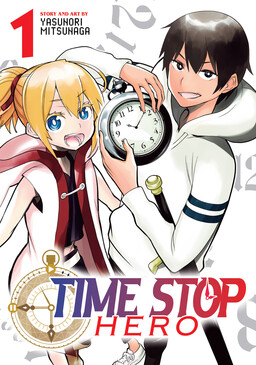
Fantasy / Comedy
Time Stop Hero
Yu's review of Time Stop Hero — Sekai Kamino is summoned to another world and finds a watch that can stop time; rather than using it heroically, he uses it to look at things he shouldn't and avoid danger while pretending to be braver than he is; the comedy comes from his cowardly-but-oddly-effective approach and what the time-stop reveals about the world.
Fantasy / Comedy
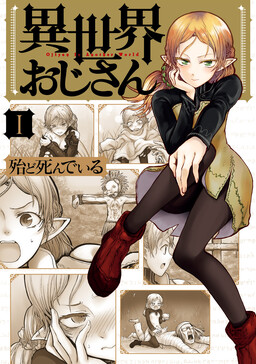
Uncle from Another World
Yu's review of Uncle from Another World — Takafumi's uncle Yosuke wakes from a 17-year coma having been an isekai hero in another world; Takafumi discovers his uncle has magical powers but also deeply embarrassing stories about how he was treated in the other world.

Fantasy / Comedy
KonoSuba: God's Blessing on This Wonderful World!
Yu's review of KonoSuba — the isekai parody where every party member is disastrously incompetent at something crucial. A useless goddess, an explosion-obsessed mage, a masochistic crusader, and a pathetic protagonist who somehow keeps surviving. The funniest isekai ever made.
Written by
Yu
Manga Enthusiast from Japan
I grew up in Japan and manga literally saved me during a tough time in elementary school. My English isn't perfect, but my love for manga is real — and I want to share it with you.
Disclosure: This post contains affiliate links. As an Amazon Associate, I earn from qualifying purchases at no extra cost to you.