
The 8th Son? Are You Kidding Me? Review: Isekai About Being the Least Important Person in a Noble Family
by Okumoto Hiroki (art), Y.A (story)
Read the first volume. If it doesn't hook you, put it down. It'll hook you.
Buy The 8th Son? Are You Kidding Me? on Amazon →*Affiliate link — I earn a small commission at no extra cost to you.
Reincarnated into nobility sounds like the isekai dream, until you're the eighth son in a minor noble family with no inheritance and six older brothers who already claimed everything.
Quick Take
- An isekai with an unusually specific premise: being the lowest-status member of an already-minor noble family
- The protagonist's overpowered magic is balanced against genuine social obstacles
- 14 complete volumes in English — a full story with a satisfying resolution
Who Is This Manga For?
- Isekai fans who enjoy the social-climbing aspect of noble reincarnation stories
- Readers who like seeing a protagonist navigate bureaucratic and social obstacles alongside combat
- People who want a complete isekai story without ongoing publication uncertainty
- Anyone who enjoys light harem elements in their fantasy
Content Warnings & Age Rating
Age Rating: T (Teen) Content Warnings: Fantasy violence, harem elements, mild fan service
Standard light novel adaptation content. Nothing graphic.
Yu's Rating
| Category | Score |
|---|---|
| Story Depth | ★★★☆☆ |
| Art Style | ★★★★☆ |
| Character Development | ★★★☆☆ |
| Accessibility for Non-Japanese Readers | ★★★★☆ |
| Reread Value | ★★★☆☆ |
Story Overview
Shingo Ichinomiya is a regular salaryman who wakes up reincarnated as Wendelin von Benno Baumeister — the eighth son of a poor, backwater noble family in a typical fantasy world. As the eighth son, he has no inheritance, no prospects, and no particular reason for anyone to care about his existence.
Then he discovers he has exceptional magical talent. Exceptionally exceptional. The kind of talent that hasn't appeared in centuries.
This creates both opportunity and complication. Wendelin has to navigate a noble society that wasn't expecting someone of his low status to have this kind of power — learning the rules of advancement, finding patrons, completing commissions that establish his reputation, and avoiding the political landmines that come with being unexpectedly powerful in a world built around blood and birth.
The series follows his progress from ignored youngest son to an independent noble with his own domain — achieved through a combination of combat ability, magical utility, and the carefully managed relationships his common-sense salaryman background helps him build.
Characters
Wendelin — The protagonist's salaryman pragmatism is more useful than fighting ability for much of the story. He approaches noble society as a system to navigate rather than a world to transform, which produces a more patient and less overtly heroic protagonist than typical isekai.
Elise, Luise, Ina, Wilma — The harem members, each with their own personality and reason for attachment to Wendelin. The harem is handled relatively tastefully for the genre.
Art Style
Okumoto's art is clean and competent light novel adaptation work. Character designs are attractive and distinctive. Action sequences are dynamic; the magical effects are drawn with visual imagination. The noble-world environments are rendered with enough period-accurate detail to feel grounded.
Cultural Context
The "noble reincarnation" isekai is a well-defined subgenre in Japanese light novel and manga publishing — Ascendance of a Bookworm, The Rising of the Shield Hero, and many others occupy adjacent territory. The 8th Son distinguishes itself within this tradition by making the protagonist's low social status a genuine obstacle rather than a temporary inconvenience, and by using the salaryman-in-noble-society contrast for sustained practical comedy.
What I Love About It
The sections where Wendelin applies modern common sense to obviously inefficient noble-society practices — not as a transformative reformer, but as someone who just wants to be effective — are the series at its most entertaining. He's not trying to fix the world. He's trying to get things done within a world that has its own logic.
The dungeon-clearing arcs are also well-paced. The combat is fun without being the only reason to keep reading.
What English-Speaking Fans Say
Considered a solid mid-tier isekai. Not the genre's best or most distinctive entry, but reliable entertainment with a complete run in English. The noble-social-climbing elements are the consistent distinguishing praise. Complete 14-volume availability is frequently cited as a virtue.
Memorable Scene ⚠️ Spoiler Warning
The arc where Wendelin has to navigate competing noble factions who both want to claim him as an asset — using his salaryman-era understanding of office politics to maneuver between parties that assume he doesn't know how institutions work — is the series at its most specifically itself. It's isekai-as-workplace-comedy.
Similar Manga
| Title | Its Approach | How The 8th Son Differs |
|---|---|---|
| Ascendance of a Bookworm | Reincarnation with focus on social climbing through non-combat means | Bookworm is more focused on a specific skill; 8th Son uses overpowered magic as the vehicle |
| The Rising of the Shield Hero | Isekai with social obstacles and redemption arc | Shield Hero is darker in tone; 8th Son is lighter and more comedy-adjacent |
| How a Realist Hero Rebuilt the Kingdom | Noble management isekai with practical problem-solving | Realist Hero is more politics-focused; 8th Son is more adventure-forward |
Reading Order / Where to Start
Volume 1, straight through. The series builds its world and social dynamics systematically over the first several volumes.
Official English Translation Status
Media Do published all 14 volumes digitally in English. Complete.
Pros & Cons
Pros
- Complete 14-volume story with satisfying resolution
- The low-status-noble premise is more specific than generic isekai setups
- Wendelin's pragmatism is a refreshing alternative to typical isekai heroism
- Noble society navigation is more developed than in many similar series
Cons
- Not distinctive enough to stand out strongly in a crowded genre
- Harem elements are handled reasonably but are present throughout
- Character depth is limited to the protagonist
- Pacing occasionally slows in the social-maneuvering sections
- Light novel adaptation means thin prose in the manga format
Is The 8th Son? Are You Kidding Me? Worth Reading?
For isekai fans, yes — a complete, readable entry in the noble-reincarnation subgenre. Not the genre's peak, but a satisfying complete run.
Format Comparison
| Format | Pros | Cons |
|---|---|---|
| Physical | — | Limited physical availability |
| Digital | Primary format; complete and accessible | — |
| Omnibus | No omnibus available | — |
Where to Buy
Read the first volume. If it doesn't hook you, put it down. It'll hook you.
This post contains affiliate links. If you purchase through these links, I may earn a small commission at no extra cost to you. As an Amazon Associate, I earn from qualifying purchases.
*Affiliate link — I earn a small commission at no extra cost to you.
More Manga You Might Like
Fantasy / Isekai
I Was Reincarnated as the 7th Prince, so I Can Take My Time Perfecting My Magic
Yu's review of I Was Reincarnated as the 7th Prince — a magic researcher who died regretting he couldn't study more magic is reborn as the seventh prince of a kingdom; with royal resources and a child's unlimited time ahead of him, he dedicates his new life to the pursuit of perfect magical knowledge, incidentally becoming the most powerful person in the world along the way.
Fantasy / Action
The Beginning After the End
A review of The Beginning After the End, TurtleMe and Fuyuki23's manhwa about a lonely, all-powerful king reborn as a child named Arthur Leywin — and the second life he uses to finally learn how to love people.
Fantasy
Knights & Magic
Yu's review of Knights & Magic — a Japanese engineer and mecha otaku dies and is reincarnated into a fantasy world where giant robots called Silhouette Knights exist; his engineering knowledge and intense passion for mecha design drive him to redesign these machines from first principles.
Fantasy / Isekai
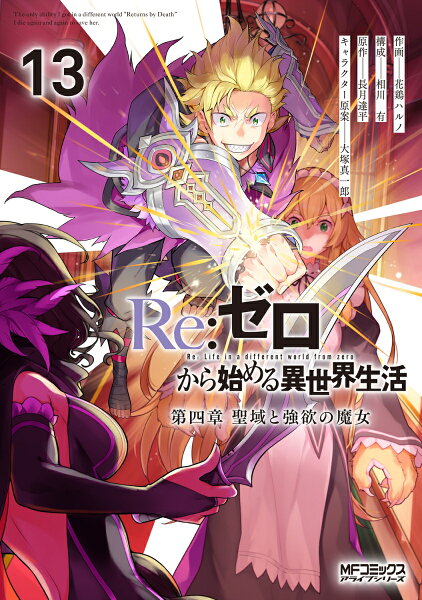
Re:Zero - Starting Life in Another World
Subaru Natsuki is a NEET in Tokyo. He buys snacks at a convenience store and walks out into a fantasy world. He has no special abilities, no useful skills, and no idea where he is. He dies within hours. Then he wakes up at the convenience store. Tappei Nagatsuki's massively popular dark isekai light novel has spawned a long-running manga adaptation across multiple arc-specific series. Yen Press publishes the English manga.
Fantasy
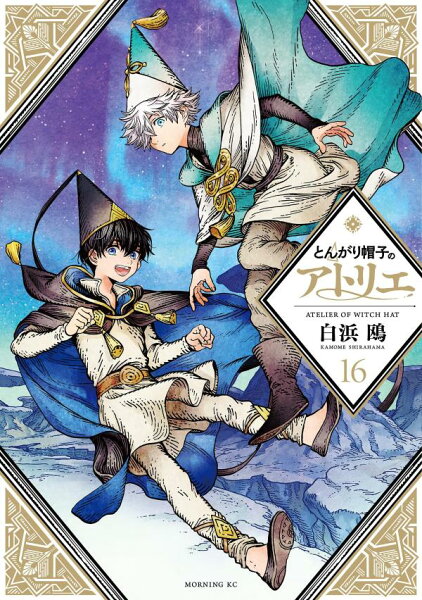
Witch Hat Atelier
Yu's review of Witch Hat Atelier — a girl born without magic witnesses the forbidden secret of how magic actually works, and must now become a witch to undo what she accidentally caused.
Fantasy / Comedy
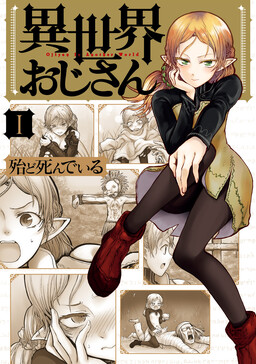
Uncle from Another World
Yu's review of Uncle from Another World — Takafumi's uncle Yosuke wakes from a 17-year coma having been an isekai hero in another world; Takafumi discovers his uncle has magical powers but also deeply embarrassing stories about how he was treated in the other world.
Written by
Yu
Manga Enthusiast from Japan
I grew up in Japan and manga literally saved me during a tough time in elementary school. My English isn't perfect, but my love for manga is real — and I want to share it with you.
Disclosure: This post contains affiliate links. As an Amazon Associate, I earn from qualifying purchases at no extra cost to you.