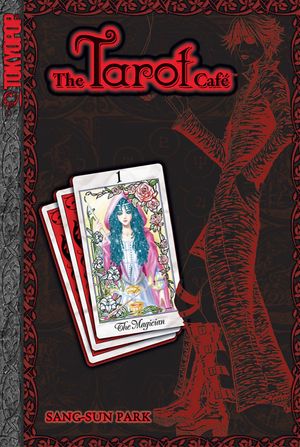
Tarot Cafe Review: She Reads Cards for Monsters and Is Herself the Saddest Story in the Cafe
by Sang-Sun Park
Read the first volume. If it doesn't hook you, put it down. It'll hook you.
Buy Tarot Cafe on Amazon →*Affiliate link — I earn a small commission at no extra cost to you.
She reads the cards for monsters and ghosts and things that want what they can't have. Meanwhile her own cards are the ones she can't read clearly.
Quick Take
- A seven-volume Korean manhwa with an anthology structure — each chapter follows Pamela using tarot to help a supernatural client — around which a darker personal story accumulates
- Sang-Sun Park's art is the series' most immediately striking element: detailed, atmospheric, and suited to the gothic register
- More emotionally complex than the format suggests; the anthology cases inform the central mystery
Who Is This Manga For?
- Readers who enjoy dark fantasy with gothic atmosphere
- Manhwa fans looking for something with visual and thematic ambition
- People who enjoy anthology-format fantasy with an overarching mystery
- Anyone interested in tarot as a narrative framework
Content Warnings & Age Rating
Age Rating: T (Teen) Content Warnings: Dark themes, supernatural violence, tragic endings, some disturbing imagery
Darker than standard shojo/manhwa. Appropriate for older teens and adults.
Yu's Rating
| Category | Score |
|---|---|
| Story Depth | ★★★★☆ |
| Art Style | ★★★★★ |
| Character Development | ★★★★☆ |
| Accessibility for Non-Japanese Readers | ★★★★☆ |
| Reread Value | ★★★★☆ |
Story Overview
Pamela runs a cafe where supernatural beings — vampires, shape-shifters, spirits, and other creatures — come to have their futures read in tarot. She helps them understand and navigate their wishes and fates. She is calm, perceptive, and effective at this work.
What she has not yet resolved is her own situation: Pamela is bound by a contract with a being named Belus, who holds something she values and will not release it without a price she has not yet been able to pay. The mystery of what she gave up and what it will cost her to get it back is the thread that runs through the anthology cases.
The individual cases are their own contained stories — often tragic, occasionally hopeful — and the ways they reflect or contrast with Pamela's own bind is Sang-Sun Park's structural sophistication. By the time the central mystery resolves, the anthology cases have built the emotional context for it.
Characters
Pamela — A character defined by what she is not yet willing to show. Her composure in helping others conceals her own grief, and the gradual revelation of what she carries is the series' emotional reveal.
Belus — The being who holds Pamela's contract and whose relationship with her is not purely antagonistic. The complexity of what they are to each other is one of the series' central questions.
Art Style
Sang-Sun Park's art is the series' most distinctive quality — intricate, gothic, and visually inventive. The character designs are elegant and distinct, the supernatural elements have visual imagination, and the tarot imagery is used with genuine design sense rather than generic occult symbolism. The art quality across seven volumes is consistent and excellent.
Cultural Context
Tarot as a storytelling framework draws on Western occult tradition, but Sang-Sun Park's use of it is more visual and metaphorical than systematic — the cards appear as narrative tools rather than a structured divinatory system. The series belongs to the tradition of Korean manhwa that engaged with European gothic aesthetics in the early 2000s.
The supernatural client structure evokes the "problem of the week" format of supernatural anime and manga while Park uses it with more thematic ambition than the format usually requires.
What I Love About It
The cases where Pamela's reading reveals something the client didn't want to know — and the way she handles the gap between the truth and what the client came hoping to hear — are the series at its most morally interesting. She is not cruel, but she does not simplify.
What English-Speaking Fans Say
Consistently cited as one of the best manhwa from the early-2000s wave. The art is universally praised; the gothic atmosphere is the most described quality. Readers note that the anthology structure rewards rereading — the individual cases look different once Pamela's full situation is known.
Memorable Scene ⚠️ Spoiler Warning
The revelation of what Pamela actually gave to Belus — and why she agreed to the terms — reframes her composure throughout the series as something harder than it appeared. The chapter where she acknowledges this to herself is the series' emotional center.
Similar Manga
| Title | Its Approach | How Tarot Cafe Differs |
|---|---|---|
| Vampire Knight | Gothic supernatural romance | Vampire Knight is more romance-focused; Tarot Cafe is darker and more standalone-case-focused |
| Angel Diary | Korean manhwa supernatural romance | Angel Diary is lighter and more comedic; Tarot Cafe has a gothic register |
| xxxHolic | Supernatural wish-granting anthology | xxxHolic has a similar structure; Tarot Cafe is more gothic and less philosophical |
Reading Order / Where to Start
Volume 1, straight through. The anthology structure is accessible from the beginning, and the overarching mystery builds naturally.
Official English Translation Status
Tokyopop published all 7 volumes in English. Complete. Availability varies due to Tokyopop's closure.
Pros & Cons
Pros
- Sang-Sun Park's art is exceptional and the primary reason to seek this out
- The anthology structure works as both standalone entertainment and thematic development
- The gothic atmosphere is consistent and fully realized
- Pamela is an unusually complex female protagonist
Cons
- The dark tone is not for all readers
- Some of the individual cases are stronger than others
- Tokyopop closure affects availability
- The central mystery's resolution may feel too neat compared to the complexity of what precedes it
Is Tarot Cafe Worth Reading?
For gothic fantasy and manhwa fans — definitely yes. The art alone is worth finding this series.
Format Comparison
| Format | Pros | Cons |
|---|---|---|
| Physical | Complete 7-volume set | Tokyopop closure; availability varies |
| Digital | More accessible | Limited platforms |
| Omnibus | No omnibus | — |
Where to Buy
Read the first volume. If it doesn't hook you, put it down. It'll hook you.
This post contains affiliate links. If you purchase through these links, I may earn a small commission at no extra cost to you. As an Amazon Associate, I earn from qualifying purchases.
*Affiliate link — I earn a small commission at no extra cost to you.
More Manga You Might Like
Fantasy / Mystery
In/Spectre
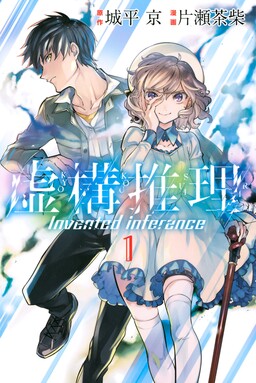
Yu's review of In/Spectre — Kotoko Iwanaga gave an eye and a leg to the youkai of her village when she was a child; in exchange, she became their Goddess of Wisdom, mediating disputes and solving the problems of the spirit world; she enlists the help of Kurou Sakuragawa, a man with a strange relationship to death, and together they maintain peace between humans and spirits.
Fantasy / Romance
Angel Diary
A review of Angel Diary — a twelve-volume Korean manhwa about Dong-Young, a princess from heaven who escaped her arranged marriage to the king of the underworld by hiding as a human girl in a Korean high school, only to have the king himself transfer to her school to find her.
Romance / Fantasy
The Remarried Empress
A review of The Remarried Empress, the fantasy manhwa about an empress who divorces her faithless emperor and starts a new life with a worthy king.
Action / Fantasy
Tower of God
A review of Tower of God, the Korean webtoon manhwa about a boy who climbs an infinite tower in search of his only friend.
Fantasy / Supernatural
Toilet-Bound Hanako-kun
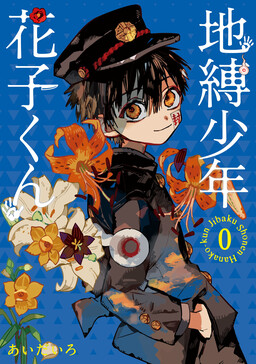
Yu's review of Toilet-Bound Hanako-kun — Nene Yashiro summons Hanako-kun, the most famous of her school's Seven Wonders, the ghost rumored to grant wishes; when she accidentally becomes bound to him as his helper, she enters a world of supernatural politics, competing spirits, and the mystery of who Hanako actually was.
Fantasy / Mystery
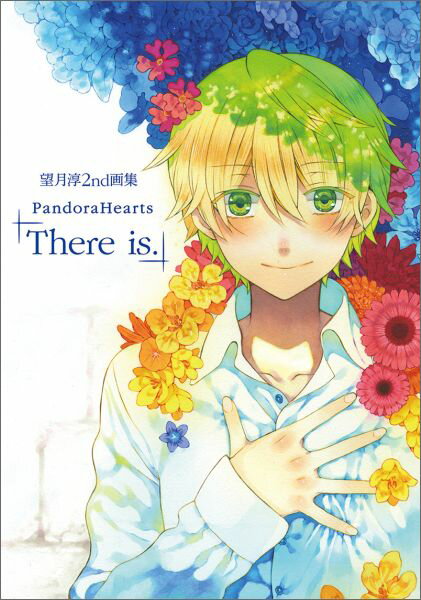
Pandora Hearts
Yu's review of Pandora Hearts — a nobleman's son is cast into a prison dimension called the Abyss on his fifteenth birthday, returns with a powerful chain partner, and unravels a conspiracy that rewrote the history of his world.
Written by
Yu
Manga Enthusiast from Japan
I grew up in Japan and manga literally saved me during a tough time in elementary school. My English isn't perfect, but my love for manga is real — and I want to share it with you.
Disclosure: This post contains affiliate links. As an Amazon Associate, I earn from qualifying purchases at no extra cost to you.