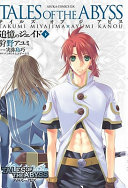
Tales of the Abyss Review: The Game's Manga Nails the One Thing the Game Gets Right
by Rei Izumi (art)
Read the first volume. If it doesn't hook you, put it down. It'll hook you.
Buy Tales of the Abyss on Amazon →*Affiliate link — I earn a small commission at no extra cost to you.
What does it mean to be a person if the person you think you are never actually existed?
Quick Take
- A compressed adaptation of one of the JRPG genre's best character arcs
- Tokyopop only released 4 of 9 volumes — the story is incomplete in English
- Worth reading for Luke's character arc even without the full story
Who Is This Manga For?
- Fans of the Tales of the Abyss game who want a manga companion
- Readers interested in JRPG adaptations with genuine emotional core
- People curious about the game without the 80-hour time commitment
- Anyone who enjoys identity-focused fantasy narratives
Content Warnings & Age Rating
Age Rating: T (Teen) Content Warnings: Fantasy violence, character death, identity deconstruction themes, mild language
Standard JRPG adaptation content.
Yu's Rating
| Category | Score |
|---|---|
| Story Depth | ★★★★☆ |
| Art Style | ★★★★☆ |
| Character Development | ★★★★☆ |
| Accessibility for Non-Japanese Readers | ★★★★☆ |
| Reread Value | ★★★☆☆ |
Story Overview
Luke fon Fabre is a noble's son who has been isolated inside his mansion since childhood — kidnapped once, never allowed to leave again. He's arrogant, naive about the world, and genuinely insufferable in the way that people raised with privilege and no consequences tend to be.
Then he gets caught up in a series of events involving a prophecy, a mysterious group called the Oracle Knights, and his teacher Van — who turns out to have his own agenda that upends everything Luke thought he knew about himself, his purpose, and his identity.
The first major revelation of Tales of the Abyss — which the manga reaches within its available four volumes — is about the nature of Luke's existence: he is a replica, a created person, not the original Luke. The story then asks: does that make him less real? Does it change who he is now, or who he can become?
Rei Izumi's adaptation captures Luke's arc well within the four volumes. The arrogance is drawn honestly — he's not a likable protagonist initially, and the manga doesn't soften this — and the first cracks in that arrogance are drawn with care.
Characters
Luke fon Fabre — One of the more committed-to protagonist-as-genuinely-unpleasant arcs in JRPG history. He has to earn the player's/reader's sympathy rather than having it given.
Tear Grants — The female lead: competent, restrained, professionally obligated to deal with Luke. Her relationship with him is the story's anchor.
Van Grants — The mentor whose hidden agenda is the story's structural engine. His revelation reframes the earlier sections of the story.
Art Style
Izumi's art is clean and competent game adaptation work: the character designs from Fujishima Kosuke are faithfully rendered, action sequences are dynamic, emotional moments are handled with appropriate expressiveness. The world design — Auldrant's specific visual vocabulary — translates reasonably well to manga.
Cultural Context
Tales of the Abyss (2005 PS2 game) was one of the more philosophically ambitious entries in Namco's long-running JRPG series. The "existence of replicas" premise — created people who have the same genetic makeup as originals but no lived history — engaged directly with questions about identity, authenticity, and whether a person's value comes from their origin or their choices.
These are questions Japanese philosophy and popular culture engage with frequently — the manga adaptation uses them to ground what could be a standard fantasy adventure in something more genuinely interesting.
What I Love About It
Luke's arc is the best argument for video game characters as literary characters that I know. The game takes 80 hours to fully develop it. The manga takes four volumes to show its beginnings and hints at its resolution. Even in compressed form, the specific quality of his development — from someone who doesn't deserve empathy to someone who earns it — is readable.
The moment the manga reaches (within four volumes) where Luke genuinely reckons with what he is, what he caused, and what he can do about it is one of the more affecting identity-crisis moments in game adaptation manga.
What English-Speaking Fans Say
Primarily discussed by Tales franchise fans. The incomplete English release is the consistent complaint — 4 of 9 volumes covers about half the story. The consensus: good adaptation of the game's emotional content, frustrating that it stops where it does.
Memorable Scene ⚠️ Spoiler Warning
The scene where Luke learns what he actually is and has to sit with the implications — not action, not plot, just a person confronting something that changes everything about their self-understanding — is where the manga earns its seriousness.
Similar Manga
| Title | Its Approach | How Tales of the Abyss Differs |
|---|---|---|
| Persona 4 | Game adaptation focusing on friendship and identity | Tales of the Abyss focuses more on one protagonist's fundamental self-reckoning |
| Star Ocean: Second Evolution | Similar JRPG adaptation | Tales of the Abyss has more thematic weight on identity questions |
| Sword Art Online: Alicization | Identity and existence in a created world | Tales of the Abyss is more grounded; SAO is more sci-fi philosophical |
Reading Order / Where to Start
Volume 1, straight through. Aware that the English release is 4 of 9 volumes — incomplete.
Official English Translation Status
Tokyopop published volumes 1-4 in English. Complete Japanese series is 9 volumes. English release covers roughly the first half.
Pros & Cons
Pros
- Luke's character arc begins promisingly in 4 volumes
- Faithful to the game's visual and emotional register
- Identity themes handled with genuine seriousness
- Tear is a well-drawn female lead
Cons
- English release is half the story
- Requires familiarity with or interest in JRPG narrative conventions
- Some game content (the battle system, optional characters) doesn't translate to manga
- The incomplete release makes full assessment difficult
- Luke's initial arrogance can deter readers who don't know the arc is the point
Is Tales of the Abyss Worth Reading?
For game fans and JRPG adaptation enthusiasts, yes — accepting the incomplete English release. For newcomers, consider playing the game first.
Format Comparison
| Format | Pros | Cons |
|---|---|---|
| Physical | Character designs look good in print | Out of print; incomplete |
| Digital | More accessible | — |
| Omnibus | No omnibus available | — |
Where to Buy
Read the first volume. If it doesn't hook you, put it down. It'll hook you.
This post contains affiliate links. If you purchase through these links, I may earn a small commission at no extra cost to you. As an Amazon Associate, I earn from qualifying purchases.
*Affiliate link — I earn a small commission at no extra cost to you.
More Manga You Might Like

Fantasy / Sci-Fi
Sword Art Online: Alicization
A review of the Sword Art Online: Alicization manga adaptation — the arc where Kirito wakes inside an artificial world with no memory of how he got there, and must navigate a society with its own laws, history, and artificial consciousness.
Fantasy
Legend of the Northern Blade
A review of Legend of the Northern Blade — the Korean murim manhwa about the son of the Northern Heavenly Sect's leader who must revive his father's legacy and face the Silent Night that destroyed everything.
Fantasy / Adventure
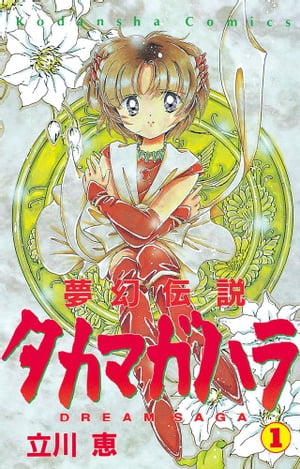
Dream Saga
A review of Dream Saga — Megumi Tachikawa's five-volume fantasy manga about an ordinary girl who discovers she can travel to Takamagahara, the realm of Japanese gods, by sleeping with a special acorn.
Fantasy / Action
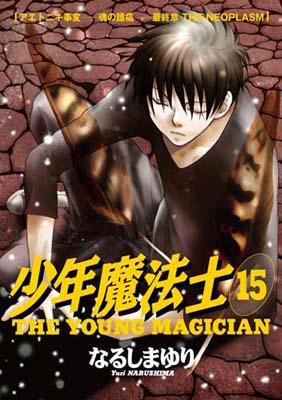
The Young Magician
A review of The Young Magician — Narumi Kakinouchi's ten-volume fantasy manga about a young boy with extraordinary magical ability who is brought into a world of sorcerers, ancient powers, and conflicts he is not yet ready to understand.
Romance / Fantasy
The Remarried Empress
A review of The Remarried Empress, the fantasy manhwa about an empress who divorces her faithless emperor and starts a new life with a worthy king.
Fantasy / Slice of Life
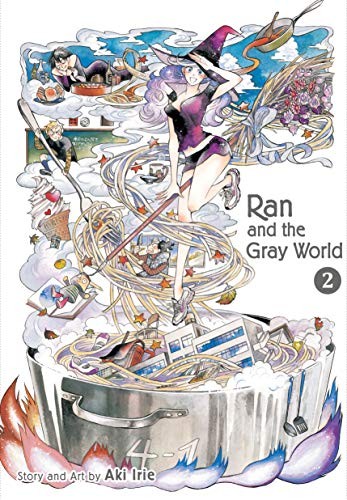
Ran and the Gray World
A review of Ran and the Gray World, the magical fantasy manga about a little girl who can transform into an adult using her late mother's shoes — and the world she discovers.
Written by
Yu
Manga Enthusiast from Japan
I grew up in Japan and manga literally saved me during a tough time in elementary school. My English isn't perfect, but my love for manga is real — and I want to share it with you.
Disclosure: This post contains affiliate links. As an Amazon Associate, I earn from qualifying purchases at no extra cost to you.