
Sword Art Online: Alicization Review: The Arc Where SAO Finally Asks the Question It Was Always Circling
by Kotaro Yamada (art), Reki Kawahara (story)
Read the first volume. If it doesn't hook you, put it down. It'll hook you.
Buy Sword Art Online: Alicization on Amazon →*Affiliate link — I earn a small commission at no extra cost to you.
What if the people inside the simulation are real — and the people running it don't care?
Quick Take
- The most philosophically serious arc in the SAO franchise, focused on artificial consciousness and identity
- Kirito and Eugeo's friendship is the emotional engine; Eugeo might be the best character in the franchise
- 12 volumes complete in English — a full, satisfying arc
Who Is This Manga For?
- SAO fans who want the franchise at its most ambitious
- Readers interested in consciousness and identity questions in fantasy settings
- People who gave up on SAO after the first arc and are curious whether it improved
- Anyone who enjoys dual-protagonist stories where the relationship between leads is central
Content Warnings & Age Rating
Age Rating: T (Teen) Content Warnings: Fantasy violence, character death, themes of artificial consciousness and free will
More mature in themes than earlier SAO arcs. Some scenes are genuinely dark.
Yu's Rating
| Category | Score |
|---|---|
| Story Depth | ★★★★☆ |
| Art Style | ★★★★☆ |
| Character Development | ★★★★☆ |
| Accessibility for Non-Japanese Readers | ★★★★☆ |
| Reread Value | ★★★★☆ |
Story Overview
Kirito wakes inside a virtual world called the Underworld with no memory of how he arrived. The world runs on rules called Taboo Indices — a rigid social order enforced by a concept called the Seal of the Right Eye that physically prevents residents from breaking laws, even when those laws are unjust.
He meets Eugeo, a boy from a small village who is bound to a sacred task he has performed his whole life: cutting a massive tree called the Gigas Cedar, one swing at a time, for as long as anyone can remember. Alice, their childhood friend, was taken to the capital by the Integrity Knights — the world's enforcers — for accidentally stepping across a sacred boundary.
Eugeo wants to find Alice. Kirito, with his player's instincts intact, sees a world whose rules can be understood and navigated. Together they set out for the capital — training at a swordsmanship academy, climbing through the world's hierarchy, working toward what turns out to be a much larger confrontation about the nature of the world itself.
The central question of Alicization is whether the people of the Underworld — who were created to be an artificial population, who live and love and die by programmed parameters — have genuine souls. Are they people? Does it matter how they came to exist?
Characters
Eugeo — The revelation of this arc. Where Kirito is competent and capable but emotionally familiar, Eugeo is genuinely new: someone who has lived his whole life under a rule he never chose, who has to actively learn that he is allowed to want things. His development from dutiful Gigas Cedar cutter to the person he becomes at the arc's end is one of the franchise's genuine achievements.
Kirito — More effective here than in the franchise's earlier arcs because he has a genuine partner rather than a harem structure. His role as someone who can see the system's logic serves the story's philosophical questions directly.
Alice Synthesis Thirty — The Integrity Knight who was Alice, now transformed by the system into an enforcer of the same rules that took her. Her process of remembering who she was is the arc's most emotionally precise thread.
Art Style
Kotaro Yamada's art is clean, detailed, and manages the fantasy-world visual vocabulary effectively. The Underworld has a specific aesthetic — medieval European architecture rendered in a way that feels slightly unreal, because it is. Character designs are faithful to the light novel and anime versions. Action sequences are dynamic and clearly choreographed.
Cultural Context
Sword Art Online: Alicization engages directly with questions from philosophy of mind — specifically the question of whether an entity can be conscious if its consciousness was programmed rather than emerged. This is not a uniquely Japanese concern, but the specific way the story frames it — through a closed world with explicit rules, where "soul" is treated as a measurable quantity — draws on a tradition of Japanese SF that takes these questions seriously.
The Taboo Index system also works as a critique of social conformity: a world where everyone follows rules because the rules are literally internalized, where deviation is physically impossible, is a world where virtue is meaningless because it cannot be chosen.
What I Love About It
Eugeo's arc hit me in a way I didn't expect from this franchise.
He spends years cutting a tree for no reason he was ever told. He just does it because it's his sacred task. The first time the story asks him what he actually wants — not what he's supposed to want, not what the rules say he should want, but what Eugeo wants — and he has to realize he doesn't know how to answer that question... that moment is the kind of character writing I don't usually associate with SAO.
The friendship between him and Kirito is also the franchise's most sincere relationship. It's mutual. They both change each other. That's rare in isekai-adjacent stories where the protagonist is usually the only one who matters.
What English-Speaking Fans Say
Widely considered the franchise's best arc. Even readers who bounced off the first two arcs often cite Alicization as worth returning for. Eugeo is consistently praised. The philosophical ambition — whether or not the execution fully delivers — is appreciated as something SAO hadn't attempted before.
Memorable Scene ⚠️ Spoiler Warning
The moment when it becomes clear what Chudelkin has been doing to the Integrity Knights — and specifically what was done to Alice to make her into Alice Synthesis Thirty — is where Alicization earns its darker content warnings. It's not gratuitous, but it's genuinely disturbing in what it implies about a system that treats human consciousness as a resource.
Similar Manga
| Title | Its Approach | How SAO: Alicization Differs |
|---|---|---|
| Tales of the Abyss | Identity and existence for a created person | Tales of the Abyss is more intimate; Alicization operates at larger philosophical scale |
| No Game No Life | Protagonist transported to a world defined by rules | NGNL is comedic; Alicization takes its premise with complete seriousness |
| Re:Zero | Isekai with genuine stakes and psychological weight | Re:Zero focuses on trauma and repetition; Alicization focuses on consciousness and freedom |
Reading Order / Where to Start
This arc requires no prior SAO knowledge — it works as a standalone fantasy. However, familiarity with Kirito's character from earlier arcs adds context. Either start here or read the original arc first.
Official English Translation Status
Yen Press published all 12 volumes in English. Complete and widely available.
Pros & Cons
Pros
- The SAO franchise's most philosophically ambitious arc
- Eugeo is a genuinely excellent character
- 12 complete volumes — a full story
- The Underworld's artificial nature makes the fantasy setting more interesting than standard isekai
Cons
- Pacing in the middle section slows considerably
- The story's resolution involves elements that not all readers will find satisfying
- SAO's persistent issues with female character agency are not fully resolved here
- The philosophical questions are raised more clearly than they're answered
Is Sword Art Online: Alicization Worth Reading?
Yes — especially for readers who've been skeptical of SAO. This is the arc where the franchise attempts something genuinely serious, and largely succeeds. Eugeo alone is worth the twelve volumes.
Format Comparison
| Format | Pros | Cons |
|---|---|---|
| Physical | Full art detail; satisfying to own as a complete arc | 12 volumes requires shelf space |
| Digital | Convenient for the series length | — |
| Omnibus | No omnibus available for the manga | — |
Where to Buy
Read the first volume. If it doesn't hook you, put it down. It'll hook you.
This post contains affiliate links. If you purchase through these links, I may earn a small commission at no extra cost to you. As an Amazon Associate, I earn from qualifying purchases.
*Affiliate link — I earn a small commission at no extra cost to you.
More Manga You Might Like
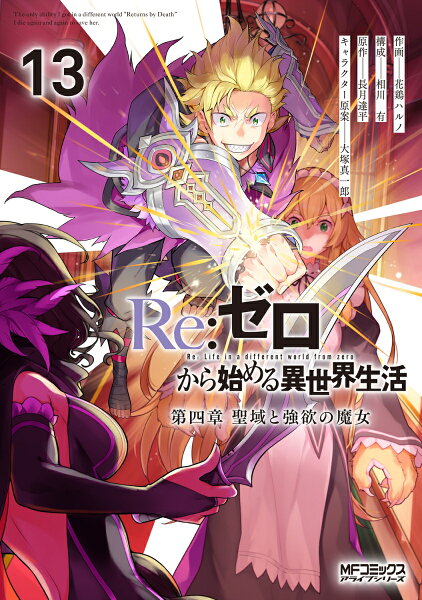
Fantasy / Isekai
Re:Zero - Starting Life in Another World
Subaru Natsuki is a NEET in Tokyo. He buys snacks at a convenience store and walks out into a fantasy world. He has no special abilities, no useful skills, and no idea where he is. He dies within hours. Then he wakes up at the convenience store. Tappei Nagatsuki's massively popular dark isekai light novel has spawned a long-running manga adaptation across multiple arc-specific series. Yen Press publishes the English manga.
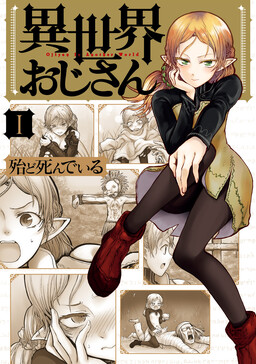
Fantasy / Comedy
Uncle from Another World
Yu's review of Uncle from Another World — Takafumi's uncle Yosuke wakes from a 17-year coma having been an isekai hero in another world; Takafumi discovers his uncle has magical powers but also deeply embarrassing stories about how he was treated in the other world.

Fantasy / Comedy
KonoSuba: God's Blessing on This Wonderful World!
Yu's review of KonoSuba — the isekai parody where every party member is disastrously incompetent at something crucial. A useless goddess, an explosion-obsessed mage, a masochistic crusader, and a pathetic protagonist who somehow keeps surviving. The funniest isekai ever made.
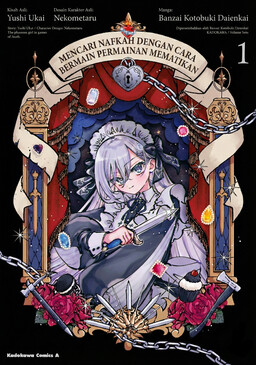
Fantasy / Isekai
Dead Mount Death Play
Yu's review of Dead Mount Death Play — Ryohgo Narita and Shinta Fujimoto's reverse-isekai thriller. The Corpse God, a feared necromancer, is slain by the hero Shagrua and reincarnates into modern Shinjuku in the body of a murdered teenager, Polka Shinoyama. Wanting only a peaceful life, he is pulled into Tokyo's criminal underworld.
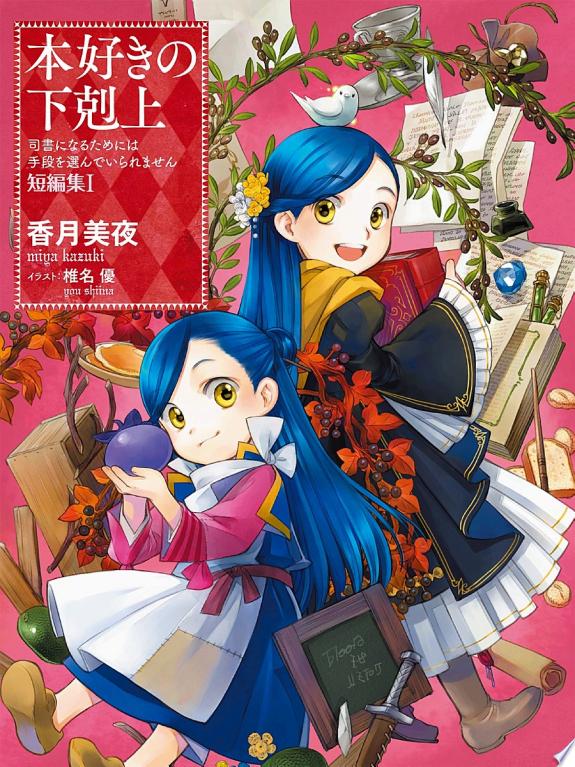
Fantasy / Slice of Life
Ascendance of a Bookworm
Yu's review of Ascendance of a Bookworm — a book-obsessed librarian reincarnated into a medieval world with almost no books who decides to manufacture them from scratch, starting with the materials available in a lower-class commoner household.
Fantasy
Grimgar of Fantasy and Ash
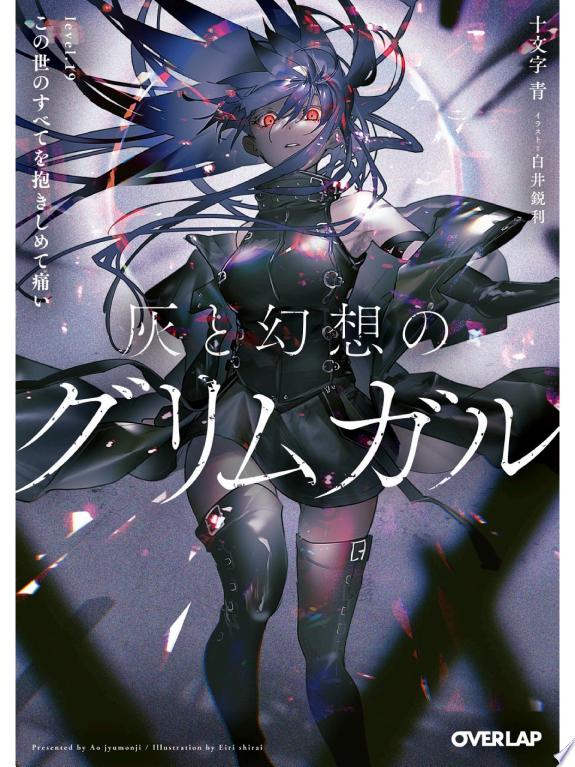
A review of Grimgar of Fantasy and Ash — a grounded isekai fantasy where a group of strangers wake up in another world with no memories, no skills, and no understanding of how hard survival actually is.
Written by
Yu
Manga Enthusiast from Japan
I grew up in Japan and manga literally saved me during a tough time in elementary school. My English isn't perfect, but my love for manga is real — and I want to share it with you.
Disclosure: This post contains affiliate links. As an Amazon Associate, I earn from qualifying purchases at no extra cost to you.