
That Time I Got Reincarnated as a Slime Review: The Isekai That Actually Builds a World
by Fuse (story) / Taiki Kawakami (art)
Read the first volume. If it doesn't hook you, put it down. It'll hook you.
Buy That Time I Got Reincarnated as a Slime on Amazon →*Affiliate link — I earn a small commission at no extra cost to you.
Quick Take
- The isekai where the protagonist builds a monster civilization instead of just getting stronger
- More optimistic and community-focused than typical power-fantasy isekai
- The nation-building arcs are the series' greatest strength — unusually thoughtful for the genre
Who Is This Manga For?
Slime Isekai is for you if:
- You enjoy isekai but want something with more focus on building than fighting
- You love large ensemble casts with distinct monster species and characters
- You want a feel-good adventure where the protagonist's power is used constructively
- You want an ongoing series with consistent quality and a dedicated community
Content Warnings & Age Rating
Age Rating: T (Teen) Content Warnings: Action violence, especially in war arcs; some suggestive humor; the stakes in later arcs become significantly higher than the early material suggests
The series is generally light but gets more serious in its political and war arcs.
Yu's Rating
| Category | Score |
|---|---|
| Story Depth | ★★★★☆ |
| Art Style | ★★★★☆ |
| Character Development | ★★★★☆ |
| Accessibility for Non-Japanese Readers | ★★★★★ |
| Reread Value | ★★★☆☆ |
Story Overview
Satoru Mikami is a 37-year-old corporate drone in Tokyo who dies protecting a colleague from a knife attack. He wakes up in a fantasy world — but not as a human. He is a slime: the weakest monster type in any RPG system.
What he has, however, is a unique skill called Predator — he can absorb and replicate the abilities of anything he consumes. Combined with the cheats he negotiated while dying, this makes him extraordinarily powerful despite his weak physical form.
He names himself Rimuru Tempest and begins the project that defines the series: building a nation where monsters and humans can coexist.
Rather than the typical isekai arc of defeating a Demon King or becoming the strongest warrior, Rimuru's journey involves diplomacy, resource management, civil infrastructure, and the complex politics of a world where monster-kind has always been persecuted. It's an isekai that takes economics seriously.
Characters
Rimuru Tempest — One of isekai's more interesting protagonists because his greatest strength is not combat — it's his understanding of how organizations work and his ability to apply modern management principles to a fantasy society. His fundamental kindness, combined with real capability, makes him likeable without being boring.
Shion — Rimuru's devoted secretary, whose loyalty and combat ability are both extreme. Her character arc involves a significant tragedy that changes the series' tone.
Benimaru — The hobgoblin chief's son who becomes one of Rimuru's most powerful subordinates. His straightforward code of honor provides a useful counterweight to Rimuru's more calculating approach.
Milim Nava — A Demon Lord who becomes Rimuru's friend with comedic speed. Her childlike enthusiasm and apocalyptic power are a consistent source of both humor and genuine stakes.
Art Style
Kawakami's art is clean and professional, with character designs that successfully differentiate a very large cast of monster and human characters. The action sequences are competent and clear.
The world design — the city of Tempest as it grows from a clearing to a functioning metropolis — is one of the manga's more satisfying visual progressions.
Cultural Context
Company management as fantasy — Rimuru applies Japanese corporate knowledge to monster society: efficient meetings, clear task delegation, quality control for craftwork, systematic resource management. This is isekai filtered through the specific experience of a Japanese salaryman who was good at his job. Japanese readers recognize the management approaches being satirized and applied.
Monster discrimination — The persecution of monsters by humans provides the political backdrop for the nation-building project. The series engages genuinely with questions of how marginalized groups can achieve safety and recognition — through strength, through diplomacy, through proving economic value. These are real political questions the manga addresses with more seriousness than the genre usually allows.
The salaryman fantasy — The isekai protagonist is almost always a teenager or young adult. Slime Isekai's choice of a 37-year-old salaryman reflects a specific Japanese fantasy — what if all that experience, competence, and exhaustion translated into genuine power in a fresh world?
What I Love About It
There is an arc where Rimuru has to negotiate trade agreements with human cities that fear monsters. He approaches it not with threats but with economics — explaining what Tempest produces, why trade benefits both sides, what the alternative costs.
The negotiation is treated with the same detail and care that the series gives to its fight scenes.
I love this. I love a manga that takes the boring parts of building something seriously, that understands that civilization requires paperwork and compromise and showing up even when it's not exciting.
What English-Speaking Fans Say
Slime Isekai has one of the largest isekai fanbases in the West, sustained by multiple anime seasons and a large manga readership. It is considered one of the better isekai manga available.
Common praise: the nation-building arcs, Rimuru's competence without arrogance, the large ensemble cast.
Common criticism: the later war arcs become darker than readers expecting consistent light fun anticipated; some readers find the power scaling loses meaning as Rimuru becomes too powerful.
Memorable Scene ⚠️ Spoiler Warning
Shion's death and what follows.
In a shocking mid-series development, Shion is killed while Rimuru is away. His response to this — the choice he makes about what to do with his power in that moment — transforms the series from a feel-good nation-building story into something with real weight.
The Rimuru who emerges from that arc is different from the one who entered it. The series is better for it.
Similar Manga
If you liked Slime Isekai, try:
- Overlord — Darker isekai with similar "protagonist builds a nation" premise
- The Rising of the Shield Hero — More conflict-driven isekai, similar underdog trajectory
- Dungeon Meshi — Better fantasy world-building, different structure
- Ascendance of a Bookworm — Another isekai focused on building rather than fighting
Reading Order / Where to Start
Start from Volume 1. The nation-building premise is established quickly.
Official English Translation Status
Status: Ongoing English Volumes: 25+ Translator: Yen Press Translation Quality: Good throughout
Pros & Cons
Pros
- The nation-building arcs are genuinely interesting and thoughtfully written
- Rimuru is a more mature and interesting protagonist than most isekai leads
- The large ensemble cast has real variety and character
- Consistently optimistic without being saccharine
Cons
- The power fantasy elements eventually make individual stakes hard to feel
- Some later arcs are slower than the early nation-building material
- Monthly publication means slow story progression
Format Comparison
| Format | Volumes | Price per vol. (approx.) | Best for |
|---|---|---|---|
| Paperback (individual) | 25+ vols | ~$10–12 | Collecting |
| Kindle | 25+ vols | ~$7–9 | Ongoing reading |
Where to Buy
Read the first volume. If it doesn't hook you, put it down. It'll hook you.
This post contains affiliate links. If you purchase through these links, I may earn a small commission at no extra cost to you. As an Amazon Associate, I earn from qualifying purchases.
*Affiliate link — I earn a small commission at no extra cost to you.
More Manga You Might Like
Fantasy / Slice of Life
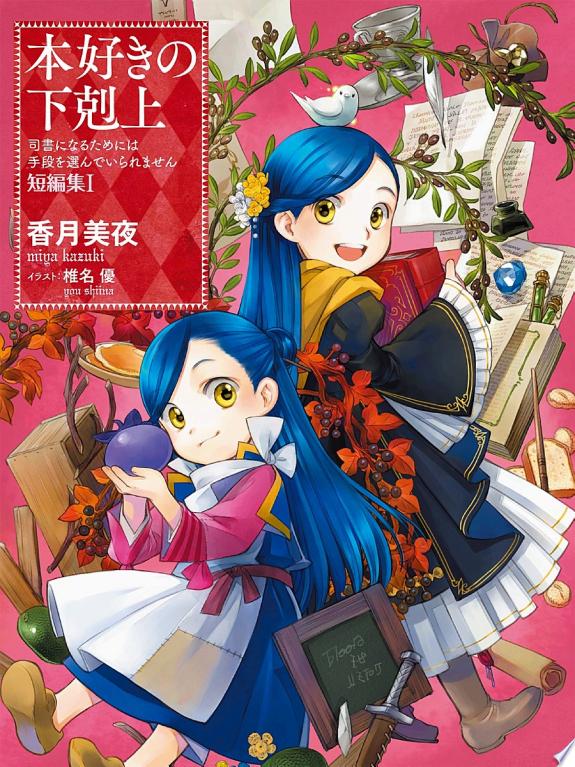
Ascendance of a Bookworm
Yu's review of Ascendance of a Bookworm — a book-obsessed librarian reincarnated into a medieval world with almost no books who decides to manufacture them from scratch, starting with the materials available in a lower-class commoner household.
Fantasy / Adventure
Faraway Paladin
Yu's review of Faraway Paladin — Will was raised in a ruined city by three undead: a skeletal warrior, a mummified sorcerer, and a ghost priestess; having learned everything from them, he must eventually leave to find his own purpose in a world that doesn't know he exists.

Fantasy / Adventure
Yona of the Dawn
Yu's review of Yona of the Dawn — a sheltered princess witnesses her father's murder, flees the palace with her bodyguard, and begins the journey to reclaim her kingdom and herself.
Fantasy / Comedy
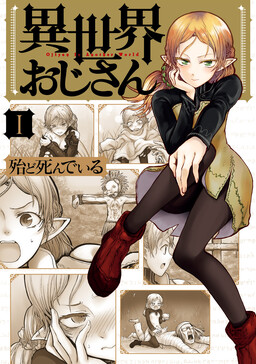
Uncle from Another World
Yu's review of Uncle from Another World — Takafumi's uncle Yosuke wakes from a 17-year coma having been an isekai hero in another world; Takafumi discovers his uncle has magical powers but also deeply embarrassing stories about how he was treated in the other world.
Fantasy / Adventure
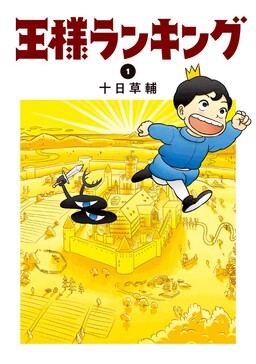
Ranking of Kings
Yu's review of Ranking of Kings — Prince Bojji cannot speak, cannot hear, and is considered the weakest person in the kingdom; when he makes an unlikely friend named Kage, a shadow assassin, he begins a journey to become the greatest king in the world despite everything working against him.

Fantasy / Comedy
KonoSuba: God's Blessing on This Wonderful World!
Yu's review of KonoSuba — the isekai parody where every party member is disastrously incompetent at something crucial. A useless goddess, an explosion-obsessed mage, a masochistic crusader, and a pathetic protagonist who somehow keeps surviving. The funniest isekai ever made.
Written by
Yu
Manga Enthusiast from Japan
I grew up in Japan and manga literally saved me during a tough time in elementary school. My English isn't perfect, but my love for manga is real — and I want to share it with you.
Disclosure: This post contains affiliate links. As an Amazon Associate, I earn from qualifying purchases at no extra cost to you.