
Shakugan no Shana Review: The Flame-Haired Sword Dancer Who Taught Me About Existence
by Ayato Sasakura (art), Yashichiro Takahashi (story)
Read the first volume. If it doesn't hook you, put it down. It'll hook you.
Buy Shakugan no Shana on Amazon →*Affiliate link — I earn a small commission at no extra cost to you.
Quick Take
- The premise — the protagonist is already dead — gives the romance and action unusually high stakes
- Shana's character arc from weapon to person is the series' best element
- The manga condenses the light novel's philosophical material into accessible action
Who Is This Manga For?
Shakugan no Shana suits readers who:
- Love action fantasy with romantic depth — the Yuji/Shana dynamic earns its payoff
- Are interested in existential themes — what does it mean to exist when your existence is already ending?
- Want supernatural action with good worldbuilding — the Guze mythology is well-developed
- Like tsundere protagonists handled with care — Shana is the archetype executed well
Content Warnings & Age Rating
Age Rating: T (Teen) Content Warnings: Violence, characters dying (including significant deaths), existential themes about impermanence, romantic themes in later volumes
Appropriate for teens. The existential material is handled thoughtfully.
Yu's Rating
| Category | Score |
|---|---|
| Story Depth | ★★★★☆ |
| Art Style | ★★★★☆ |
| Character Development | ★★★★★ |
| Accessibility for Non-Japanese Readers | ★★★★☆ |
| Reread Value | ★★★☆☆ |
Story Overview
Yuji Sakai's world ends on an ordinary day in the city when monsters begin eating people. He discovers that most of the humans around him are Torches — fading remnants left behind after the real person was consumed, slowly disappearing until they cease to exist. Nobody remembers the real person once the Torch burns out.
He discovers this because he is also a Torch. He should already be disappearing.
Shana is a Flame Haze — a human granted supernatural power to hunt the Denizens (beings from another world who consume human existence). She appears to fight the monsters eating the city. She is small, carries an enormous sword, and has flame-red hair when she activates her power. She is completely clinical about Yuji's impending disappearance.
Yuji's problem is that he doesn't want to disappear. And despite Shana's insistence that he's already effectively dead, something about his particular Torch is different.
Characters
Yuji Sakai — one of the more thoughtful shonen protagonists of his generation. His response to discovering he's already dead is not depression but a kind of intensely focused desire to make his remaining existence matter. That clarity drives the whole series.
Shana — the Flame Haze. Her transformation from weapon-that-talks into person-who-cares is the series' emotional journey. She learns what she feels about Yuji at the same pace the reader does, which makes it work.
Margery Daw — another Flame Haze, older, cynical, carrying genuine damage from her past. Her arc provides adult contrast to the teenage main characters.
Alastor — the Crimson God bound to Shana, manifesting as a pendant. His dry running commentary is the series' best consistent comedy.
Art Style
Ayato Sasakura's art is clean and energetic, with strong character design work. Shana in her activated state — red hair blazing, enormous sword, small stature — is one of the visual signatures of 2000s light novel adaptation manga.
The combat sequences communicate the speed and danger of Flame Haze battles clearly. The city-destruction scale of larger fights is handled with appropriate grandeur.
Cultural Context
Shakugan no Shana began as a light novel series by Yashichiro Takahashi, published in Dengeki Bunko. The manga adaptation ran concurrently with the anime adaptation in the mid-2000s, a period when light-novel-to-manga-to-anime pipelines became standard in Japanese media.
The series' core philosophical question — what is existence worth if it is temporary? — connects to Buddhist and Shinto ideas about impermanence that run throughout Japanese culture. Yuji's refusal to accept his fading is a specifically human assertion against natural order.
What I Love About It
I came to Shana through the anime and then read the manga to get more. What the manga does better than the anime is pacing — the light novel material breathes more naturally in manga form than in a 24-episode season, and the character development has more room.
Shana herself is what stays with me. She starts as someone who uses "Torch" to mean "effectively not a person" and ends as someone who understands exactly what that word costs. Watching her learn what she actually feels about Yuji — despite resisting it the whole time — is one of the more honest tsundere arcs I've seen, because it's slow and it's genuinely earned rather than just delayed.
What English-Speaking Fans Say
Shakugan no Shana has a dedicated Western fanbase, primarily from the anime era. The manga is considered a solid adaptation that captures the light novel's character work in accessible form.
Common sentiment: the Shana archetype (small, powerful, tsundere, secretly deeply feeling) has been copied many times since, but Shana herself holds up because the original execution was careful.
Memorable Scene ⚠️ Spoiler Warning
The scene where Yuji gives Shana her name — "Shana" isn't her real name, it's the name he gives her because she won't share hers — and she accepts it despite herself. She accepted it. The moment is small and the series makes it enormous by showing everything it costs Shana to admit that she cared what he called her.
Similar Manga
- A Certain Magical Index — similar supernatural action with detailed worldbuilding and teenage protagonists
- Noragami — supernatural beings navigating relationships with humans, similar emotional depth
- Katanagatari — sword-focused supernatural action with unusual protagonist dynamics
- Magical Girl Lyrical Nanoha — another 2000s action series where the nominal combat framework is really about a relationship
Reading Order / Where to Start
Volume 1 of 10. The manga is a self-contained adaptation of the light novel's main arc. Familiarity with the anime helps but isn't required.
Official English Translation Status
VIZ Media published the complete 10-volume English run. Available in digital and physical editions.
Pros & Cons
Pros
- The existential premise gives the romance genuine stakes
- Shana's character development is one of the best tsundere arcs in the genre
- Complete 10-volume story
- VIZ translation is accessible
Cons
- Light novel source material's density is sometimes compressed awkwardly
- The secondary cast is less developed than the main pair
- Some 2000s light novel adaptation conventions feel dated
Format Comparison
| Format | Pros | Cons |
|---|---|---|
| Digital | Complete series easily accessible | |
| Paperback | Good format for rereading | Some volumes out of print |
| Omnibus | N/A | Not available |
Recommendation: Digital for accessibility; paperback if you find a good set.
Where to Buy
Read the first volume. If it doesn't hook you, put it down. It'll hook you.
This post contains affiliate links. If you purchase through these links, I may earn a small commission at no extra cost to you. As an Amazon Associate, I earn from qualifying purchases.
*Affiliate link — I earn a small commission at no extra cost to you.
More Manga You Might Like
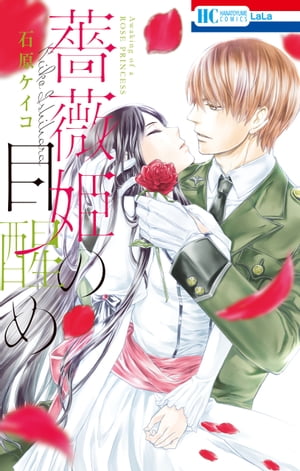
Fantasy / Romance
Kiss of the Rose Princess
A review of Kiss of the Rose Princess — Aya Shouoto's nine-volume shojo fantasy about Anise Yamamoto, who receives four magical knight cards and must kiss each knight to summon their power to fight supernatural threats.
Fantasy / Romance
Sakura Hime: The Legend of Princess Sakura
A review of Sakura Hime: The Legend of Princess Sakura — Arina Tanemura's twelve-volume historical fantasy shojo following a princess who discovers she is descended from the moon and carries a sword that can destroy yokai — and everything she cares about.
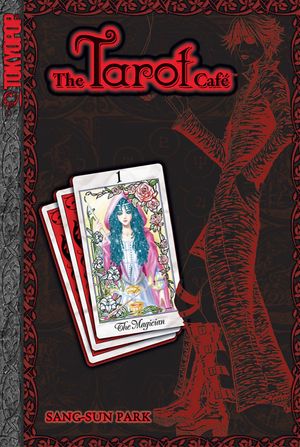
Fantasy / Mystery
Tarot Cafe
A review of Tarot Cafe — Sang-Sun Park's seven-volume Korean manhwa following Pamela, a tarot card reader who helps supernatural beings fulfill their wishes — while bound by a contract of her own that may cost her everything.
Fantasy / Slice of Life
Kamakura Story
Kamakura Story follows mystery writer Ichiro Maekawa and his young wife Akiko as they navigate married life in Kamakura — a coastal city where the supernatural is simply part of daily existence, and demons and spirits share the streets with ordinary people.
Fantasy / Comedy
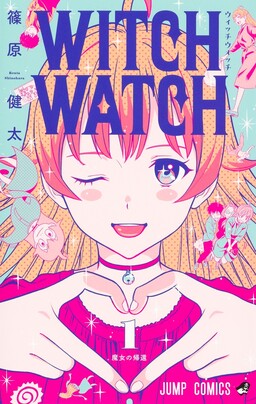
Witch Watch
Yu's review of Witch Watch — Nico is a witch who sees disaster visions; Morihito is her childhood friend and an ogre who has sworn to protect her; they live together in modern Japan, where Nico's disaster visions lead to increasingly absurd comedic situations.
Fantasy
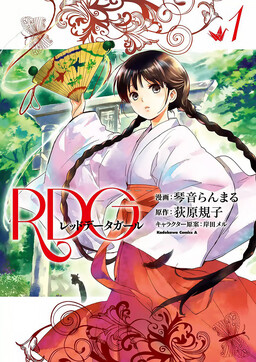
Red Data Girl
Yu's review of Red Data Girl — Izumiko Suzuhara has grown up at a mountain shrine; she destroys electronic devices by touch; she's an endangered shrine maiden (yorishiro) for a powerful deity; she enters a school that serves as a hub for supernatural politics; manga adaptation of Noriko Ogiwara's light novel.
Written by
Yu
Manga Enthusiast from Japan
I grew up in Japan and manga literally saved me during a tough time in elementary school. My English isn't perfect, but my love for manga is real — and I want to share it with you.
Disclosure: This post contains affiliate links. As an Amazon Associate, I earn from qualifying purchases at no extra cost to you.