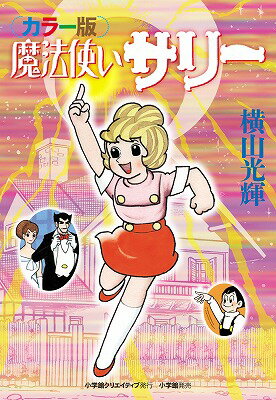
Sally the Witch Review: The Manga That Invented Magical Girls
by Mitsuteru Yokoyama
Read the first volume. If it doesn't hook you, put it down. It'll hook you.
Buy Sally the Witch on Amazon →*Affiliate link — I earn a small commission at no extra cost to you.
What if the girl with all the magic chose to give up her throne just to know what it felt like to have a friend?
Quick Take
- The original magical girl manga — Sally established the genre in 1966 and everything came after
- Mitsuteru Yokoyama created the template: magical girl hides her powers, helps her friends, faces the cost of belonging to two worlds
- Warm, episodic, and foundational — understanding this manga means understanding where Sailor Moon, Card Captor Sakura, and everything else began
Who Is This Manga For?
- Fans of magical girl anime and manga who want to read the genre's origin
- Readers interested in manga history — this is the text that defined an entire tradition
- All-ages readers looking for warmth and gentle fantasy
- Parents seeking manga to introduce to children — this is safe and emotionally positive
Content Warnings & Age Rating
Age Rating: All Ages Content Warnings: Light magical themes. All-ages content throughout. No concerning material.
Appropriate for all readers.
Yu's Rating
| Category | Score |
|---|---|
| Story Depth | ★★★☆☆ |
| Art Style | ★★★★☆ |
| Character Development | ★★★☆☆ |
| Accessibility for Non-Japanese Readers | ★★★★☆ |
| Reread Value | ★★★☆☆ |
Story Overview
Sally is a princess from a magical kingdom who slips away to the human world, drawn by curiosity about what ordinary life is like. In the human world, she attends school under the name Sachiko, makes friends, and tries to hide her magical abilities — which is harder than it sounds.
Each chapter involves Sally's magical powers colliding with everyday situations. A friend has a problem. Sally's magic could solve it instantly but would reveal her secret. She finds another way, or finds the limits of what magic can solve, or learns something about what humans value that magic cannot provide.
The series is episodic — there is no single overarching threat — but the emotional consistency is real. Sally keeps choosing human connection over magical convenience, and that choice is the series' argument.
Characters
Sally (Sachiko): A princess who chooses friendship over power, repeatedly and without resentment. Her goodness is not passive — she makes active decisions to prioritize her human relationships, and those decisions cost her something each time.
Yoshiko and Sumire: Sally's human friends — the two girls who matter most to her in the human world and whose lives she quietly protects throughout the series.
Art Style
Yokoyama's art for Sally is lighter and more feminine than his robot and adventure manga — he calibrated his visual approach to the shojo magazine context and to the emotional warmth of the material. Sally's character design became iconic in Japan and influenced magical girl character design for decades.
Cultural Context
Sally the Witch began as an anime in 1966 (itself influenced by the American TV show "Bewitched") and then ran as a manga in Ribon. The anime-manga relationship was one of the first in the medium, and the franchise established patterns that shojo manga and anime would follow for the next sixty years.
The magical girl genre — with all its variations and subversions — is essentially a response to what this series established. Sailor Moon, Cardcaptor Sakura, Madoka Magica: all of them are in conversation with Sally the Witch.
What I Love About It
I love the simplicity of the central choice: a girl with unlimited power chooses to constrain herself for the sake of belonging.
This is not naive. It's a precise observation about what human connection requires — that you cannot have it from a position of absolute advantage. Sally's magic doesn't make friendship easier; it makes it harder. She must offer something that isn't magical to be a real friend.
What English-Speaking Fans Say
Not known in English-speaking markets because it hasn't been translated. Among scholars of anime and manga history, Sally the Witch is recognized as a foundational text — the series that made the magical girl genre possible. Its influence is acknowledged throughout the academic and critical literature on shojo manga.
Memorable Scene ⚠️ Spoiler Warning
A scene where Sally must choose between using her magic to solve a problem that would also reveal her identity and watching a friend suffer a smaller difficulty without intervention. She chooses not to use her magic. The friend manages on her own. The scene establishes that Sally's restraint is not about self-denial but about respect for what her friend is capable of.
Similar Manga
- Cardcaptor Sakura: CLAMP's successor to the magical girl tradition — available in English
- Sailor Moon: The genre's most famous later work — available in English
- Unico: Tezuka's all-ages fantasy — similar warmth, different structure
Reading Order / Where to Start
Volume 1. The series is episodic and self-contained, but reading from the beginning establishes the world and Sally's character properly.
Official English Translation Status
Sally the Witch has no official English translation.
Pros & Cons
Pros
- The foundational magical girl manga — historically essential
- Warm and positive without being saccharine
- Complete at 7 volumes
- Accessible for all ages
Cons
- No English translation
- The episodic structure offers no cumulative payoff
- The historical significance may matter more than the reading experience for modern readers
Format Comparison
| Format | Notes |
|---|---|
| Physical | Japanese editions available |
| Digital | Available in Japanese |
| Omnibus | Collected editions available |
Where to Buy
No English release yet. That just means you find it before everyone else does.
*Affiliate link — I earn a small commission at no extra cost to you.
More Manga You Might Like
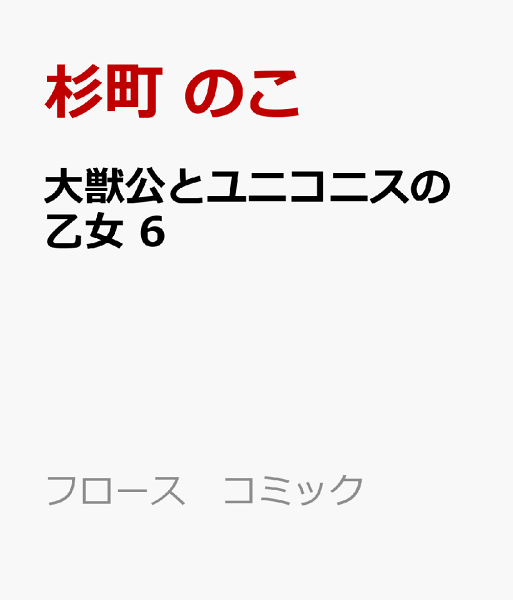
Fantasy
Unico
Unico is a small unicorn with the power to make anyone who meets him happy — which is why the gods condemn him to be carried across time by the West Wind, stripped of all memories and relationships, forbidden to stay anywhere long enough to be loved.
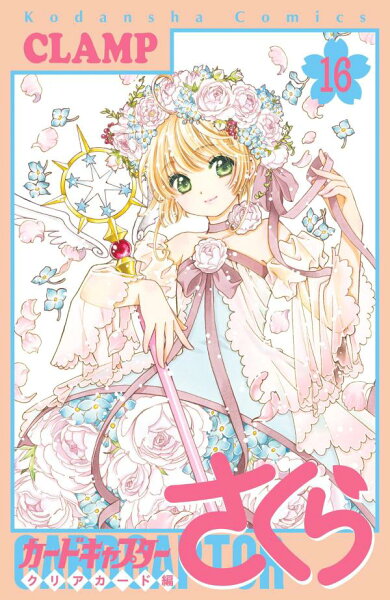
Fantasy / Magical Girl
Cardcaptor Sakura
Yu's review of Cardcaptor Sakura — a ten-year-old girl accidentally releases the Clow Cards, has to capture them all, transforms them into her own, and along the way the manga quietly becomes one of CLAMP's warmest, most generous stories about love.
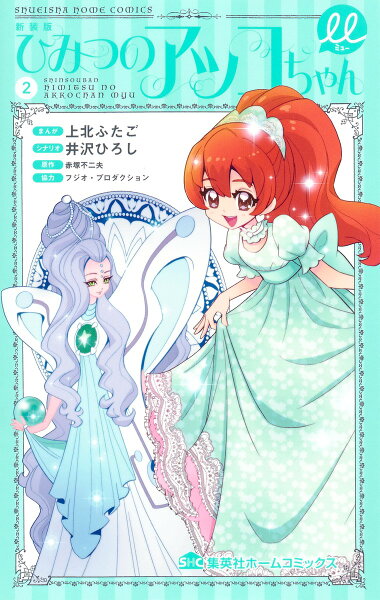
Fantasy / Slice of Life
Himitsu no Akko-chan
Himitsu no Akko-chan is the manga that established the magical girl transformation formula — a young girl receives a magical mirror that allows her to transform into anyone or anything, and uses this power to solve problems and help people.
Fantasy / Slice of Life
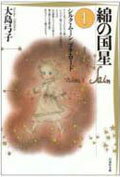
The Star of Cottonland
The Star of Cottonland follows Chi, a small stray kitten who believes with complete sincerity that she is a human child temporarily in cat form — Yumiko Oshima's beloved shojo classic about identity, belonging, and the particular consciousness of cats.
Fantasy / Shoujo
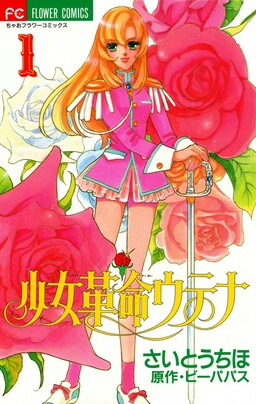
Revolutionary Girl Utena
Yu's review of Revolutionary Girl Utena — Utena Tenjou, who decided as a child to become a prince rather than a princess, attends Ohtori Academy and becomes drawn into its secret dueling system; the winner of the duels wins possession of Anthy Himemiya, the Rose Bride; a surrealist fairy tale manga about power, freedom, and who gets to be the subject of a story.
Fantasy
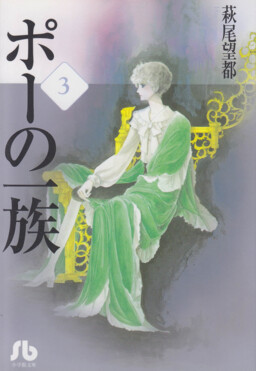
Poe Clan
Yu's review of Poe Clan — Edgar is a vampire child, eternally young, moving through European history across several centuries; his vampire existence means watching everyone he cares for age and die while he remains unchanged; Moto Hagio's foundational vampire manga, originally published in 1972.
Written by
Yu
Manga Enthusiast from Japan
I grew up in Japan and manga literally saved me during a tough time in elementary school. My English isn't perfect, but my love for manga is real — and I want to share it with you.