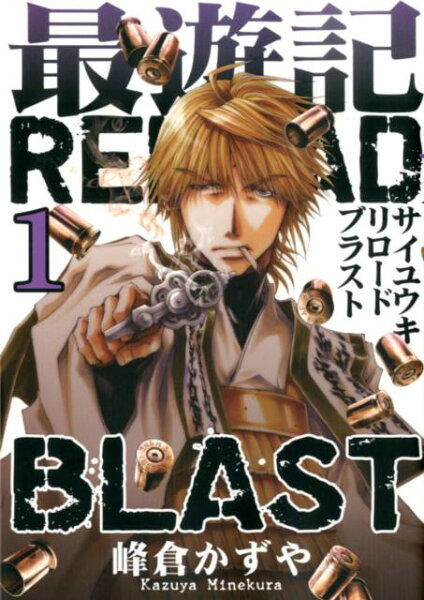
Saiyuki Review — Kazuya Minekura's Dark Fantasy Retelling of Journey to the West Where the Monk Carries a Gun and the Monkey King Smokes
by Kazuya Minekura
Read the first volume. If it doesn't hook you, put it down. It'll hook you.
Buy Saiyuki on Amazon →*Affiliate link — I earn a small commission at no extra cost to you.
I read Saiyuki in middle school when my mother brought home an old volume from a secondhand bookstore in Akihabara. I had not yet read the original Journey to the West. I read Minekura's version first and thought it was the strangest, coolest thing I had ever encountered — four men with attitudes, a talking dragon, a gun-toting Buddhist monk, the gradual unfolding of why these four people specifically were traveling west together.
I have read the original Journey to the West since. Minekura's version is its own thing entirely.
Quick Take
- Kazuya Minekura's 1997–2002 manga reimagines the Chinese classic Journey to the West as gritty dark fantasy with four anti-hero protagonists
- The original 9-volume series spawned sequel manga (Saiyuki Reload, Reload Blast, Ibun) extending the story for decades
- Age rating: T+ (Older Teen) — graphic violence, smoking, drinking, mature themes throughout
What Is Saiyuki About?
The series is a dark fantasy retelling of Saiyuki / Journey to the West (西遊記), the 16th-century Chinese classic novel. In the original, a Buddhist monk named Xuanzang travels from China to India to retrieve sacred Buddhist scriptures, accompanied by three demon-disciples: the Monkey King Sun Wukong, the pig-spirit Zhu Bajie, and the river-monster Sha Wujing. The original is one of the foundational works of Chinese literature.
Minekura's version retains the four-character structure and the westward journey premise, but completely reimagines the tone, setting, and character dynamics.
The setting: A fantasy land where the gods of Heaven (Tenkai) once ruled and where demons (yokai) and humans coexisted in uneasy peace. Recently, an unknown force has begun resurrecting the powerful demon king Gyumao, causing demons across the land to lose their sanity and attack humans. The Heaven Council has sent a special task force west to stop the resurrection.
The four protagonists:
- Genjo Sanzo (玄奘三蔵) — The Buddhist priest leading the journey. Heavy-smoking, harsh, intermittently brutal. Carries a magical revolver. Has the Maten Sutra, an ancient scripture that is one of five Heavenly Sutras with reality-altering power. His past involves his mentor's murder and his complicated inheritance of the role
- Son Goku (孫悟空) — The Monkey King. Reimagined as a teenage boy with limiter shackles that prevent him from accessing his true power. Cheerful, gluttonous, deeply attached to Sanzo. His past spans 500 years of imprisonment
- Sha Gojyo (沙悟浄) — The half-demon womanizer. Red-haired, charming, plays mah-jongg, drinks. Carries a chained sickle weapon. His complicated heritage (half-demon, half-human) and family backstory are some of the manga's most affecting material
- Cho Hakkai (猪八戒) — The gentle one. Former human turned demon. Quiet, polite, traumatized. Carries an emerald-eyed dragon named Hakuryuu who can transform into a Jeep. Hakkai's backstory is the manga's darkest and most carefully constructed
The four travel west together. Each chapter is some combination of encountering attacking demons, building character relationships, flashing back to their respective pasts, and slowly approaching the source of the resurrection. The original 9-volume series ends at a specific point in their journey; the journey continues across the multiple sequel manga.
The Saiyuki Franchise: Multiple Series
This can be confusing for new readers, so let me clarify the publication structure:
- Saiyuki (1997–2002, 9 volumes) — The original series
- Saiyuki Reload (2002–2009, 10 volumes) — Direct continuation, picks up where Saiyuki ended
- Saiyuki Reload Blast (2009–ongoing) — Continuation of Reload
- Saiyuki Ibun (2009–ongoing) — A prequel/side-story series focusing on Genjo Sanzo's predecessors
- Various spinoffs and short series
For new readers: start with the original Saiyuki (9 volumes). It is the most self-contained and gives you the four protagonists as Minekura first conceived them. Reload picks up after.
Who Is This Manga For?
- Fantasy readers who like adult-leaning ensemble adventures
- Journey to the West fans willing to engage with a radical reinterpretation
- Character drama enjoyers — the manga's primary subject is the four protagonists' interior lives
- Anime watchers of the 2000–2001 Gensomaden Saiyuki anime who want the source
- Not for: younger readers; readers wanting a faithful Journey to the West adaptation
Content Warnings & Age Rating
Age Rating: T+ (Older Teen) — 16+ Content Warnings: Graphic violence (regular demon battles, some gore); recurring smoking and drinking by main characters; some sexual content (mostly Gojyo's storylines); dark themes including child abuse, trauma, and murder in backstories
The T+ rating is the floor. Saiyuki is significantly darker than its character-design cute appearance might suggest.
Characters (Brief Overview — Detailed Above)
The four protagonists are the manga's primary subject. The sustained character development across 9 volumes — particularly Hakkai's backstory (volumes 6–7) and the gradual reveal of Sanzo's past — is the manga's signature contribution.
Supporting cast includes:
- Goku's past — reveals across the series about his 500-year imprisonment
- Various demon antagonists — many with their own arcs and tragedies
- Heavenly Court figures — political backdrop that becomes more important in Reload
Art Style
Kazuya Minekura's art is exceptional and distinctively stylized. Character designs are androgynous, lean, sharply detailed. Panel compositions are cinematic with frequent attention to specific details (cigarettes, weapons, weather). The action sequences are dynamic.
The art has evolved across the franchise; Minekura's late-Reload-era style is more refined than her early Saiyuki style. Both have their fans.
Cultural Context
Kazuya Minekura is one of the most influential Japanese manga creators to emerge from the late-1990s G-Fantasy scene. Her career has been affected by health issues — she has taken multiple long hiatuses for medical reasons across the years. Reload Blast and Ibun have proceeded with extended gaps between volumes as her health permits.
The Saiyuki anime franchise is substantial:
- Gensomaden Saiyuki (2000–2001) — original anime, 50 episodes
- Saiyuki Reload (2003–2004) — 25 episodes
- Saiyuki Reload Gunlock (2004) — 26 episodes
- Saiyuki Reload Blast (2017) — 12 episodes
- Saiyuki Reload -Zeroin- (2022) — newest installment
Each anime adaptation covers approximately one arc of the manga.
What I Love About It
Hakkai's backstory arc.
I won't spoil specifics. Somewhere in volumes 6–7 of the original Saiyuki, the manga gives Cho Hakkai an extended flashback explaining who he was before he became the gentle traveler the reader has come to know. The backstory is one of the most carefully constructed in the manga.
What I love is the contrast. Hakkai-in-present is the kindest of the four. He cooks. He cleans. He smiles at people. He is patient with Goku, gentle with Sanzo's harshness, tolerant of Gojyo's chaos. He is, in the manga's present, the group's calm.
The backstory reveals what made him calm. The events that turned him from human into demon — the violence he committed, the loss he experienced — are detailed across multiple chapters. Minekura draws the past Hakkai differently. His face is harder. His eyes are different. The reader sees who he was before he met Gojyo, who eventually became his closest friend, and before he met Sanzo and Goku, who became his found family.
The arc closes on present-Hakkai sitting with the others, doing something ordinary — preparing dinner, sharing a joke — and the reader sees what it has cost him to become this version of himself. The kindness is not naive. The kindness is earned. The manga had to show us what he had been to make us understand what he chose to become.
That arc is the manga's whole thesis. The four protagonists are all in some way damaged. They have all chosen to travel together. The travel — and each other — is what they have built out of the damage. Saiyuki is not really about Journey to the West. It is about the family of damaged people the journey becomes.
I think about this when I think about my own friends. We are all damaged in different ways. We have chosen each other anyway. That choice is what makes us a family.
What English-Speaking Fans Say
Saiyuki had a substantial English-language fan base during TOKYOPOP's release period (2004–2009). The fan community has aged with the franchise; many readers who started Saiyuki in the early 2000s have continued through Reload, Blast, and Ibun across the years.
The most common comment: the character writing is the manga's strength, and the franchise's longevity is sustained by the four protagonists rather than by plot mechanics.
The English release status is complicated: TOKYOPOP's license lapsed after the original 9-volume Saiyuki run, and the subsequent series (Reload, Blast, Ibun) have had different English publishers (or no English release).
Memorable Scene ⚠️ Light Spoiler
The chapter where Goku remembers Sanzo from before.
I won't spoil specifics. Across the manga, hints accumulate that Sanzo and Goku knew each other before the current journey. Eventually, in a specific chapter, Minekura gives Goku a flashback to the moment when Sanzo — five hundred years younger than his current self in some sense, though the mechanics are mythological — freed Goku from his imprisonment on Mount Gogyou.
The chapter is rendered with restraint. The freeing is not dramatic. Sanzo (or who Sanzo was then) reaches Goku because Goku has been calling out to someone for five hundred years and Sanzo finally hears him. The dialogue is small. The moment is small. The weight is enormous.
Goku in the present, remembering this, looks at Sanzo with the specific way the eyes of a person look when they understand who has saved them. Sanzo, in the present, looks at Goku with the specific way the eyes of a person look when they understand they have been the one to save someone.
The chapter ends without overtelling. Minekura trusts the reader to feel the weight. Saiyuki is a manga about four damaged people. This chapter is the moment we understand what Sanzo and Goku specifically have between them — older than the journey, deeper than friendship, the kind of bond that earns the term "family" in Minekura's specific vocabulary.
Similar Manga
| Title | Its Approach | How Saiyuki Differs |
|---|---|---|
| Yu Yu Hakusho | 1990s shounen with team dynamic | YuYu Hakusho is more fighting-tournament; Saiyuki is more travel-drama |
| Trigun | Western-coded fantasy with damaged protagonists | Trigun is single-protagonist; Saiyuki is ensemble |
| Bleach (early arcs) | Stylized action with cool character designs | Bleach is more conventional shounen; Saiyuki has more adult content |
| Jojo's Bizarre Adventure | Stylized adventure with ensemble cast | Jojo is more bizarre and supernatural; Saiyuki is more grounded in fantasy-Asia |
Reading Order / Where to Start
Saiyuki Volume 1. Read the original 9-volume series first. After completing it, continue with Saiyuki Reload (10 volumes), then Reload Blast (ongoing). Ibun is a prequel series that can be read after the main story.
Official English Translation Status
TOKYOPOP published all 9 volumes of the original Saiyuki in English (2004–2006). The TOKYOPOP volumes are out of print but available secondhand.
Saiyuki Reload (10 volumes) was partially published in English by TOKYOPOP and later by other publishers; current English availability is mixed.
Reload Blast and Ibun are partially available in English; check current publisher status.
The original 2000–2001 anime (Gensomaden Saiyuki) is the most accessible English-language entry point and is available with subtitles on some streaming services.
Pros & Cons
Pros
- One of the most influential dark fantasy manga of the late 1990s / early 2000s
- The four protagonists are one of manga's great ensemble casts
- Minekura's art is distinctive and high-quality
- 9 volumes is a meaningful but manageable original-series commitment
- The journey-to-the-west foundation gives the manga thematic depth
Cons
- The franchise is long; multiple series may overwhelm new readers
- English release status varies by series; finding all volumes can be difficult
- Smoking and drinking by main characters is constant
- The dark-fantasy ensemble style is an acquired taste. It won't land for everyone, especially readers wanting more conventional shounen action.
Is Saiyuki Worth Reading?
For fantasy manga readers willing to engage with dark, adult-leaning material: yes — the original 9-volume Saiyuki is among the best ensemble fantasy manga of its era.
For Journey to the West fans curious about reinterpretations: yes, with the warning that Minekura's version is significantly removed from the source.
Format Comparison
| Format | Notes |
|---|---|
| Physical (TOKYOPOP) | 9 volumes original Saiyuki; out of print; available secondhand |
| Digital | Limited availability |
| Anime (Gensomaden Saiyuki, 2000–2001) | 50 episodes; available with English subtitles on some platforms |
| Sequel manga (Reload/Blast/Ibun) | Mixed English availability |
Where to Buy
Read the first volume. If it doesn't hook you, put it down. It'll hook you.
This post contains affiliate links. If you purchase through these links, I may earn a small commission at no extra cost to you. As an Amazon Associate, I earn from qualifying purchases.
*Affiliate link — I earn a small commission at no extra cost to you.
More Manga You Might Like
Action / Fantasy
Tower of God
A review of Tower of God, the Korean webtoon manhwa about a boy who climbs an infinite tower in search of his only friend.
Fantasy / Action
X/1999
Yu's review of X/1999 — Kamui Shirô returns to Tokyo after years away, destined to decide the fate of the Earth; two groups of seven — the Dragons of Heaven who would save humanity and the Dragons of Earth who would let the planet destroy it — await his choice; the series is an apocalyptic tragedy where the question is not whether loss will happen but who will carry it.
Fantasy / Action
Solo Leveling
Yu's review of Solo Leveling — Sung Jinwoo is the weakest hunter in a world where gates to dungeons have opened and hunters fight the monsters within; after a near-fatal mission, he receives a mysterious system that allows only him to grow stronger — endlessly, without limit.
Fantasy / Action
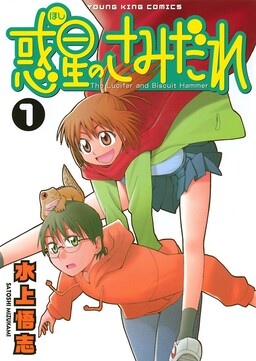
Lucifer and the Biscuit Hammer
Yu's review of Lucifer and the Biscuit Hammer — Yuuhi Amamiya, a university student who doesn't care about much of anything, is told by a lizard that he is a 'Beast Knight' destined to save the world; he's more interested in the plan of Princess Samidare to save the world herself — so she can destroy it after.
Fantasy / Action
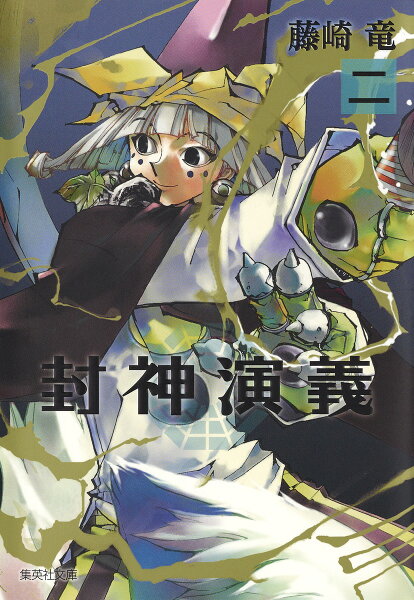
Soul Hunter
Based on the Chinese classic 'Investiture of the Gods,' Soul Hunter follows Taikoubou — a lazy, brilliant immortal sent to overthrow a corrupt dynasty — and the impossible task he's been given by the heavens themselves.
Fantasy / Isekai
Dead Mount Death Play
Yu's review of Dead Mount Death Play — Ryohgo Narita and Shinta Fujimoto's reverse-isekai thriller. The Corpse God, a feared necromancer, is slain by the hero Shagrua and reincarnates into modern Shinjuku in the body of a murdered teenager, Polka Shinoyama. Wanting only a peaceful life, he is pulled into Tokyo's criminal underworld.
Written by
Yu
Manga Enthusiast from Japan
I grew up in Japan and manga literally saved me during a tough time in elementary school. My English isn't perfect, but my love for manga is real — and I want to share it with you.
Disclosure: This post contains affiliate links. As an Amazon Associate, I earn from qualifying purchases at no extra cost to you.