
Saint Young Men Review: Jesus and Buddha Take a Vacation in Tokyo and Try to Blend In
by Hikaru Nakamura
Read the first volume. If it doesn't hook you, put it down. It'll hook you.
Buy Saint Young Men on Amazon →*Affiliate link — I earn a small commission at no extra cost to you.
Quick Take
- Jesus Christ and Gautama Buddha are roommates in a Tokyo apartment, trying to experience ordinary modern Japanese life without causing miracles
- Hikaru Nakamura's comedy is gentle and genuinely warm — the joke is always the affection between two beings trying to understand a world they created
- Ongoing, beloved, and consistently one of the funniest manga being published
Who Is This Manga For?
- Readers who want comedy manga that is warm rather than mean
- Anyone comfortable with gentle religious satire presented with obvious affection
- Fans of slice-of-life who want an absurdist premise executed with absolute sincerity
- Readers who want something they can read in any order and enjoy immediately
Content Warnings & Age Rating
Age Rating: T (Teen) Content Warnings: Religious satire — both Jesus and Buddha are portrayed affectionately but humorously. Not intended to offend; most readers of faith report enjoying the obvious affection for both figures.
The manga has been celebrated by religious and non-religious readers alike for its warmth.
Yu's Rating
| Category | Score |
|---|---|
| Story Depth | ★★★☆☆ |
| Art Style | ★★★★☆ |
| Character Development | ★★★★☆ |
| Accessibility for Non-Japanese Readers | ★★★★★ |
| Reread Value | ★★★★★ |
Story Overview
Jesus Christ and Gautama Buddha have decided to take a vacation in modern Japan. They share a cheap apartment in Tachikawa, manage a tight budget, go to convenience stores, attend summer festivals, worry about the internet, and try to experience the mundane details of human life they spent their divine existences above.
The jokes come from the gap: Jesus accidentally creates wine when he touches juice. Buddha achieves enlightenment in a coffee shop and the surrounding customers join him. Their halos glow when they get excited, requiring hat management. Their landlady is a devoted woman who can never quite look at them directly.
Each chapter is self-contained. The series has no destination — it is exactly what it says it is: two deities on holiday, learning about convenience store rice balls and Japanese weather.
Characters
Jesus — Enthusiastic, easily moved to tears, quick to post about his experiences, concerned about his follower count. His warmth is the source of most of the chapter's emotional resolution.
Buddha — More restrained, quieter, always slightly closer to enlightenment than he wants to be in a convenience store context. His embarrassment at Jesus's enthusiasm is the recurring comic dynamic.
Matsuda-san — Their landlady, who suspects something but can never confirm it. Her absolute normalcy is the straight-line to every absurd situation.
Art Style
Nakamura's art is clean and expressive — the character designs for Jesus and Buddha are immediately recognizable while being entirely non-threatening. The comedy panel work is precise: she knows exactly when to hold on a face and when to cut. Visual gags reward close reading.
Cultural Context
Saint Young Men reflects Japan's distinctly non-confrontational relationship with world religions — Nakamura is clearly fond of both figures and both traditions, and the humor comes from affection rather than critique. The manga also functions as a gentle guide to modern Japanese daily life seen through eyes that genuinely find everything remarkable.
What I Love About It
The chapter where Jesus discovers the internet and becomes briefly obsessed with his own search results. It is a perfect expression of everything the manga is — the gap between the divine and the mundane, and how the divine finds the mundane genuinely moving rather than beneath it. That combination of gentle comedy and warmth is what Nakamura does better than almost anyone.
What English-Speaking Fans Say
Western readers approached Saint Young Men with varying degrees of concern about religious satire and then overwhelmingly found it charming instead. The series has devotees across religious and non-religious communities who cite it as proof that affectionate comedy can engage with sacred figures without disrespect. The Kodansha USA release expanded the readership significantly.
Memorable Scene ⚠️ Spoiler Warning
The summer festival arc — where both Jesus and Buddha try to manage their powers among large crowds of faithful who are there for exactly the kinds of experiences that could trigger involuntary miracles — is the series at its most perfectly constructed.
Similar Manga
- Thermae Romae — A Roman architect travels through time to Japanese baths; similar fish-out-of-water comedy
- Nichijou — Absurdist slice-of-life, similar warmth
- The Way of the Househusband — Modern setting comedy with a specific absurd premise
- Yotsuba&! — Warmth as the comedy itself
Reading Order / Where to Start
Volume 1 — each chapter is independent and the series is enjoyable from any point, but volume 1 establishes the dynamic.
Official English Translation Status
Kodansha USA is publishing the ongoing series in English. Multiple volumes available.
Pros & Cons
Pros
- Consistently funny across all volumes
- Warmth is the dominant tone — no mean comedy
- Standalone chapters mean no barrier to re-entry
- Cross-cultural accessibility is exceptional
Cons
- No plot or destination — readers who want narrative progression will find little
- Religious satire is mild but present; requires comfort with the premise
- English release is behind the Japanese
Format Comparison
| Format | Notes |
|---|---|
| Individual Volumes | Kodansha USA; standard |
| Digital | Available; works well on any device |
Where to Buy
Read the first volume. If it doesn't hook you, put it down. It'll hook you.
This post contains affiliate links. If you purchase through these links, I may earn a small commission at no extra cost to you. As an Amazon Associate, I earn from qualifying purchases.
*Affiliate link — I earn a small commission at no extra cost to you.
More Manga You Might Like

Fantasy
Miss Kobayashi's Dragon Maid: Kanna's Daily Life
Yu's review of Miss Kobayashi's Dragon Maid: Kanna's Daily Life — Kanna, the small dragon child who lives with Kobayashi and Tohru, goes to elementary school; this spinoff follows her daily life, her human friend Saikawa, and her gradual understanding of human childhood; coolkyousinnjya's all-ages spinoff of the original Dragon Maid.

Fantasy / Comedy
Jashin-chan Dropkick
A review of Jashin-chan Dropkick, the comedy manga about a demon girl from hell who wants to kill her summoner — but can't — and is furious about it every day.
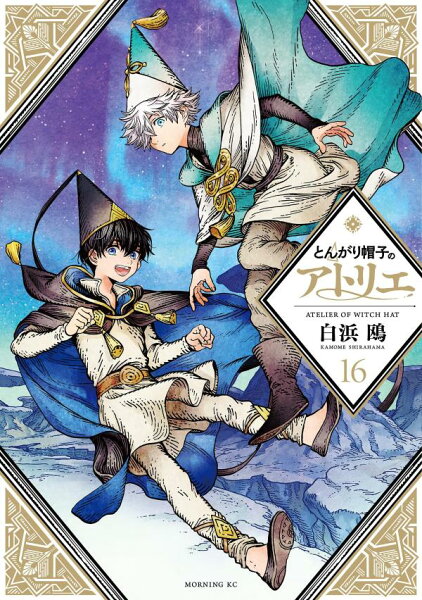
Fantasy
Witch Hat Atelier
Yu's review of Witch Hat Atelier — a girl born without magic witnesses the forbidden secret of how magic actually works, and must now become a witch to undo what she accidentally caused.

Fantasy / Comedy
Uncle from Another World
Yu's review of Uncle from Another World — Takafumi's uncle Yosuke wakes from a 17-year coma having been an isekai hero in another world; Takafumi discovers his uncle has magical powers but also deeply embarrassing stories about how he was treated in the other world.

Fantasy / Supernatural
Toilet-Bound Hanako-kun
Yu's review of Toilet-Bound Hanako-kun — Nene Yashiro summons Hanako-kun, the most famous of her school's Seven Wonders, the ghost rumored to grant wishes; when she accidentally becomes bound to him as his helper, she enters a world of supernatural politics, competing spirits, and the mystery of who Hanako actually was.

Fantasy / Comedy
Welcome to Demon School! Iruma-kun
Yu's review of Welcome to Demon School! Iruma-kun — Iruma Suzuki is sold to a demon by his neglectful parents and becomes the grandson of the great demon Sullivan; enrolled in a demon school where humans are supposedly food, Iruma must hide his human nature while navigating the competitive and colorful demon school environment.
Written by
Yu
Manga Enthusiast from Japan
I grew up in Japan and manga literally saved me during a tough time in elementary school. My English isn't perfect, but my love for manga is real — and I want to share it with you.
Disclosure: This post contains affiliate links. As an Amazon Associate, I earn from qualifying purchases at no extra cost to you.