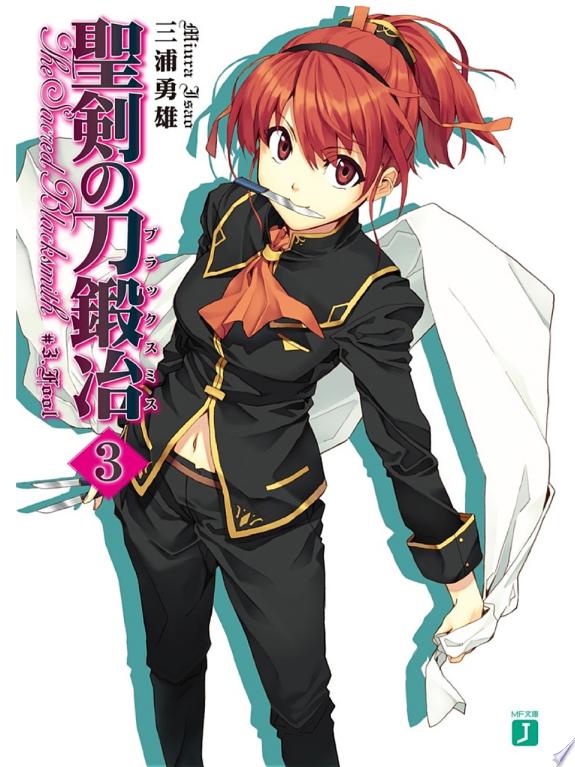
The Sacred Blacksmith Review: A Knight Who Can't Win a Fight, and the Smith Who Won't Forge Her a Sword
by Isao Miura (original) / Kōtarō Yamada (manga)
Read the first volume. If it doesn't hook you, put it down. It'll hook you.
Buy The Sacred Blacksmith on Amazon →*Affiliate link — I earn a small commission at no extra cost to you.
I came to Sacred Blacksmith during my "I want a fantasy with knights and clean armor" phase a few summers ago. I'd just read too much grim Berserk derivation and wanted something with neat European-style city-states and a protagonist who was sincere rather than haunted. Yamada's manga adaptation gave me that, and then a little more than I expected.
I'm Yu. I picked up the first Seven Seas volume off a bookstore endcap in Tokyo because I liked the cover and ended up reading all ten.
Quick Take
- Kōtarō Yamada's 10-volume manga adaptation of Isao Miura's Sacred Blacksmith light novels — serialized in Monthly Comic Alive (Media Factory) from March 2009 to January 2017.
- Seven Seas Entertainment published all ten English volumes between May 2013 and July 2017; the series is complete in English.
- Rated T (Teen) — fantasy combat, demon-contract body horror in select chapters, no explicit content.
Story Overview
Cecily Campbell has just inherited her late father's knighthood in the Independent Trade City of Housman — a city-state of the kind manga rarely bothers to set up: independent of any kingdom, governed by guilds and a council, defended by an Order of Knights that is mostly a ceremonial role for noble children. Cecily is sincere, brave, and terrible at fighting. In the first chapter her heirloom sword shatters mid-strike.
She is saved by Luke Ainsworth, a young man wielding a katana in a setting where everyone else carries longswords. Luke is a Sacred Blacksmith — one of the few craftsmen left who can forge real Sacred Swords, the only weapons capable of cutting down the kind of demons that emerged from a forgotten war forty years ago. He won't make Cecily a sword. He won't apprentice her. He won't explain why.
The manga is about the slow erosion of his refusal. The reason — a Demon Contract he is still actively paying for, with Lisa, the small girl who lives with him and is also the body his ongoing contract is bound to — is the real engine of the story. Layered over the personal arc is the political one: the Valbanill War is not as buried as the city thinks, and someone is reactivating the old contracts in service of a coup.
Characters
Cecily Campbell — A protagonist who starts unable to win a fight. Yamada's manga refuses to short-cut her arc; she gets stronger in increments, by being humiliated and getting back up, and the eventual victories land because they were earned in losing volumes.
Luke Ainsworth — The blacksmith. Cold not from edgelord posture but from a specific, ongoing grief that Yamada reveals slowly. His contract isn't a flashback wound — it's something he is still carrying right now, in panel, every day. That distinction is what gives him weight.
Lisa — Looks like a small girl, behaves like a small girl, is actually a Sacred Demon Sword that Luke is bound to. The "tiny mascot character who is secretly a weapon" trope is everywhere in this kind of light-novel fantasy; what Yamada does with her — making her cheerful and unbothered about being a contracted weapon, then revealing how much that cheerfulness is for Luke's sake — is the part of the cast I came back for.
Aria — Another demon sword, manifesting as a tall woman with a serious manner. The contrast with Lisa is the manga's most efficient piece of worldbuilding: same kind of contract, very different outcome.
Charlotte E. Firobisher — Princess of a neighboring state, friend, and the political vector for the conspiracy that drives the later arcs.
What I Love About It
The forge scenes.
Yamada draws the act of making a Sacred Sword like it actually matters. The katana-forging method Luke uses — which is recognizably Japanese in a setting that is recognizably European — is rendered as a long technical process with real steps: the heating, the folding, the quenching, the binding ritual that makes the sword Sacred rather than ordinary. Most fantasy manga treat forging as "the smith hits the anvil and a sword comes out." Yamada gives it pages.
What I love is what that craft choice does to the story. Luke isn't a hero by accident or destiny. He is a craftsman who has spent years learning a thing very few people in the world can do, and he is choosing not to teach it. When Cecily eventually proves she is worth being made a sword for, the moment lands because the sword is a thing of months and ritual, not a plot reward. The manga's argument is that the people who shape weapons are not minor characters in the war; they are choosing it.
Memorable Scene ⚠️ Spoiler Warning
The chapter that lays out what Lisa actually is and what the contract Luke maintains with her actually costs is, structurally, the manga's pivot. Without spoiling specifics: it reframes Luke's coldness, his isolation, and his refusal to apprentice Cecily as not a character flaw but as a kind of ongoing ethical posture. He is not a man stuck in the past. He is a man performing daily maintenance on a wound he chose, because the alternative was worse, and because the wound has a face he loves.
Yamada draws this revelation across only a few pages and does not milk it. The decision to let Cecily react quietly — to spend the rest of the volume thinking about what she just learned rather than vowing some big response — is what told me Yamada respected this adaptation more than the genre usually deserves.
Pros & Cons
Pros:
- A 10-volume complete fantasy — finite, satisfying, English-licensed in full.
- The European city-state setting is more carefully built than most "isekai-adjacent" fantasy.
- Yamada's forge sequences are some of the best craft-process pages in any 2010s manga.
Cons:
- The light-novel DNA shows in some early-volume harem-comedy beats.
- The manga adapts the novels selectively; readers who want the full Miura plotline should read the LNs alongside.
- Some side characters (especially Charlotte's retinue) are underdrawn relative to the leads.
Is The Sacred Blacksmith Worth Reading?
Yes, if you want a complete medieval-Euro-fantasy manga that takes its craft setting seriously and treats its female lead like she actually has to earn her arc. Skip if light-novel fantasy fanservice tropes are an automatic no.
Who Is This Manga For?
- Readers who liked Spice and Wolf (the manga) for its quieter craft worldbuilding.
- Claymore fans who want a softer-edged fantasy with a similar "woman with a sword in a wounded world" energy.
- Fantasy readers tired of isekai, looking for an original-fantasy setting.
- Light-novel adaptation fans who want one in a complete, contained run.
Official English Translation Status
Seven Seas Entertainment published the complete 10-volume English manga between May 21, 2013 and July 11, 2017. All volumes are available in print and digital. The original Isao Miura light novels (16 volumes in Japanese, MF Bunko J) have not been licensed in English.
Where to Buy
Seven Seas's English print run is the practical way to read this in order. Volumes are also available digitally through Seven Seas's storefront and Kindle.
Browse The Sacred Blacksmith on Amazon →
This post contains affiliate links. If you purchase through these links, I may earn a small commission at no extra cost to you. As an Amazon Associate, I earn from qualifying purchases.
*Affiliate link — I earn a small commission at no extra cost to you.
More Manga You Might Like

Fantasy / Action
Lucifer and the Biscuit Hammer
Yu's review of Lucifer and the Biscuit Hammer — Yuuhi Amamiya, a university student who doesn't care about much of anything, is told by a lizard that he is a 'Beast Knight' destined to save the world; he's more interested in the plan of Princess Samidare to save the world herself — so she can destroy it after.
Fantasy
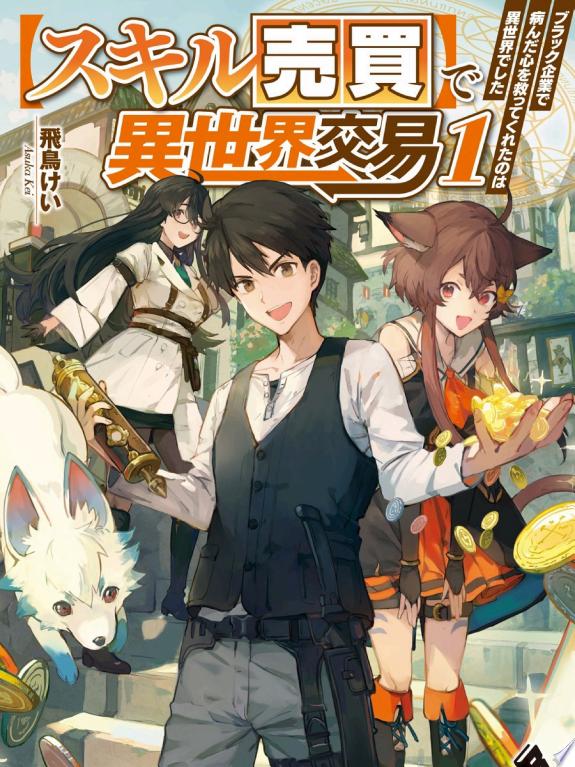
The Dungeon of Black Company
A review of Youhei Yasumura's The Dungeon of Black Company — 14 volumes in Comic Newtype. Kinji Ninomiya used financial schemes to become wealthy without working; transported to a fantasy world, he is immediately forced into brutal dungeon labor and must scheme his way out. Seven Seas Entertainment's English edition is complete.
Fantasy / Action
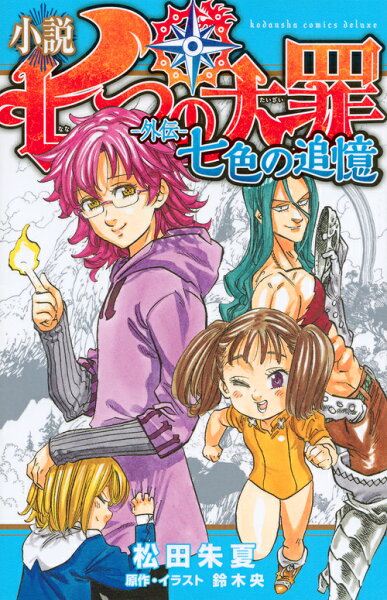
Seven Deadly Sins
Yu's review of Seven Deadly Sins — a princess secretly seeks the legendary Seven Deadly Sins, a group of powerful and disgraced knights, to save her kingdom from a corrupted Holy Knights order.
Fantasy / Action
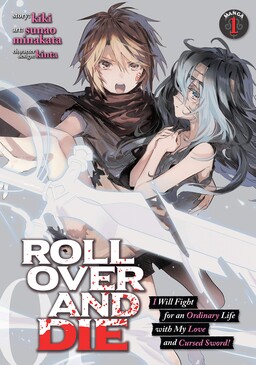
Roll Over and Die: I Will Fight for an Ordinary Life with My Love and Cursed Sword!
Yu's review of Roll Over and Die — Flum Apricot is the only member of her party without a special ability; her party abandons her to die in a dungeon; she survives through a cursed sword that works by inflicting permanent injuries on her and by using the Reversal ability that turns her weakness into something else entirely.
Fantasy
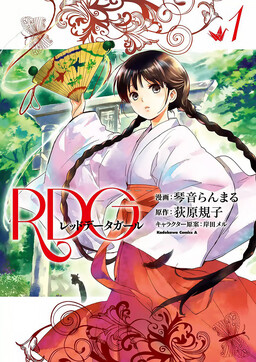
Red Data Girl
Yu's review of Red Data Girl — Izumiko Suzuhara has grown up at a mountain shrine; she destroys electronic devices by touch; she's an endangered shrine maiden (yorishiro) for a powerful deity; she enters a school that serves as a hub for supernatural politics; manga adaptation of Noriko Ogiwara's light novel.

Fantasy / Action
Peach Boy Riverside
Yu's review of Peach Boy Riverside — Princess Sally Salami leaves her sheltered life to see the world; she encounters Mikoto, a young man with the power to destroy oni, who is driven by hatred; Sally's compassion and Mikoto's hatred are placed in constant tension as they navigate a world where the line between humans and monsters is not clear.
Written by
Yu
Manga Enthusiast from Japan
I grew up in Japan and manga literally saved me during a tough time in elementary school. My English isn't perfect, but my love for manga is real — and I want to share it with you.
Disclosure: This post contains affiliate links. As an Amazon Associate, I earn from qualifying purchases at no extra cost to you.