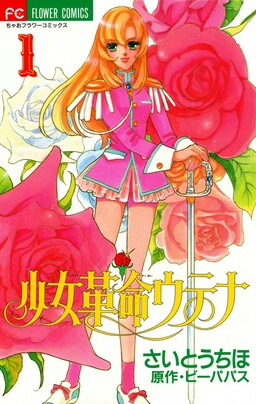
Revolutionary Girl Utena Review: A Girl Who Wants to Be a Prince, a School That Is a Stage, and a Rose Bride Who Has Forgotten She Can Choose
by Chiho Saito / Be-Papas
Read the first volume. If it doesn't hook you, put it down. It'll hook you.
Buy Revolutionary Girl Utena on Amazon →*Affiliate link — I earn a small commission at no extra cost to you.
Quick Take
- One of manga's most distinctive works — a surrealist fairy tale that deconstructs the princess/prince binary while telling its story through it; the visual language is deliberately theatrical and the narrative operates on symbolic rather than realistic logic
- The Rose Bride system (Anthy is "owned" by whoever wins the duels) is the series' central horror, and the manga asks questions about complicity, power, and freedom that most shoujo doesn't approach
- 5 volumes complete; essential reading for anyone interested in manga that pushes what the medium can do
Who Is This Manga For?
- Readers who want manga with genuine thematic ambition rather than genre entertainment
- Anyone interested in fairy tale deconstruction, specifically around gender and power
- Fans of surrealist narrative where symbol and event are the same thing
- Readers who want complete manga that rewards multiple readings
Content Warnings & Age Rating
Age Rating: T+ (Older Teen) Content Warnings: Psychological content; dueling as institutionalized violence; manipulation and control (the Rose Bride system); dark fairy tale themes; mild mature content
The T+ rating is accurate for the psychological and thematic content.
Yu's Rating
| Category | Score |
|---|---|
| Story Depth | ★★★★★ |
| Art Style | ★★★★★ |
| Character Development | ★★★★★ |
| Accessibility for Non-Japanese Readers | ★★★★☆ |
| Reread Value | ★★★★★ |
Story Overview
As a child, Utena was comforted in her grief by a prince she never saw again — and decided she would become a prince herself rather than waiting for one. At Ohtori Academy, she is drawn into the Student Council's secret dueling system: the winner of the duels wins the Rose Bride, Anthy Himemiya.
Anthy is passive, accommodating, and has apparently no self beyond her role as the Rose Bride. Utena, who entered the dueling system by accident to protect Anthy, becomes her champion — but the series asks progressively more difficult questions about whether what Utena is doing is actually liberation or a different form of the same possession.
Characters
Utena Tenjou — A protagonist whose sincerity is her most important quality and also her greatest blindness. She believes in the prince ideal genuinely — and the series follows what happens when that belief meets an institution designed to exploit it.
Anthy Himemiya — The Rose Bride whose passivity is the series' central mystery. The question of who Anthy actually is — beneath the role, outside the system — is the series' most important question and the hardest one to answer.
The Student Council — Each duellist represents a different relationship to power, ownership, and the fairy tale logic of the school. Their individual stories add perspective on what the dueling system actually does to people.
Art Style
Chiho Saito's art is elegant and expressively theatrical — the rose iconography, the dueling tower, the visual language of the school's surrealism are all rendered with a clarity that makes the symbolic content readable without reducing it to literal explanation.
Cultural Context
Revolutionary Girl Utena emerged from Be-Papas, a creative team led by director Kunihiko Ikuhara, who left Sailor Moon to create it. The manga and anime were developed simultaneously as different interpretations of the same concept rather than one adapting the other. Both are worth experiencing; the manga is lighter in its symbolism and more accessible for first-time readers.
What I Love About It
The series asks: if the prince's role is to rescue and possess, and the princess's role is to be rescued and possessed, what happens when someone tries to be the prince without accepting what the role actually requires? Utena's answer is one of manga's most honest treatments of how complicity works.
What English-Speaking Fans Say
Western readers describe Revolutionary Girl Utena as one of the most important manga they've encountered — not necessarily the most enjoyable first read but the most rewarding to think about afterward. Feminist manga scholarship consistently cites it. The anime is more famous internationally; many Western readers discover the manga through the anime.
Memorable Scene ⚠️ Spoiler Warning
The chapter where Anthy reveals her actual understanding of the situation she has always been in — and what she has been doing the entire time — is the series' most complete revelation about whose story this actually was.
Similar Manga
- Cardcaptor Sakura — CLAMP, softer fairy tale, gender play less central
- Princess Tutu — Dark fairy tale deconstruction, anime
- Sailor Moon — Magical girl precedent, less deconstructive
- From Eroica With Love — Gender-play in manga, different context
Reading Order / Where to Start
Volume 1 — The school and the Rose Bride system are established immediately. The anime is recommended alongside for the fuller experience.
Official English Translation Status
VIZ Media published all 5 volumes. Complete and available.
Pros & Cons
Pros
- Thematically ambitious in ways manga rarely attempts
- Art is visually elegant and symbolically precise
- Complete 5-volume run
- Anthy's arc is one of manga's most quietly devastating character revelations
Cons
- Surrealist narrative requires engagement with its symbolic logic
- The anime version is considered more complete; manga is companion piece
- T+ content may limit younger reader access to appropriate context
Format Comparison
| Format | Notes |
|---|---|
| Individual Volumes | VIZ; complete |
| Digital | Available |
Where to Buy
Read the first volume. If it doesn't hook you, put it down. It'll hook you.
This post contains affiliate links. If you purchase through these links, I may earn a small commission at no extra cost to you. As an Amazon Associate, I earn from qualifying purchases.
*Affiliate link — I earn a small commission at no extra cost to you.
More Manga You Might Like
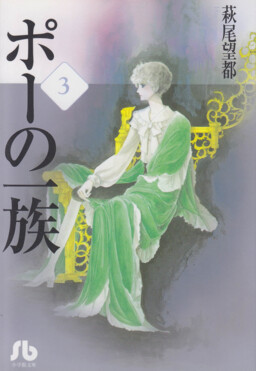
Fantasy
Poe Clan
Yu's review of Poe Clan — Edgar is a vampire child, eternally young, moving through European history across several centuries; his vampire existence means watching everyone he cares for age and die while he remains unchanged; Moto Hagio's foundational vampire manga, originally published in 1972.
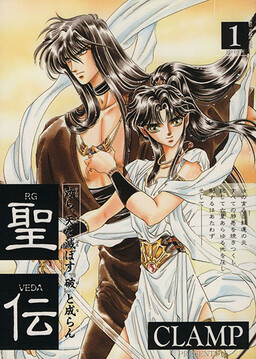
Fantasy
RG Veda
Yu's review of RG Veda — a prophecy states that six stars will gather to overthrow the god-king Taishakuten; Yasha-oh, a warrior king, discovers a child named Ashura who may be the catalyst; CLAMP's epic fantasy based on Hindu and Buddhist mythology about a destined tragedy that all six stars are walking toward.
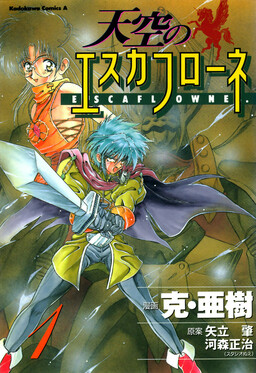
Fantasy / Romance
The Vision of Escaflowne
Yu's review of The Vision of Escaflowne — Hitomi Kanzaki is transported to the world of Gaea, where she becomes connected to a prophecy involving Van Fanel and his giant armor Escaflowne; the manga adaptation of the 1996 anime differs significantly from the source, emphasizing the romance more heavily while keeping the fantasy-mecha elements.

Fantasy / Romance
Rosario + Vampire
Yu's review of Rosario + Vampire — Tsukune Aono accidentally enrolls in Yokai Academy, a school for monsters, where he meets Moka Akashiya, a vampire who wears a rosario that suppresses her true power; a monster school harem manga with genuine comedy and escalating supernatural action.
Fantasy
Unico
Unico is a small unicorn with the power to make anyone who meets him happy — which is why the gods condemn him to be carried across time by the West Wind, stripped of all memories and relationships, forbidden to stay anywhere long enough to be loved.
Fantasy / Slice of Life
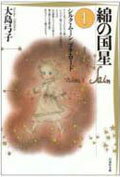
The Star of Cottonland
The Star of Cottonland follows Chi, a small stray kitten who believes with complete sincerity that she is a human child temporarily in cat form — Yumiko Oshima's beloved shojo classic about identity, belonging, and the particular consciousness of cats.
Written by
Yu
Manga Enthusiast from Japan
I grew up in Japan and manga literally saved me during a tough time in elementary school. My English isn't perfect, but my love for manga is real — and I want to share it with you.
Disclosure: This post contains affiliate links. As an Amazon Associate, I earn from qualifying purchases at no extra cost to you.