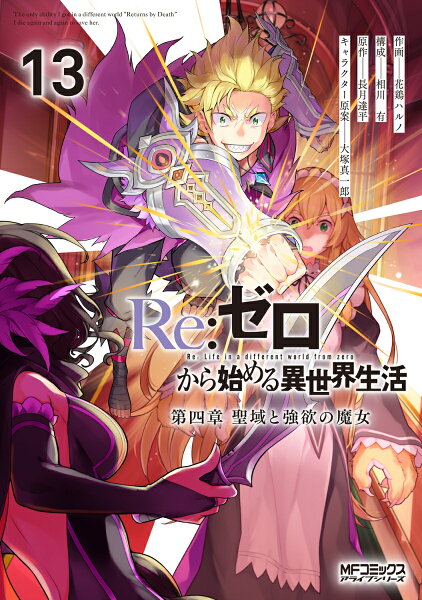
Re:Zero Review: The Isekai Where Dying Doesn't Make You Stronger — It Breaks You
by Tappei Nagatsuki (story) / Daichi Matsuse (art)
Read the first volume. If it doesn't hook you, put it down. It'll hook you.
Buy Re:Zero − Starting Life in Another World on Amazon →*Affiliate link — I earn a small commission at no extra cost to you.
Quick Take
- An isekai where dying and respawning doesn't make the protagonist stronger — it traumatizes him
- Subaru Natsuki is one of manga's most psychologically realistic portrayals of a person breaking under pressure
- Darker than most isekai and more interested in the cost of failure than the reward of success
Who Is This Manga For?
Re:Zero is for you if:
- You want isekai that takes the psychological cost of its premise seriously
- You love complex characters whose failures are as important as their successes
- You can handle dark, distressing content in a fantasy setting
- You want an ongoing series with a large, well-developed ensemble
Content Warnings & Age Rating
Age Rating: T (Teen) — but the content pushes harder than the rating suggests Content Warnings: The protagonist dies repeatedly in graphic ways; psychological horror from repeated trauma; extended torture sequences; mental breakdown depicted in detail; significant character death
This is not a comfortable series. The darkness is purposeful but it is real.
Yu's Rating
| Category | Score |
|---|---|
| Story Depth | ★★★★★ |
| Art Style | ★★★★☆ |
| Character Development | ★★★★★ |
| Accessibility for Non-Japanese Readers | ★★★★☆ |
| Reread Value | ★★★★☆ |
Story Overview
Natsuki Subaru is a shut-in teenager transported to a fantasy world. He has no special ability — no magic, no combat skill, no knowledge of why he was brought here. What he has, unknown to him at first, is Return by Death: when he dies, he resets to a specific point in the past.
This sounds like an advantage. It is not.
Every death is experienced. Every death costs. Subaru cannot tell anyone about his ability — something prevents him from communicating it without horrific consequences. He must solve each situation through failure, reset, and approaching differently, without ever being able to explain to the people around him why he knows what he knows.
The series is about what this does to a person. Subaru is not a stoic hero who absorbs trauma without effect. He breaks. He makes terrible decisions. He has a mental breakdown on screen in one of the most uncomfortable sequences in isekai. He gets back up not because he is strong but because he decides, again and again, that the alternative is worse.
Characters
Natsuki Subaru — One of isekai's most psychologically complex protagonists. His self-loathing, his obsessive need to be needed, his pattern of making things worse by trying too hard — these are accurately observed character flaws that the series uses to create genuine drama. His lowest moment (episode 18 equivalent in the manga) is disturbing and completely believable.
Emilia — The silver-haired half-elf Subaru falls in love with. Her arc — dealing with her own history of rejection and what it has done to her self-worth — parallels Subaru's in ways that become thematically central.
Rem — One of manga's most beloved secondary characters. Her arc in the first major story arc is the series' most affecting sequence. Her devotion to Subaru — built on a specific moment of genuine bravery she witnessed — is the series' most discussed emotional element.
Beatrice — The prickly spirit librarian whose role in Subaru's journey deepens significantly in later arcs.
Art Style
Matsuse's art is clean and well-composed, with strong character expressions — important for a series where so much of the drama is internal. The death sequences are depicted without excessive gore but with enough specificity to convey real consequence.
The fantasy environments are well-designed, particularly the mansion and the various kingdoms Subaru visits. Character designs are distinctive across a large ensemble.
Cultural Context
Hikikomori and ordinary failure — Subaru is not secretly special. He is genuinely ordinary, and his transportation to a fantasy world does not change that. The specific humiliation of arriving in a power fantasy and discovering you have nothing to offer resonates with anxiety about personal inadequacy that is particularly acute in Japan's achievement-focused culture.
Return by Death as trauma — The mechanics of dying and returning, and what they do to a person psychologically, engage with real trauma research in ways that feel accurate. The inability to share the trauma — the inability to tell anyone what you've experienced — mirrors specific features of how trauma operates.
Rem's confession — The scene where Rem confesses her feelings to Subaru has become one of the most-discussed scenes in modern isekai. It is a scene about someone choosing another person completely, in full knowledge of who they are, and what that kind of acceptance means to a person who doesn't believe they deserve it.
What I Love About It
There is an arc called "Obeying Instinct" where Subaru, having failed too many times, simply runs. He decides he cannot do this. He is done. He is leaving.
He gets a few chapters of being a coward. The series does not condemn him for it. It lets him have his breakdown completely.
And then someone talks to him. Not with heroic speeches. Not with manipulation. They just sit with him where he is and say: this is hard, and you've been trying alone for too long, and maybe we can try together.
Re:Zero understands something that most fantasy manga doesn't: the bravery of getting back up after a complete breakdown is different from the bravery of never breaking. Both are real. The second one is more honest.
What English-Speaking Fans Say
Re:Zero has one of the largest and most devoted Western fanbases in modern isekai. The anime is considered exceptional. The manga is praised for translating the psychological depth of the light novel.
Common discussion: Rem versus Emilia (the two love interests and their different relationships with Subaru) is one of the most active debates in Western anime fandom.
Common praise: Subaru's psychological complexity, Rem's arc, the series' willingness to let its protagonist fail completely.
Memorable Scene ⚠️ Spoiler Warning
Rem's confession.
"I love you, Natsuki Subaru."
What comes before it — Rem's full accounting of who Subaru is, what she has seen him do and fail to do, her understanding of his worst qualities alongside his most important ones — makes it one of the most complete declarations of love in manga.
She is not in love with a version of him. She is in love with him.
Similar Manga
If you liked Re:Zero, try:
- Made in Abyss — Similar willingness to genuinely hurt its characters
- Hunter x Hunter — Similar psychological complexity in a fantasy setting
- Tokyo Revengers — Time loop mechanics, less dark
- Vinland Saga — Similar psychological cost of violence and failure
Reading Order / Where to Start
Start from Volume 1. The series is continuous and the psychological depth builds across the full run.
Official English Translation Status
Status: Ongoing English Volumes: 30+ Translator: Yen Press Translation Quality: Excellent
Pros & Cons
Pros
- Subaru is one of the most psychologically honest protagonists in isekai
- Rem's arc is exceptional
- The series takes the cost of its premise seriously
- Large ensemble with genuinely developed secondary characters
Cons
- Very dark — not for readers wanting comfortable isekai
- The psychological content can be genuinely distressing
- Ongoing with significant investment required
Format Comparison
| Format | Volumes | Price per vol. (approx.) | Best for |
|---|---|---|---|
| Paperback (individual) | 30+ vols | ~$13–15 | Collecting |
| Kindle | 30+ vols | ~$8–10 | Ongoing reading |
Where to Buy
Read the first volume. If it doesn't hook you, put it down. It'll hook you.
This post contains affiliate links. If you purchase through these links, I may earn a small commission at no extra cost to you. As an Amazon Associate, I earn from qualifying purchases.
*Affiliate link — I earn a small commission at no extra cost to you.
More Manga You Might Like
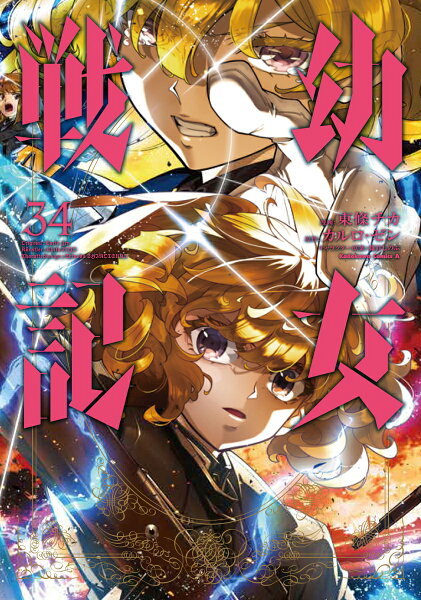
Fantasy / Military
The Saga of Tanya the Evil
Yu's review of The Saga of Tanya the Evil — a cold-blooded Japanese salaryman is reincarnated as a blonde girl in a magical World War I Europe and becomes the most ruthless and effective military officer in the imperial army.
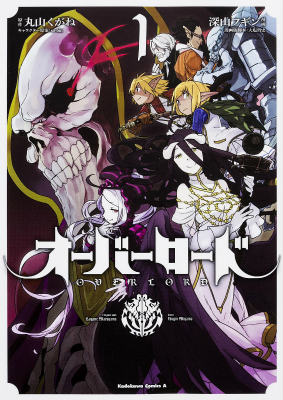
Fantasy / Isekai
Overlord
Yu's review of Overlord — an isekai where the protagonist is already maxed-level and essentially a god, and the story is about what happens when an overpowered player becomes the monster everyone else fears. Dark, intelligent, and not what you expect.
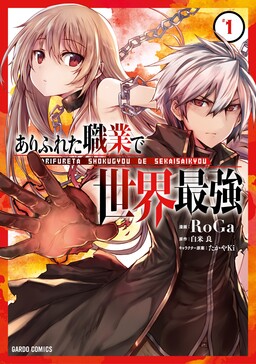
Fantasy / Isekai
Arifureta: From Commonplace to World's Strongest
Yu's review of Arifureta — Hajime Nagumo is the weakest student when his class is summoned to another world; betrayed and pushed into a lethal dungeon alone, he survives through mutation and problem-solving and emerges as something that no longer resembles the person who went in.
Fantasy / Dark
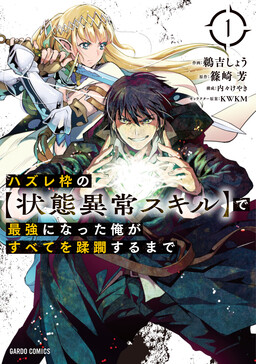
Failure Frame: I Became the Strongest and Annihilated Everything With Low-Level Spells
Yu's review of Failure Frame — Touka Mimori is summoned to another world along with his class; while classmates receive powerful gifts, Touka receives only 'Failure,' an ability the goddess deems worthless; she discards him in a dungeon; using his unique interpretation of his ability, he survives and begins building toward revenge against the goddess herself.
Fantasy / Isekai
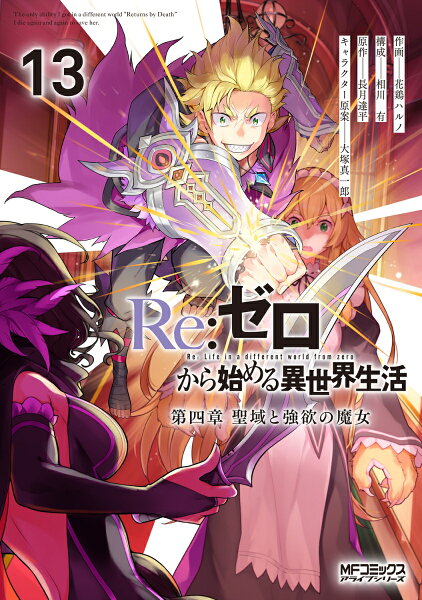
Re:Zero - Starting Life in Another World
Subaru Natsuki is a NEET in Tokyo. He buys snacks at a convenience store and walks out into a fantasy world. He has no special abilities, no useful skills, and no idea where he is. He dies within hours. Then he wakes up at the convenience store. Tappei Nagatsuki's massively popular dark isekai light novel has spawned a long-running manga adaptation across multiple arc-specific series. Yen Press publishes the English manga.
Fantasy / Comedy
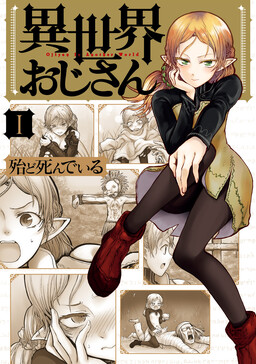
Uncle from Another World
Yu's review of Uncle from Another World — Takafumi's uncle Yosuke wakes from a 17-year coma having been an isekai hero in another world; Takafumi discovers his uncle has magical powers but also deeply embarrassing stories about how he was treated in the other world.
Written by
Yu
Manga Enthusiast from Japan
I grew up in Japan and manga literally saved me during a tough time in elementary school. My English isn't perfect, but my love for manga is real — and I want to share it with you.
Disclosure: This post contains affiliate links. As an Amazon Associate, I earn from qualifying purchases at no extra cost to you.