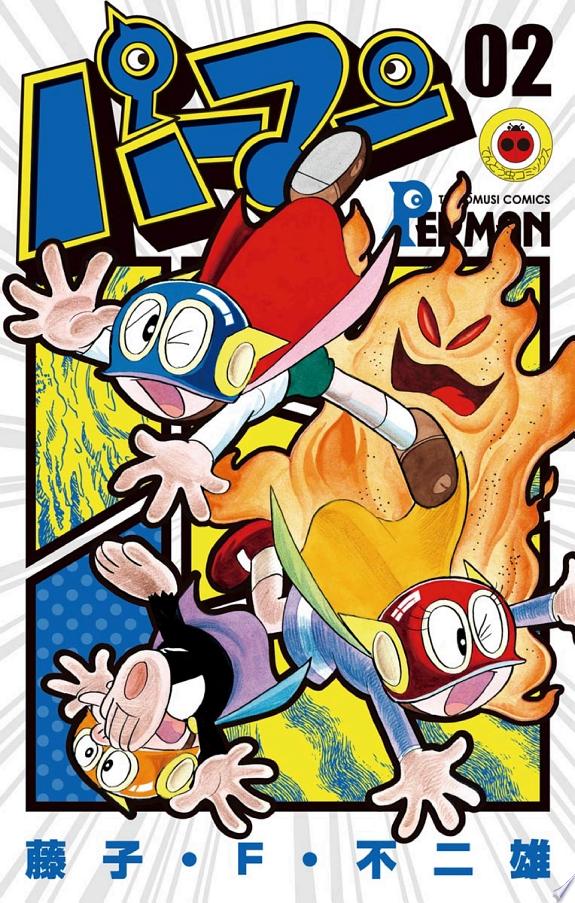
Perman Review: The Ordinary Kid Who Got Superpowers and Stayed Ordinary
by Fujiko F. Fujio
Read the first volume. If it doesn't hook you, put it down. It'll hook you.
Buy Perman on Amazon →*Affiliate link — I earn a small commission at no extra cost to you.
What if you got superpowers specifically because you were the most average kid around?
Quick Take
- Fujiko F. Fujio's superhero comedy — the hero is not chosen for greatness but for availability
- The comedy comes from Mitsuo being genuinely mediocre in every dimension except that he now owns a flying helmet
- A warm, inventive classic — 6 volumes of a superhero who is mostly worried about homework
Who Is This Manga For?
- Fans of Doraemon who want the same Fujiko F. Fujio warmth in a superhero setting
- Readers interested in how Fujiko F. Fujio worked with genre conventions before Doraemon defined his style
- Children's manga fans who want a hero story that doesn't take heroism too seriously
- Anyone who finds the "wrong person gets the power" premise more interesting than the chosen one narrative
Content Warnings & Age Rating
Age Rating: All Ages Content Warnings: Superhero comedy. No concerning content.
Appropriate for all readers.
Yu's Rating
| Category | Score |
|---|---|
| Story Depth | ★★★☆☆ |
| Art Style | ★★★★☆ |
| Character Development | ★★★☆☆ |
| Accessibility for Non-Japanese Readers | ★★★★☆ |
| Reread Value | ★★★☆☆ |
Story Overview
An alien named Birdman arrives in Japan looking for Superman to deputize as Earth's local hero. Superman is unavailable. Birdman selects the first available person — Mitsuo Suwa, an ordinary elementary school student with no distinguishing qualities — and gives him a superhero kit: a helmet that enables flight, a costume, and a copy robot that can pretend to be him while he's out saving the world.
The copy robot is the series' great invention. Because Mitsuo has to maintain his secret identity while also attending school and performing other ordinary functions, the copy robot fills in for him — which creates a perpetual problem, because the robot must mimic Mitsuo exactly, including his below-average academic performance and generally unremarkable behavior.
The comedy is the gap: Mitsuo is a superhero who must maintain a secret identity as someone with nothing interesting to hide. The heroism is real. The person performing it is genuinely, persistently ordinary.
Characters
Mitsuo: A protagonist whose ordinariness is not a starting condition he will transcend — it's his permanent state, even after acquiring superpowers. The powers don't change him; they just give him something extraordinary to be average at.
The copy robot: The series' most interesting element — a perfect physical replica of Mitsuo that creates comedic situations by being exactly what Mitsuo is, which is never what the situation requires.
Birdman: The alien superior who remains perpetually uncertain whether this deployment was a mistake.
Art Style
Fujiko F. Fujio's art has the clean warmth of his best children's work — round faces, clear expressions, and the visual simplicity that makes complex comedic situations immediately readable.
Cultural Context
Perman ran in multiple Shogakukan magazines from 1967 to 1968, with sequel series and revival editions through the 1980s. It appeared before Doraemon established Fujiko F. Fujio's definitive template, and elements that would become central to that template — the ordinary protagonist, the extraordinary tool, the gap between situation and capacity — appear here in earlier form.
An anime adaptation ran from 1983 to 1985.
What I Love About It
I love the copy robot as a premise.
The copy robot solves Mitsuo's secret identity problem by generating a version of him that can be in two places at once — but since it must perfectly replicate him, it replicates all his flaws. Every time Mitsuo needs to be somewhere heroic, his copy is somewhere ordinary being exactly as mediocre as he actually is. The solutions create the problems.
What English-Speaking Fans Say
Not known in English-speaking markets. Among Fujiko F. Fujio readers and children's manga historians, Perman is recognized as the laboratory where the creative elements of Doraemon were first assembled.
Memorable Scene ⚠️ Spoiler Warning
A situation where the copy robot, filling in for Mitsuo at school, produces a test result that is exactly as bad as Mitsuo's genuine performance — which creates a problem, because a real hero should surely be smarter than this. Mitsuo's response to the implication reveals exactly how he understands his own heroism.
Similar Manga
| Title | Its Approach | How Perman Differs |
|---|---|---|
| Doraemon | Extraordinary tool helping ordinary boy | Extraordinary role given to ordinary boy — without tool support |
| Himitsu no Akko-chan | Magical power for ordinary girl | Superhero power for ordinary boy, no clear reason chosen |
| Astro Boy | Robot superhero with emotional depth | Human superhero with comedic inadequacy |
Reading Order / Where to Start
Volume 1. The premise is established immediately and the series builds from it.
Official English Translation Status
Perman has no official English translation.
Pros & Cons
Pros
- The copy robot premise is genuinely inventive
- Warm, accessible Fujiko F. Fujio charm throughout
- Short — 6 volumes is perfectly sized
- Historically important as Doraemon's predecessor
Cons
- No English translation
- Thinner than Doraemon in emotional depth
- The episodic structure doesn't build to memorable peaks
- If the ordinariness joke doesn't click, there's less beneath it
Is Perman Worth Reading?
For Fujiko F. Fujio fans, yes — this is interesting as the earlier version of the creative instincts that produced Doraemon. For general children's manga readers, Doraemon does what this does with more emotional payoff. But Perman is charming on its own terms.
Format Comparison
| Format | Notes |
|---|---|
| Physical | Japanese editions available |
| Digital | Available in Japanese |
| Omnibus | Collected editions available |
Where to Buy
No English release yet. That just means you find it before everyone else does.
*Affiliate link — I earn a small commission at no extra cost to you.
More Manga You Might Like
Fantasy / Romance
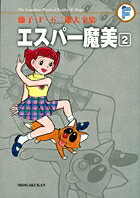
Esper Mami
Esper Mami follows Mami Sakura, a middle school girl who develops psychic powers — telekinesis, ESP, teleportation — and uses them not to become a hero or save the world but to navigate daily life, help her artist father, and exist in the complicated territory of early romance.

Fantasy / Comedy
Kaibutsu-kun
Kaibutsu-kun follows the prince of the Monster World who comes to the human world accompanied by his three monster retainers — Dracula, Frankenstein's monster, and a werewolf — and proceeds to cause chaos while trying to understand humans, who are funnier and stranger than any monster.
Fantasy / Slice of Life
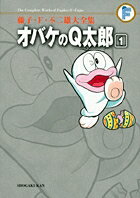
Obake no Q-taro
Obake no Q-taro is the story of a round, clumsy ghost who is adopted by a Japanese family — not through any supernatural event but because the children found him and decided to keep him — and who causes gentle chaos while eating as many rice crackers as possible.

Fantasy / Comedy
Papuwa-kun
Papuwa-kun follows a boy named Papuwa who lives on a tropical island with a magical fish named Liquid and an assortment of strange creatures — a comedy that became a fixture of early 1990s shonen manga through sheer warmth and reliable absurdism.
Fantasy
Unico
Unico is a small unicorn with the power to make anyone who meets him happy — which is why the gods condemn him to be carried across time by the West Wind, stripped of all memories and relationships, forbidden to stay anywhere long enough to be loved.
Fantasy / Slice of Life
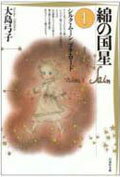
The Star of Cottonland
The Star of Cottonland follows Chi, a small stray kitten who believes with complete sincerity that she is a human child temporarily in cat form — Yumiko Oshima's beloved shojo classic about identity, belonging, and the particular consciousness of cats.
Written by
Yu
Manga Enthusiast from Japan
I grew up in Japan and manga literally saved me during a tough time in elementary school. My English isn't perfect, but my love for manga is real — and I want to share it with you.