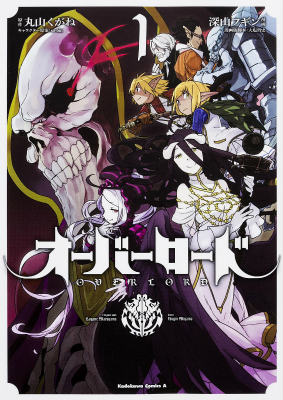
Overlord Review: The Guild Master Who Became a God in a World That Has No Respawn
by Kugane Maruyama (story) / Hugin Miyama (art)
Read the first volume. If it doesn't hook you, put it down. It'll hook you.
Buy Overlord on Amazon →*Affiliate link — I earn a small commission at no extra cost to you.
Quick Take
- An isekai from the perspective of the final boss — the protagonist is the most powerful being in the world and is building an empire
- The series is genuinely dark: the "hero" commits atrocities and the narrative does not excuse them
- More intelligent about its premise than most isekai
Who Is This Manga For?
Overlord is for you if:
- You want isekai from an unusual perspective — the overpowered character who becomes the world's greatest threat
- You can engage with a morally complex protagonist whose actions are not always defensible
- You love political strategy and empire-building in a fantasy setting
- You want dark fantasy that takes its own darkness seriously
Content Warnings & Age Rating
Age Rating: M (Mature) Content Warnings: Graphic violence; the protagonist participates in or orders events that include mass death; genocide depicted without full condemnation; the series requires engagement with a protagonist who is not a hero
These are significant warnings. Overlord is not a comfortable series.
Yu's Rating
| Category | Score |
|---|---|
| Story Depth | ★★★★★ |
| Art Style | ★★★★☆ |
| Character Development | ★★★★☆ |
| Accessibility for Non-Japanese Readers | ★★★★☆ |
| Reread Value | ★★★★☆ |
Story Overview
Momonga is the last remaining player in Yggdrasil, a virtual reality MMORPG being shut down. When the servers are scheduled to go offline, he stays until the end — alone in the guild hall of Ainz Ooal Gown, the legendary dark guild he and his friends built together.
The servers don't go offline. Instead, the world becomes real.
Momonga — now Ainz Ooal Gown, skeleton overlord, master of death magic, leader of Nazarick and its powerful NPC servants who have developed their own personalities — is trapped in a world that treats his guild's lore as history.
He has two goals: find other players who may have been trapped in this world, and preserve the guild his friends built, now as a real empire.
The series follows Ainz as he builds the Sorcerer Kingdom — through strategy, demonstration of overwhelming power, and ruthlessness — while navigating a world that does not know what he actually is.
Characters
Ainz Ooal Gown (Momonga) — One of fiction's most interesting anti-heroes. He was a corporate worker in his previous life — ordinary, lonely, finding community in a game his friends eventually abandoned. Now he is something that must perform godhood while quietly hoping to find his friends. His internal monologue — the gap between how others see him and his own uncertainty — is the series' best comedy and its deepest theme.
Albedo — The floor guardian designed as a succubus who is devotedly loyal to Ainz. Her obedience, occasionally inconvenient, is one of the series' running complications.
Demiurge — The strategist guardian whose plans are often more elaborate and darker than Ainz intends. The comedy of Demiurge assuming Ainz's accident-born decisions are genius strategy is one of the series' best recurring elements.
Climb — A human character in service of a princess, whose perspective provides the "ordinary person" viewpoint on how terrifying Nazarick appears from outside.
Art Style
Miyama's art is clean and detailed, particularly effective in depicting the elaborate demon/undead character designs of Nazarick's guardians. The scale of battles — individual vs. armies — is handled with clear spatial logic.
The distinction between Nazarick's gothic grandeur and the more ordinary fantasy world outside creates effective visual contrast.
Cultural Context
The lone player — Ainz's situation — the last dedicated player staying until a game's end, while his guildmates have moved on to adult responsibilities — reflects real anxieties about gaming culture's social dynamics. Many Japanese readers recognize the specific loneliness of being the one who couldn't let go.
The corporate drone fantasy — Ainz's previous life as an ordinary salaryman, finding meaning in an online community, reflects specific aspects of Japanese labor culture. The fantasy of becoming the ultimate authority — of having the power denied to the ordinary worker — is the series' underlying power fantasy.
Empire and responsibility — Overlord takes seriously the question of what building an empire requires. The dark acts Ainz commits are not hidden — the series forces the reader to sit with them. Whether this constitutes moral engagement or problematic framing is a genuine debate.
What I Love About It
There is a running joke in Overlord where Ainz makes a decision — often accidentally or without full consideration — and Demiurge immediately interprets it as a stratagem of incomprehensible genius. Everyone then acts on this interpretation, which makes Ainz's accident into policy.
The joke is that the world's most terrifying being is mostly improvising. The comedy is that this works because everyone around him projects competence onto power.
This is also, quietly, a true thing about how authority works in the real world. Overlord is funnier and darker than it looks, and both qualities come from the same source.
What English-Speaking Fans Say
Overlord has a large Western fanbase with genuine enthusiasm for the premise and ongoing debate about how to engage with Ainz's darker actions. The light novel readers (often more advanced in the story) provide context for manga readers about where the series is heading.
Common praise: Ainz's characterization, the political world-building, the comedy of Ainz's accidental genius.
Common discussion: how to engage morally with the series' darker content.
Memorable Scene ⚠️ Spoiler Warning
The Battle of Katze Plains.
In a sequence that establishes Ainz's reputation, he demonstrates his power in a way that is visually spectacular and morally catastrophic. The series does not flinch from what it depicts. Neither should the reader.
It is the moment where Overlord definitively is what it is — not a redemption story, not a hero's journey, but something else entirely.
Similar Manga
If you liked Overlord, try:
- Slime Isekai — Similar nation-building isekai, much lighter moral register
- Shield Hero — Similar underdog-to-power trajectory, different starting point
- Re:Zero — Darker isekai with morally complex protagonist
- Vinland Saga — Historical, similar engagement with violence and its costs
Reading Order / Where to Start
Start from Volume 1.
Official English Translation Status
Status: Ongoing English Volumes: 17+ Translator: Yen Press Translation Quality: Excellent
Pros & Cons
Pros
- Ainz is one of the most interesting protagonists in isekai
- The political world-building is sophisticated
- The comedy arising from the gap between how Ainz appears and who he is is excellent
- Takes its dark premise seriously
Cons
- Content warnings are significant and real
- The moral weight of Ainz's actions requires active engagement
- Ongoing with uncertain endpoint
Format Comparison
| Format | Volumes | Price per vol. (approx.) | Best for |
|---|---|---|---|
| Paperback (individual) | 17+ vols | ~$13–15 | Collecting |
| Kindle | 17+ vols | ~$8–10 | Ongoing reading |
Where to Buy
Read the first volume. If it doesn't hook you, put it down. It'll hook you.
This post contains affiliate links. If you purchase through these links, I may earn a small commission at no extra cost to you. As an Amazon Associate, I earn from qualifying purchases.
*Affiliate link — I earn a small commission at no extra cost to you.
More Manga You Might Like
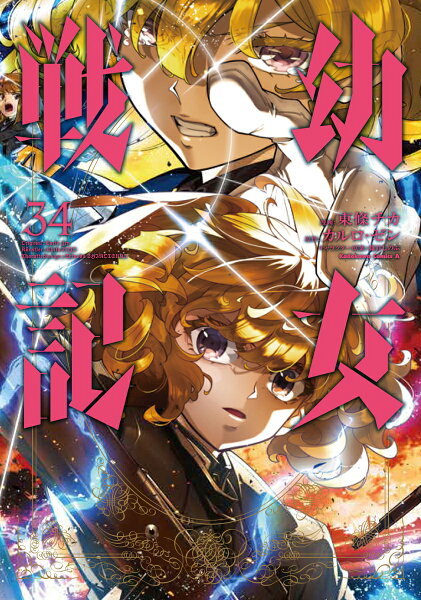
Fantasy / Military
The Saga of Tanya the Evil
Yu's review of The Saga of Tanya the Evil — a cold-blooded Japanese salaryman is reincarnated as a blonde girl in a magical World War I Europe and becomes the most ruthless and effective military officer in the imperial army.
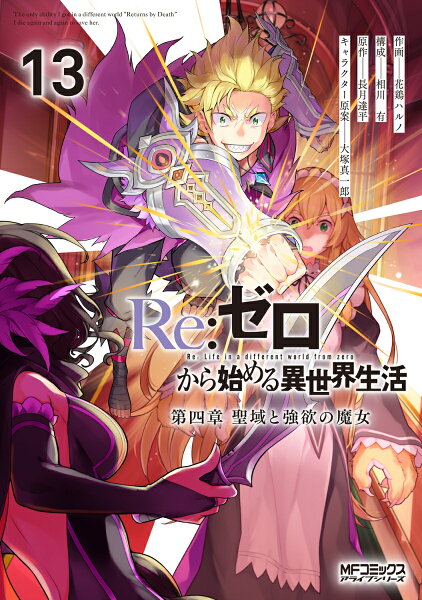
Fantasy / Thriller
Re:Zero − Starting Life in Another World
Yu's review of Re:Zero — an isekai where the protagonist can return from death, but every death costs him psychologically. Not a power fantasy. A story about someone being broken by circumstances and trying to put himself back together.
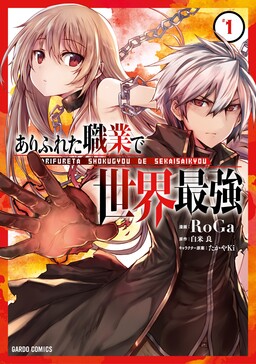
Fantasy / Isekai
Arifureta: From Commonplace to World's Strongest
Yu's review of Arifureta — Hajime Nagumo is the weakest student when his class is summoned to another world; betrayed and pushed into a lethal dungeon alone, he survives through mutation and problem-solving and emerges as something that no longer resembles the person who went in.

Fantasy / Comedy
No Game No Life
Yu's review of No Game No Life — two genius shut-in siblings transported to a world where all conflict is resolved through games. The game mechanics are inventive, the visual style is distinctive, and the content warnings are real.
Fantasy / Dark
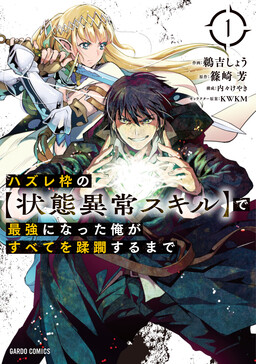
Failure Frame: I Became the Strongest and Annihilated Everything With Low-Level Spells
Yu's review of Failure Frame — Touka Mimori is summoned to another world along with his class; while classmates receive powerful gifts, Touka receives only 'Failure,' an ability the goddess deems worthless; she discards him in a dungeon; using his unique interpretation of his ability, he survives and begins building toward revenge against the goddess herself.
Fantasy / Comedy
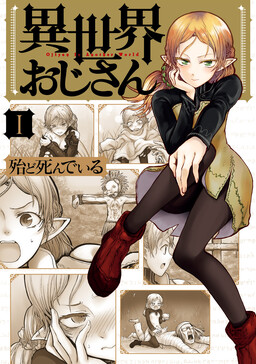
Uncle from Another World
Yu's review of Uncle from Another World — Takafumi's uncle Yosuke wakes from a 17-year coma having been an isekai hero in another world; Takafumi discovers his uncle has magical powers but also deeply embarrassing stories about how he was treated in the other world.
Written by
Yu
Manga Enthusiast from Japan
I grew up in Japan and manga literally saved me during a tough time in elementary school. My English isn't perfect, but my love for manga is real — and I want to share it with you.
Disclosure: This post contains affiliate links. As an Amazon Associate, I earn from qualifying purchases at no extra cost to you.