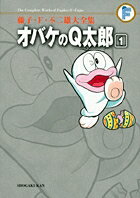
Obake no Q-taro Review: The Ghost Who Just Wanted to Eat Rice Crackers
by Fujiko F. Fujio / Fujiko Fujio A
Read the first volume. If it doesn't hook you, put it down. It'll hook you.
Buy Obake no Q-taro on Amazon →*Affiliate link — I earn a small commission at no extra cost to you.
What if the ghost haunting your house was mostly just hungry?
Quick Take
- Created by both Fujiko F. Fujio and Fujiko Fujio A — their only major collaborative work
- Q-taro is one of manga's most lovable characters: a ghost whose supernatural abilities are consistently useless in the situations they would actually help
- 8 volumes of warm family comedy that defined childhood reading for multiple Japanese generations
Who Is This Manga For?
- Fans of Doraemon who want the same family warmth with a ghost instead of a robot
- Readers interested in early Fujiko — this is where both halves of the creative team worked together
- Anyone who finds the "creature adopted by family" premise reliably charming
- Children's manga readers who want gentle comedy without conflict or stakes
Content Warnings & Age Rating
Age Rating: All Ages Content Warnings: Ghost comedy. Family themes. No concerning content.
Appropriate for all readers.
Yu's Rating
| Category | Score |
|---|---|
| Story Depth | ★★★☆☆ |
| Art Style | ★★★★☆ |
| Character Development | ★★★☆☆ |
| Accessibility for Non-Japanese Readers | ★★★★☆ |
| Reread Value | ★★★☆☆ |
Story Overview
Q-taro is a round, white ghost who looks like a simplified cartoon of everything a ghost should be — except that he has no menace, no supernatural purpose, and no particular abilities that work when they need to. He gets lost from his ghost family, is found by the children of the Oohara family, and stays because the food is good and the family is kind.
The series follows Q-taro's daily life as a household member who happens to be a ghost — which creates situations where his ghostly abilities (the ability to become invisible, to pass through walls, to fly) either create problems or fail to solve them, depending on what the episode requires.
The comedy is domestic and warm. Q-taro is not threatening, not particularly intelligent, and not trying to accomplish anything beyond being comfortable and well-fed. His relationship with the Oohara children is genuine — they like him because he is likable, not because he is useful or impressive.
Characters
Q-taro: A protagonist whose defining characteristic is wanting things that are very simple — rice crackers, a comfortable place to sleep, the company of people who like him. His supernatural status makes his simple desires funnier.
The Oohara family: A standard postwar Japanese family who respond to having a ghost in the house with remarkable normalcy — partly because Q-taro is so unthreatening, partly because normalcy is funnier than alarm.
Art Style
The Fujiko duo's collaborative art has a particular warmth — Q-taro's round design is one of manga's most immediately appealing character concepts, and the domestic settings are rendered with the comfortable detail of a place people actually live.
Cultural Context
Obake no Q-taro ran in Weekly Shonen Sunday from 1964 to 1966, with sequel series following. It was the Fujiko duo's first major success — the work that demonstrated their ability to sustain a serialized children's manga — and remained influential on subsequent ghost/family comedy in Japanese popular culture.
Multiple anime adaptations appeared across different decades.
What I Love About It
I love Q-taro's relationship with rice crackers.
It's a very small thing — a ghost who is obsessed with a specific snack food. But Fujiko made it the series' emotional anchor. Every time Q-taro gets rice crackers, it means he is happy and safe. Every time he is separated from them or denied them, something is wrong in his world. The snack food becomes shorthand for everything the series is about: a gentle creature who wants very simple things and finds them in a family that accepts him.
What English-Speaking Fans Say
Not known in English-speaking markets. Among readers of classic children's manga, Obake no Q-taro is recognized as the Fujiko duo's warmest collaboration and one of the founding examples of the "supernatural creature as family member" genre.
Memorable Scene ⚠️ Spoiler Warning
A scene where Q-taro uses one of his supernatural abilities — not to solve a problem or accomplish anything impressive, but to retrieve a bag of rice crackers that has fallen somewhere unreachable. The complete mismatch between the ability and its application is the scene's whole joke and its whole heart.
Similar Manga
| Title | Its Approach | How Obake no Q-taro Differs |
|---|---|---|
| Doraemon | Robot from the future helping a boy | Ghost from nowhere adopted by family — no mission, just presence |
| Gegege no Kitaro | Ghost solving supernatural mysteries | Ghost causing domestic comedy with no supernatural agenda |
| Chi's Sweet Home | Cat adopted by family | Ghost adopted by family — similar warmth, supernatural element |
Reading Order / Where to Start
Volume 1. The series is episodic and the premise is established immediately.
Official English Translation Status
Obake no Q-taro has no official English translation.
Pros & Cons
Pros
- One of manga's most immediately lovable characters
- The Fujiko duo's only major collaboration — historically significant
- Warm and accessible to readers of all ages
- Short and complete
Cons
- No English translation
- Thinner emotionally than Doraemon — less narrative depth
- The episodic format offers no larger story
- Q-taro's charm is simple — it won't sustain readers wanting complexity
Is Obake no Q-taro Worth Reading?
For children's manga fans and Fujiko readers, yes — Q-taro is simply a delight to spend time with, and the family warmth of the series is genuine. For readers wanting depth or narrative, this isn't that. But as gentle, warm comedy, it delivers completely.
Format Comparison
| Format | Notes |
|---|---|
| Physical | Japanese editions available |
| Digital | Available in Japanese |
| Omnibus | Collected editions available |
Where to Buy
No English release yet. That just means you find it before everyone else does.
*Affiliate link — I earn a small commission at no extra cost to you.
More Manga You Might Like
Fantasy / Romance
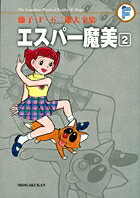
Esper Mami
Esper Mami follows Mami Sakura, a middle school girl who develops psychic powers — telekinesis, ESP, teleportation — and uses them not to become a hero or save the world but to navigate daily life, help her artist father, and exist in the complicated territory of early romance.

Fantasy / Comedy
Kaibutsu-kun
Kaibutsu-kun follows the prince of the Monster World who comes to the human world accompanied by his three monster retainers — Dracula, Frankenstein's monster, and a werewolf — and proceeds to cause chaos while trying to understand humans, who are funnier and stranger than any monster.
Fantasy / Slice of Life
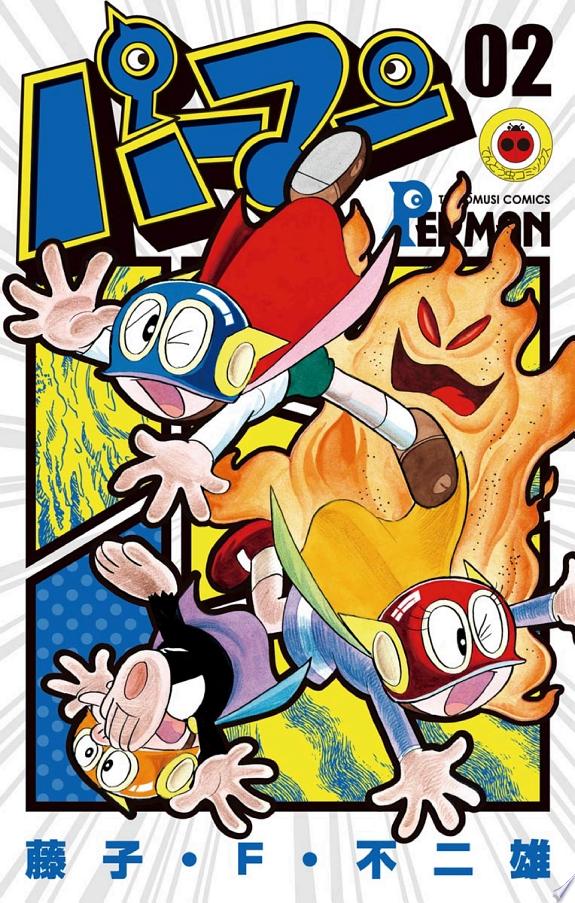
Perman
Perman follows Mitsuo Suwa, an ordinary boy who is given a superhero costume and the ability to fly by a visiting alien — not because he is special, but because Superman was unavailable — and who struggles to balance being a superhero with being an unremarkable student.
Fantasy / Comedy
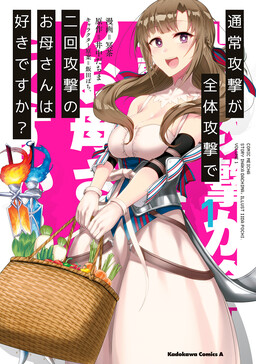
Do You Love Your Mom and Her Two-Hit Multi-Target Attacks?
Yu's review of Do You Love Your Mom and Her Two-Hit Multi-Target Attacks? — Masato Oosuki is transported into a government MMORPG test with his mother Mamako; Mamako is the most powerful person in the game and is also embarrassingly devoted to her son; the comedy of a teenage boy trying to become a hero while his overpowered mother solves everything first.
Fantasy / Comedy
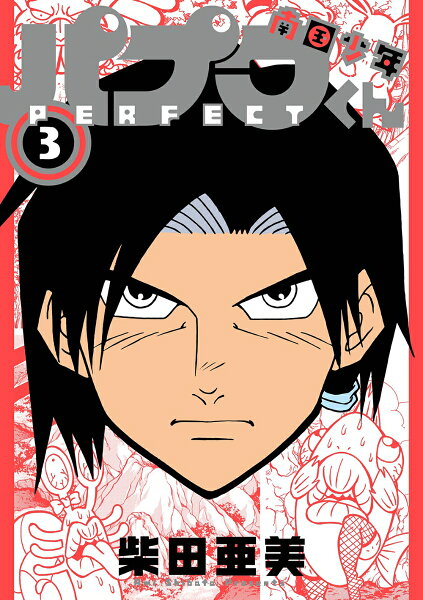
Papuwa-kun
Papuwa-kun follows a boy named Papuwa who lives on a tropical island with a magical fish named Liquid and an assortment of strange creatures — a comedy that became a fixture of early 1990s shonen manga through sheer warmth and reliable absurdism.
Fantasy
Unico
Unico is a small unicorn with the power to make anyone who meets him happy — which is why the gods condemn him to be carried across time by the West Wind, stripped of all memories and relationships, forbidden to stay anywhere long enough to be loved.
Written by
Yu
Manga Enthusiast from Japan
I grew up in Japan and manga literally saved me during a tough time in elementary school. My English isn't perfect, but my love for manga is real — and I want to share it with you.