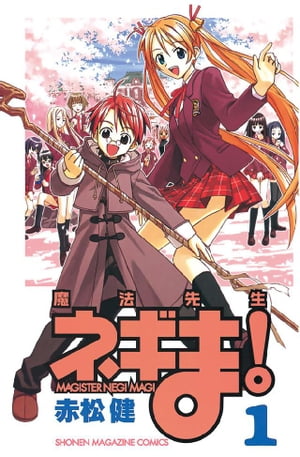
Negima! Review: A 10-Year-Old Teacher With 31 Students and Zero Sense of Scale
by Ken Akamatsu
Read the first volume. If it doesn't hook you, put it down. It'll hook you.
Buy Negima!: Magister Negi Magi on Amazon →*Affiliate link — I earn a small commission at no extra cost to you.
A story about a 10-year-old wizard teaching junior high school in Japan has no business being this epic. And yet.
Quick Take
- Starts as a harem comedy, slowly transforms into one of the most ambitious shonen battle epics of its era
- 31 named, developed female characters — more than most series manage with 5
- If you stick with it past volume 9, it becomes a completely different (and better) manga
Who Is This Manga For?
- Fans of Ken Akamatsu's Love Hina who want to see him go full shonen epic
- Readers who enjoyed long-running tournament arcs like Naruto or Fairy Tail
- Anyone who can appreciate a slow burn — the early volumes are very different from the later ones
- People who don't mind fan service in the early chapters if it eventually gives way to genuine depth
Content Warnings & Age Rating
Age Rating: T (Teen) Content Warnings: Fan service (especially in early volumes), mild violence, romantic subtext
The fan service is front-loaded. By the middle of the series, the combat and story take over almost entirely.
Yu's Rating
| Category | Score |
|---|---|
| Story Depth | ★★★★☆ |
| Art Style | ★★★★☆ |
| Character Development | ★★★★★ |
| Accessibility for Non-Japanese Readers | ★★★☆☆ |
| Reread Value | ★★★★☆ |
Story Overview
Negi Springfield is ten years old, Welsh, and a wizard-in-training. His assignment: teach English at Mahora Academy in Japan, a prestigious all-girls junior high school. His class has 31 students. Their names, faces, hobbies, and birthdays are all memorized before volume one ends.
This sounds like a setup for a silly harem comedy — and for the first several volumes, that's largely what it is. Negi is adorable, his students are charmed by him, magical mishaps create awkward situations. Standard stuff.
Then the tournament arc begins. Then the school festival arc. Then a trip to a magical world. And slowly, without you quite noticing, Negima! has become a sprawling epic about class warfare, human experimentation, parallel worlds, the price of power, and what it means to reach for the impossible.
What makes it remarkable is that the 31 girls never become background. Every major arc promotes different students to the foreground. Some become serious fighters. Some become crucial to the story's emotional core. None of them are just decoration. Akamatsu spent a decade tracking all of them, and it shows.
Characters
Negi Springfield — Determined, powerful beyond his years, and carrying a mystery about his father that drives the entire back half of the story. He grows from adorable child to genuine hero without losing the essential qualities that made you root for him.
Asuna Kagurazaka — Negi's most important student. Short-tempered, warm-hearted, and harboring secrets that go to the core of the world's history. Her arc is the one that hit me hardest.
Evangeline A.K. McDowell — Appears to be a villain. Is actually one of the most complex characters in the cast. A 600-year-old vampire in the body of a child, bored and bitter and more invested in Negi's growth than she admits.
Konoka Konoe — The school's most powerful mage, hiding it under cheerful obliviousness. Her partnership with Setsuna is one of the series' most quietly moving relationships.
Art Style
Clean, detailed, and capable of switching registers with confidence. Early volumes use a soft, rounded style optimized for comedy and fan service. By the middle of the series, action scenes have developed into something much more dynamic — elaborate battle layouts, clear choreography, the weight of power rendered in ink.
Akamatsu can draw a crowd scene with 31 distinct faces without losing clarity. That technical competence is underappreciated.
Cultural Context
Mahora Academy is structured around a distinctly Japanese educational context — homeroom teachers having responsibility for their specific class, school festivals as major social events, the particular pressure of junior high girls navigating friendship and identity. Negi's foreignness (he's Welsh, speaks accented Japanese, is unfamiliar with Japanese customs) is played partly for comedy but also as a genuine character trait: he's always slightly outside.
The magic system draws on Western and Eastern esoteric traditions — Latin spells, elemental magic, but also elements of onmyodo and Buddhist imagery. It's a mixture that feels specifically Japanese in how it combines.
What I Love About It
I started Negima! expecting a silly harem manga and got somewhere completely different.
The moment it got me was around volume 9 or 10, when the tournament arc started getting serious. Not the fights themselves — though those are excellent — but what the fights meant. Characters who had been background jokes for eight volumes suddenly had backstories, trauma, reasons for fighting. The comedy hadn't disappeared; it had earned the right to coexist with the drama.
And then Asuna's arc happened. I don't want to spoil what gets revealed about her, but when I understood what she had given up and what she was willing to give up again — in that moment I genuinely did not expect to feel that much from a manga that had started with a kid sneezing magic and accidentally undressing people.
31 characters. Akamatsu made me care about almost all of them. That's not a small thing.
What English-Speaking Fans Say
The consensus on Reddit and Goodreads is roughly: "the first 9 volumes are okay, everything after that is great." Long-time readers consider the back half one of the better shonen epics of the 2000s. New readers sometimes bounce off the early fan service before the story finds its footing.
The English community has also spent a lot of time on the ending, which is... complicated. Akamatsu left certain things unresolved, and the sequel UQ Holder! exists but doesn't satisfy everyone's questions.
Memorable Scene ⚠️ Spoiler Warning
Asuna's final sacrifice — the moment she chooses to give up 100 years of her life to save the world, knowing she'll wake up to find everyone she loves gone — is one of the best quietly devastating beats in shonen manga. The fact that it's framed matter-of-factly, without musical swells or extended flashbacks, makes it worse. She just... does it. Because it's the right thing to do. That's her entire character in one act.
Similar Manga
| Title | Its Approach | How Negima! Differs |
|---|---|---|
| Fairy Tail | Guild-based fantasy action with a found family | Negima! starts in school and grows into something structurally more complex |
| Love Hina | Harem comedy by the same author | Negima! eventually abandons the harem premise for epic fantasy |
| The Familiar of Zero | Student-teacher fantasy with magic | Negima! has far more characters and a much larger scope |
Reading Order / Where to Start
Start from Volume 1, but know that the series doesn't show its full ambition until around Volume 9. If you're not charmed by the early volumes, bookmark them and skip ahead to the festival arc — then go back to understand what you missed.
The sequel UQ Holder! is separate and doesn't require reading Negima! first, but Negima! is the better read.
Official English Translation Status
Kodansha Comics (originally Del Rey Manga) released all 38 volumes in English. Complete and widely available in print and digital.
Pros & Cons
Pros
- One of the most ambitious character ensembles in shonen manga
- The back half is genuinely great fantasy-action storytelling
- Art quality improves significantly as the series progresses
- Rewarding for long-term readers who grow alongside the cast
Cons
- Early volumes are heavy on fan service that may not be for everyone
- 38 volumes is a serious commitment before the story fully clicks
- The ending leaves some threads unresolved
- Can feel like two different manga stitched together — the tone shift is jarring until you're used to it
Is Negima!: Magister Negi Magi Worth Reading?
Yes — if you can get through the first arc. What starts as a comedy becomes one of the more emotionally generous shonen epics of the 2000s. The investment is 38 volumes, but the characters earn it.
Format Comparison
| Format | Pros | Cons |
|---|---|---|
| Physical | Full art detail; essential for appreciating action sequences | Long series takes considerable shelf space |
| Digital | Convenient for such a long series | Some fine linework can be harder to see on small screens |
| Omnibus | No omnibus available for the English release | — |
Where to Buy
Read the first volume. If it doesn't hook you, put it down. It'll hook you.
This post contains affiliate links. If you purchase through these links, I may earn a small commission at no extra cost to you. As an Amazon Associate, I earn from qualifying purchases.
*Affiliate link — I earn a small commission at no extra cost to you.
More Manga You Might Like
Fantasy / Comedy
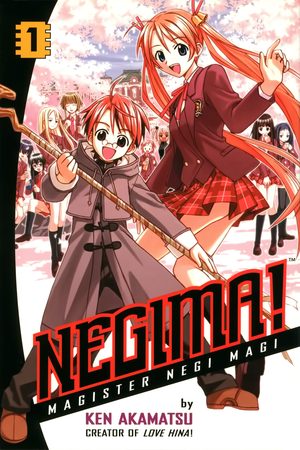
Negima! Magister Negi Magi
Yu's review of Negima! Magister Negi Magi — ten-year-old Welsh wizard Negi Springfield becomes the homeroom teacher of a class of 31 middle school girls in Japan; what begins as harem comedy transforms into a serious fantasy epic about his search for his lost father and the magical world beneath everyday Japan.
Fantasy / Action
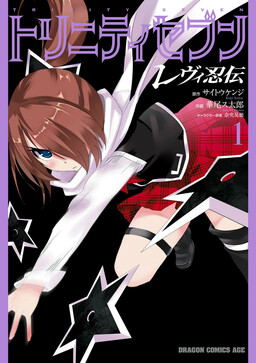
Trinity Seven
Yu's review of Trinity Seven — Arata Kasuga's town is destroyed by a Breakdown Phenomenon, his cousin Hijiri disappears, and he ends up at Royal Biblia Academy, a school that trains mages in the seven sins-based magic system; he meets the seven most powerful female mages at the academy and his inherited Archive magic, which works differently from conventional magic, makes him both their problem and their potential key.
Fantasy / Sci-Fi
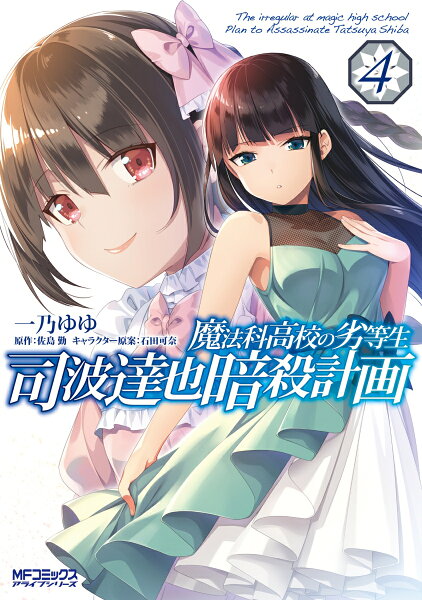
The Irregular at Magic High School
Yu's review of The Irregular at Magic High School — at a magic high school that segregates students by exam results, a 'Weed' student turns out to be one of the most powerful magicians in the world, concealing his ability for his own reasons.

Fantasy / Action
Blade Dance of the Elementalers
A review of Blade Dance of the Elementalers (Seirei Tsukai no Blade Dance) — the manga adaptation of Yu Shimizu's light novel, where the only male spirit contractor in the world enrolls in a girls-only academy and turns out to be a former assassin who once won the legendary Blade Dance disguised as a girl.

Fantasy / Romance
Rosario + Vampire
Yu's review of Rosario + Vampire — Tsukune Aono accidentally enrolls in Yokai Academy, a school for monsters, where he meets Moka Akashiya, a vampire who wears a rosario that suppresses her true power; a monster school harem manga with genuine comedy and escalating supernatural action.
Fantasy
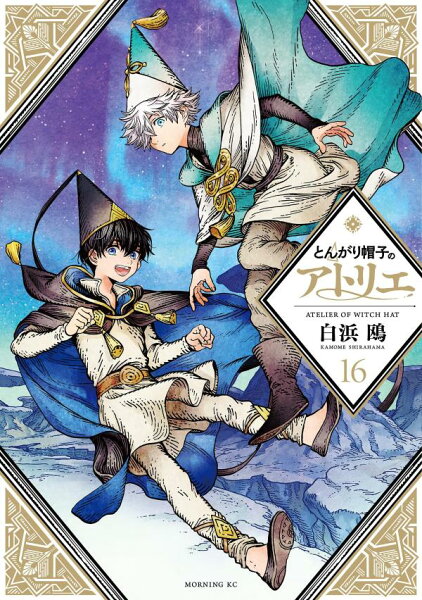
Witch Hat Atelier
Yu's review of Witch Hat Atelier — a girl born without magic witnesses the forbidden secret of how magic actually works, and must now become a witch to undo what she accidentally caused.
Written by
Yu
Manga Enthusiast from Japan
I grew up in Japan and manga literally saved me during a tough time in elementary school. My English isn't perfect, but my love for manga is real — and I want to share it with you.
Disclosure: This post contains affiliate links. As an Amazon Associate, I earn from qualifying purchases at no extra cost to you.