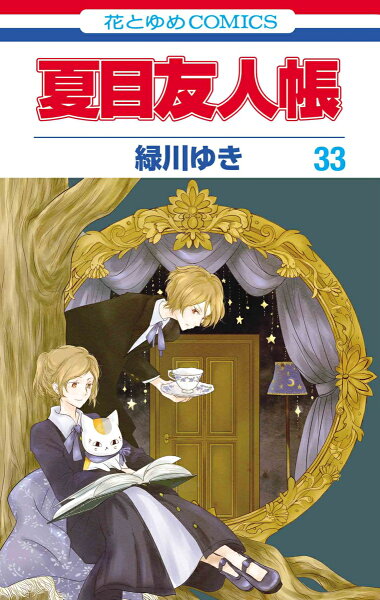
Natsume's Book of Friends Review: A Boy Who Sees Spirits Inherits His Grandmother's Book of Their Names
by Yuki Midorikawa
Read the first volume. If it doesn't hook you, put it down. It'll hook you.
Buy Natsume's Book of Friends on Amazon →*Affiliate link — I earn a small commission at no extra cost to you.
Quick Take
- Natsume Takashi can see spirits — an ability that isolated him his entire life; inheriting his grandmother's Book of Friends means returning names to spirits one by one, and finding his place in both worlds
- Quiet, warm, and profound: one of manga's best explorations of loneliness and the slow process of belonging
- Ongoing at 29 volumes — each arc is self-contained; you can read any volume
Who Is This Manga For?
- Readers who want supernatural manga with warmth rather than horror
- Fans of Japanese folklore and spirit traditions
- Anyone who has felt like they don't belong anywhere and wants manga that understands that feeling
- Readers who prefer episodic, reflective storytelling over plot-driven narratives
Content Warnings & Age Rating
Age Rating: T (Teen) Content Warnings: Supernatural encounters, recurring themes of loneliness, some melancholy in individual spirit stories
Not frightening. The spirits range from dangerous to tender to comic; the emotional weight comes from Natsume's interiority, not horror.
Yu's Rating
| Category | Score |
|---|---|
| Story Depth | ★★★★★ |
| Art Style | ★★★★★ |
| Character Development | ★★★★★ |
| Accessibility for Non-Japanese Readers | ★★★★☆ |
| Reread Value | ★★★★★ |
Story Overview
Natsume Takashi has been able to see spirits since childhood. No one else could. He was passed between relatives who found him strange, a child who pointed at things no one else could see and made up stories about them. He learned to pretend not to see.
When his grandmother Reiko's estate passes to him, he receives the Book of Friends — a book containing the names of spirits Reiko had defeated and bound. Spirits seek him out constantly, wanting their names back.
He begins returning them. Each returned name is a released spirit, a story told, a connection made. Along the way he acquires a guardian — Madara, a powerful spirit who takes the form of a fat cat and calls himself Nyanko-sensei — and slowly, chapter by chapter, builds a life in the town where he now lives.
Characters
Natsume Takashi — The series' emotional center; his interiority is the most precisely observed portrayal of a child who had to protect himself from being known and now, cautiously, doesn't have to anymore.
Madara / Nyanko-sensei — His cat guardian; the comedy of his pompous spirit-form versus his fluffy cat-form gives the series its lightness, while his genuine care for Natsume accumulates slowly and is the series' most affecting relationship.
Tanuma Kaname — A human friend who is sensitive enough to occasionally perceive spirits; his friendship with Natsume is one of the series' gentlest achievements.
Taki Tooru — A girl whose grandfather's circle allows her to interact with spirits; her friendship provides Natsume a different kind of companionship.
Art Style
Midorikawa's art is soft and expressive — the spirit designs range from beautiful to grotesque to comic, often within a single chapter, and the linework for the spirit world sequences has a delicacy that suits the material perfectly. Natsume's face across different emotional states is drawn with precise economy; she communicates enormously with small changes.
Cultural Context
Natsume's Book of Friends draws on the tradition of Japanese folklore spirits — yokai, tsukumogami, and the various beings who inhabit Japan's spiritual landscape — with genuine knowledge and affection. The book as an object of binding, the concept of names as power, the idea that spirits have their own histories and griefs: all of this comes from real Japanese folk tradition.
What I Love About It
The chapter where Natsume sees a past memory of his grandmother Reiko for the first time and realizes they are the same — the same loneliness, the same ability, the same outsider position — and the difference is what they did with it. Reiko collected names to prove her power. Natsume returns names to make connections. That parallel is the series' deepest thing.
What English-Speaking Fans Say
Natsume's Book of Friends has an intensely devoted Western fanbase that describes it as the manga they recommend to people who don't read manga. It consistently appears on lists of the most emotionally affecting manga ever made. Western readers who relate to Natsume's childhood isolation — the experience of being different in a way others cannot see — cite it as transformative.
Memorable Scene ⚠️ Spoiler Warning
The arc where Natsume meets a spirit who has been waiting for someone Reiko once promised to send — and the understanding of what Reiko was — is one of the series' defining moments of grace. The spirit waited. Natsume came. That's all. It's enough.
Similar Manga
- xxxHOLiC — Japanese folklore, episodic supernatural, spirit interactions
- Mushishi — Episodic, quiet, nature spirits, Japanese folklore
- Somali and the Forest Spirit — Emotional warmth, supernatural world
- Hotarubi no Mori e — Same author, single volume, similar warmth
Reading Order / Where to Start
Volume 1 — each arc is accessible independently, but the first volume establishes Natsume's interiority in ways that deepen everything following it.
Official English Translation Status
VIZ Media is publishing the ongoing series. 29 volumes available in English.
Pros & Cons
Pros
- Among the most emotionally precise manga ever written
- Episodic structure means any volume is readable without prior knowledge
- Japanese folklore foundation is rich and handled with care
- Nyanko-sensei provides genuine comedy without undermining the warmth
Cons
- No plot momentum — readers wanting forward narrative will find little
- The pacing is entirely internal and reflective; action readers will be frustrated
- 29 volumes ongoing with no end in sight — significant commitment
Format Comparison
| Format | Notes |
|---|---|
| Individual Volumes | VIZ Media; standard |
| Digital | Available; works well for episodic reading |
Where to Buy
Read the first volume. If it doesn't hook you, put it down. It'll hook you.
This post contains affiliate links. If you purchase through these links, I may earn a small commission at no extra cost to you. As an Amazon Associate, I earn from qualifying purchases.
*Affiliate link — I earn a small commission at no extra cost to you.
More Manga You Might Like
Fantasy / Slice of Life
Kamakura Story
Kamakura Story follows mystery writer Ichiro Maekawa and his young wife Akiko as they navigate married life in Kamakura — a coastal city where the supernatural is simply part of daily existence, and demons and spirits share the streets with ordinary people.
Fantasy / Slice of Life
The Star of Cottonland
The Star of Cottonland follows Chi, a small stray kitten who believes with complete sincerity that she is a human child temporarily in cat form — Yumiko Oshima's beloved shojo classic about identity, belonging, and the particular consciousness of cats.
Fantasy / Action
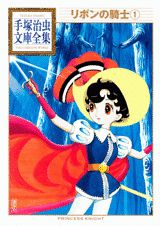
Princess Knight
Tezuka's foundational work that gave shojo manga its template — a princess raised as a prince, fighting for her kingdom and her heart.
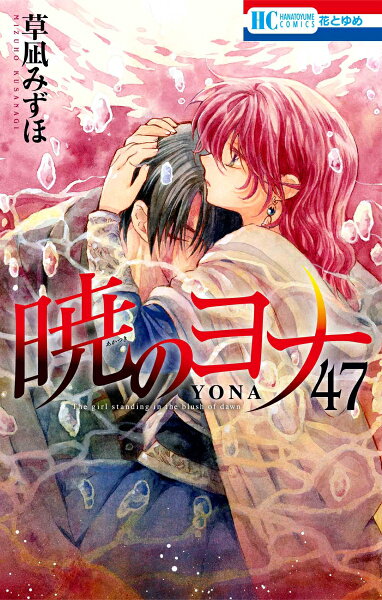
Fantasy / Adventure
Yona of the Dawn
Yu's review of Yona of the Dawn — a sheltered princess witnesses her father's murder, flees the palace with her bodyguard, and begins the journey to reclaim her kingdom and herself.
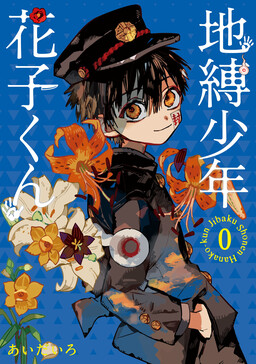
Fantasy / Supernatural
Toilet-Bound Hanako-kun
Yu's review of Toilet-Bound Hanako-kun — Nene Yashiro summons Hanako-kun, the most famous of her school's Seven Wonders, the ghost rumored to grant wishes; when she accidentally becomes bound to him as his helper, she enters a world of supernatural politics, competing spirits, and the mystery of who Hanako actually was.
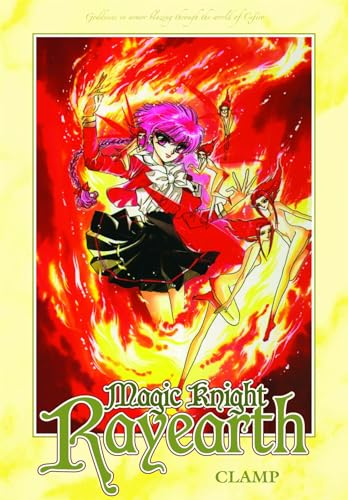
Fantasy / Magical Girl
Magic Knight Rayearth
A review of CLAMP's Magic Knight Rayearth — six volumes (Part 1 + Part 2) running in Nakayoshi 1993–1996, a magical-girl manga where the rescue mission is the trap and the real story is what happens after. Complete in English from Dark Horse.
Written by
Yu
Manga Enthusiast from Japan
I grew up in Japan and manga literally saved me during a tough time in elementary school. My English isn't perfect, but my love for manga is real — and I want to share it with you.
Disclosure: This post contains affiliate links. As an Amazon Associate, I earn from qualifying purchases at no extra cost to you.