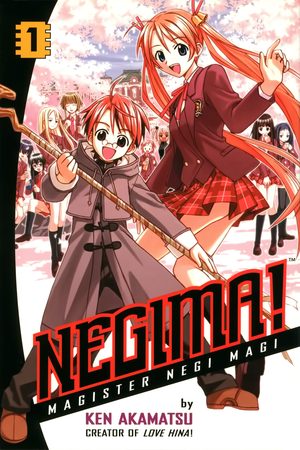
Negima! Magister Negi Magi Review: A Ten-Year-Old Wizard Becomes a Middle School Teacher and Takes on Enormous Problems
by Ken Akamatsu
Read the first volume. If it doesn't hook you, put it down. It'll hook you.
Buy Negima! Magister Negi Magi on Amazon →*Affiliate link — I earn a small commission at no extra cost to you.
Quick Take
- A harem comedy that transforms, volume by volume, into a serious magic tournament arc that is genuinely one of shonen's best — the genre shift is the series' defining feature
- Ken Akamatsu's Love Hina energy evolves into something more ambitious across 38 volumes
- Complete in English; the series earns the investment of reading through the early volumes to reach the later ones
Who Is This Manga For?
- Readers who want fantasy manga that earns its serious content through patient setup
- Fans of Ken Akamatsu's other work (Love Hina) who want something that goes further
- Anyone who enjoys reading a series' evolution from one genre to another
- Readers who can engage with early-volume harem comedy to reach the later material
Content Warnings & Age Rating
Age Rating: T (Teen) Content Warnings: Harem elements and fanservice throughout; some adult content — this is a Weekly Shonen Magazine title and reflects those conventions; the early volumes are heavier on this content than the later ones
The content is consistent with the era and genre; nothing extreme.
Yu's Rating
| Category | Score |
|---|---|
| Story Depth | ★★★★☆ |
| Art Style | ★★★★☆ |
| Character Development | ★★★★☆ |
| Accessibility for Non-Japanese Readers | ★★★★☆ |
| Reread Value | ★★★☆☆ |
Story Overview
Negi Springfield, ten years old, is a Welsh wizard who graduated from a magical academy and received his first assignment: homeroom teacher for Class 3-A at Mahora Academy in Japan. The class has 31 girls. Negi must keep the existence of magic secret while teaching, while looking for information about his father, the Thousand Master — a legendary wizard who disappeared.
The first arc is romantic comedy and misunderstanding. The second arc introduces Evangeline McDowell and the real scale of the magical world. The third arc — the Mahora festival arc — is where the series begins to reveal its actual ambitions. By the Mundus Magicus arc, the series has become a fantasy epic with a class of 31 students who have all developed into characters with distinct abilities and arcs.
Characters
Negi Springfield — His development from an earnest, slightly overwhelmed child teacher into someone who has made specific choices about what he is willing to become in order to find his father is the series' most sustained arc.
Asuna Kagurazaka — The first character established as Negi's closest companion; her past and its connection to the magical world's history becomes the series' most emotionally significant revelation.
Evangeline McDowell — The vampire student whose relationship with Negi evolves from antagonist to mentor in ways that define his development.
The 31 Students — Akamatsu's achievement: across 38 volumes, enough of the 31 girls receive development that the class feels like an actual ensemble rather than backdrop.
Art Style
Akamatsu's art is among shonen manga's most technically accomplished — the action sequences in the later volumes are kinetically clear across multiple combat styles. Character designs for 31 girls are distinct and maintained consistently. The magic system's visual language develops coherence across the series.
Cultural Context
Negima! draws on a long tradition of harem comedy manga while systematically expanding its scope. The series engages with European magical traditions (Welsh, Latin, European alchemy) filtered through Japanese school culture and shonen action conventions.
What I Love About It
The moment the reader realizes the class is not background. Volume by volume, students who seemed like walk-on characters in the harem comedy reveal depth, ability, and history. By the Mahora tournament arc, the 31 girls are a genuine ensemble and the realization that they were always going to be has been building since volume one.
What English-Speaking Fans Say
Western readers describe Negima! as the most rewarding "trust the author" experience in manga — the early volumes are not the series' best, and readers who push through them discover something considerably better. The Asuna revelation is cited as the series' most emotionally significant moment.
Memorable Scene ⚠️ Spoiler Warning
Negi's arrival at the city where the Thousand Master made his most famous decision — the moment that defined who his father was and what he chose — connects the series' central mystery to its emotional core with full force.
Similar Manga
- Fairy Tail — Magic, large ensemble, escalating adventure
- Love Hina — Same author, harem comedy, more grounded
- The Quintessential Quintuplets — Harem with genuine character development
- Black Clover — Magic tournament, large cast, similar energy
Reading Order / Where to Start
Volume 1 — the academy setup establishes immediately, though the series' best content arrives in later volumes.
Official English Translation Status
Del Rey (later Kodansha Comics) published the complete 38-volume run. All volumes available.
Pros & Cons
Pros
- The genre evolution from comedy to epic fantasy is one of manga's most sustained
- The 31-character ensemble is a genuine achievement
- The later volumes rank among shonen fantasy's best
- Complete in English
Cons
- The early volumes' harem content is a barrier for some readers
- 38 volumes is a significant investment
- The ending (in Negima's sequel UQ Holder) is incomplete from a Western reader's perspective
Format Comparison
| Format | Notes |
|---|---|
| Individual Volumes | Kodansha Comics; standard |
| Digital | Available |
Where to Buy
Read the first volume. If it doesn't hook you, put it down. It'll hook you.
This post contains affiliate links. If you purchase through these links, I may earn a small commission at no extra cost to you. As an Amazon Associate, I earn from qualifying purchases.
*Affiliate link — I earn a small commission at no extra cost to you.
More Manga You Might Like

Fantasy / Action
Negima!: Magister Negi Magi
A review of Negima! Magister Negi Magi, Ken Akamatsu's epic about a 10-year-old wizard assigned to teach a class of 31 junior high girls in Japan — which somehow escalates into a multiverse-spanning adventure.
Fantasy / Comedy
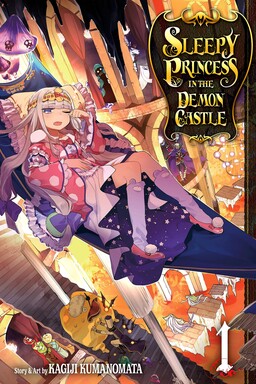
Sleepy Princess in the Demon Castle
Yu's review of Sleepy Princess in the Demon Castle — Princess Syalis has been kidnapped by Demon King Twilight and held in the demon castle while the hero prepares to rescue her; she does not care about rescue; she only wants to get a good night's sleep, and will destroy anything in her way.
Fantasy / Adventure
Magi: The Labyrinth of Magic
A review of Shinobu Ohtaka's Magi — the 37-volume Weekly Shōnen Sunday adventure (2009–2017) that starts as an Arabian Nights riff and ends as one of the most politically serious long-form shōnen of its decade. Complete in English from VIZ.
Fantasy / Comedy
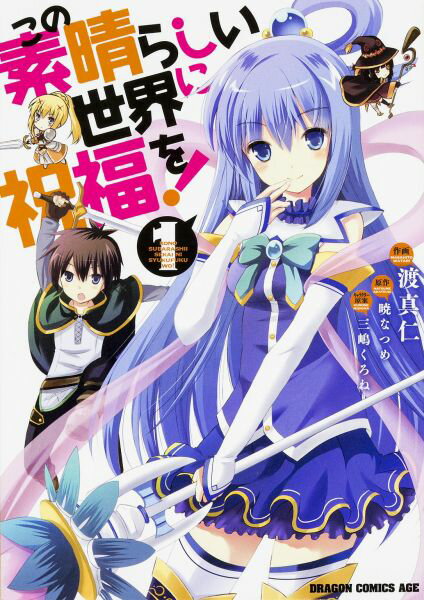
KonoSuba: God's Blessing on This Wonderful World!
Yu's review of KonoSuba — the isekai parody where every party member is disastrously incompetent at something crucial. A useless goddess, an explosion-obsessed mage, a masochistic crusader, and a pathetic protagonist who somehow keeps surviving. The funniest isekai ever made.
Fantasy / Comedy
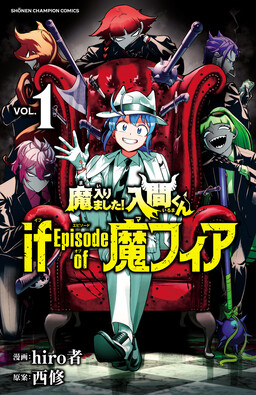
Welcome to Demon School! Iruma-kun
Yu's review of Welcome to Demon School! Iruma-kun — Iruma Suzuki is sold to a demon by his neglectful parents and becomes the grandson of the great demon Sullivan; enrolled in a demon school where humans are supposedly food, Iruma must hide his human nature while navigating the competitive and colorful demon school environment.
Fantasy / Adventure
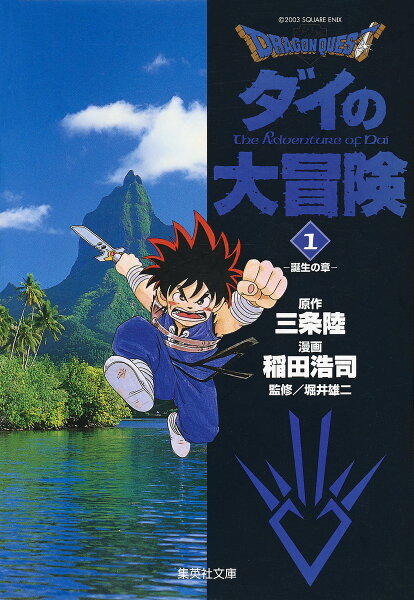
Dragon Quest: The Adventure of Dai
Yu's review of Dragon Quest: The Adventure of Dai — a boy raised on a monster island who always dreamed of being a hero discovers he may be the descendant of a legendary warrior, and sets out to defeat the demon lord threatening the world.
Written by
Yu
Manga Enthusiast from Japan
I grew up in Japan and manga literally saved me during a tough time in elementary school. My English isn't perfect, but my love for manga is real — and I want to share it with you.
Disclosure: This post contains affiliate links. As an Amazon Associate, I earn from qualifying purchases at no extra cost to you.