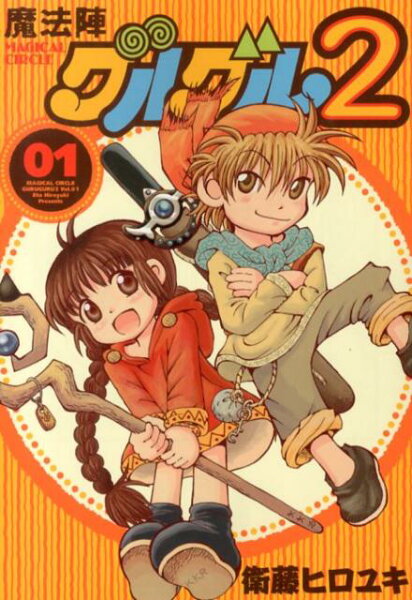
Magical Circle Guruguru Review: The Most Loving Parody of RPGs That Also Has Real Heart
by Hiroyuki Etou
Read the first volume. If it doesn't hook you, put it down. It'll hook you.
Buy Magical Circle Guruguru on Amazon →*Affiliate link — I earn a small commission at no extra cost to you.
Quick Take
- The funniest manga ever made about the Hero's Journey and also genuinely touching by the end
- Kukuri's Guruguru magic is chaotic, spectacular, and completely unpredictable — which is the joke and also the appeal
- Etou commits completely to the parody while building characters you actually care about
Who Is This Manga For?
Magical Circle Guruguru is perfect for:
- Anyone who grew up with RPGs — Dragon Quest specifically, but the genre in general
- Readers who love comedy that respects its source material — this is a parody made by someone who loves the genre
- All ages — genuinely accessible to younger readers while funny to adults who recognize what's being parodied
- Romance readers — the Nike/Kukuri dynamic is one of manga's sweetest slow burns
Content Warnings & Age Rating
Age Rating: All Ages Content Warnings: Mild fantasy violence (slapstick level), physical comedy
Completely appropriate for all ages. One of the most genuinely all-ages manga I've reviewed.
Yu's Rating
| Category | Score |
|---|---|
| Story Depth | ★★★☆☆ |
| Art Style | ★★★★☆ |
| Character Development | ★★★★★ |
| Accessibility for Non-Japanese Readers | ★★★★★ |
| Reread Value | ★★★★★ |
Story Overview
The land of Jimuna has been terrorized by the Demon King. Following the instruction of the Jimunan King, an ordinary village boy named Nike is drafted into the role of Hero. He doesn't want to be a hero. He wanted to live a normal life. But here he is.
His companion is Kukuri, the last practitioner of the ancient Guruguru magic — a magic school so old that nobody remembers how it works, including Kukuri. Her spells do things. Impressive things, usually. Whether those things are useful is more complicated.
Together they travel across a world built entirely from Dragon Quest genre conventions — towns with inns and weapon shops, random encounters, dramatic boss fights — that Etou mines for comedy without ever becoming cynical about. The setting is a joke, but it's a loving joke.
Characters
Nike — the reluctant hero. His ordinariness is the point. He's kind, slightly cowardly, persistent when it matters, and absolutely in love with Kukuri from fairly early on, though he expresses this primarily through flustered stammering.
Kukuri — the genius. Her Guruguru magic requires drawing complicated geometric patterns and the results are never entirely predictable. She is earnest, enthusiastic, socially slightly odd, and more aware of her feelings for Nike than he is of his for her, which is a refreshing reversal.
Gipple — Nike's teacher, a legendary former hero, who exists primarily to be dramatically unhelpful at crucial moments and then disappear.
Demon King Giri — a surprisingly sympathetic villain, particularly in the later volumes.
Art Style
Etou's art style evolved significantly over the 17-volume run, from somewhat simple 90s manga aesthetics to genuinely polished character work. The comedy is physical and timing-dependent — Etou's panel rhythms are excellent for slapstick.
Kukuri's Guruguru magic circles are drawn with genuine intricacy, making each spell visually distinct. You learn to anticipate the shapes and that anticipation becomes part of the comedy.
Cultural Context
Magical Circle Guruguru debuted in 1992, during the height of Dragon Quest's cultural dominance in Japan. Every child in Japan was playing Dragon Quest. Etou was writing a parody of an experience that was genuinely universal for his readers.
The series ran until 2003, then returned as a sequel series (Shin Magical Circle Guruguru) in 2014, which has been licensed by Square Enix Manga in English. The return allowed Etou to give the characters a proper conclusion while also introducing Nike and Kukuri's son to a new generation.
What I Love About It
My relationship with Guruguru is embarrassingly personal. I played Dragon Quest as a child and I understood exactly what Etou was doing from the first chapter — the hero who doesn't want to be a hero, the magic that doesn't work the way it's supposed to, the world that is exactly like a game except for the part where it has real feelings in it.
But what I didn't expect was how much the romantic subplot would matter to me. Nike and Kukuri are one of manga's best couples, and they're best because they're so clearly right for each other from the beginning. The question is just whether they'll get out of their own way long enough to notice.
By the end of the original series, I felt the same combination of "I want more of this" and "that was the exactly right ending" that only the best manga produces.
What English-Speaking Fans Say
The English-speaking fanbase discovered Guruguru primarily through the 1994 and 2017 anime adaptations. Readers who find the manga consistently prefer it — the visual comedy translates well and the character work goes deeper than the anime managed.
Fans who grew up with JRPGs in the 80s and 90s describe a reading experience of constant recognition — every convention being named and affectionately mocked.
Memorable Scene ⚠️ Spoiler Warning
Late in the series, Nike and Kukuri have a quiet moment in which they almost admit everything they feel — and then don't, because the plot intervenes. But in that moment of not-saying-it, you understand that both of them know, and that the not-saying-it is itself a kind of tenderness. It's the series' most mature moment and it comes in the middle of a comedy about a boy and a girl who fight a demon king using magic circles.
Similar Manga
- Oda Eiichiro's One Piece — different genre, same commitment to adventure and comedy as complement to genuine heart
- Dragon Ball — the original Jump adventure that both Guruguru parodies and genuinely loves
- KonoSuba — the modern isekai parody, similar energy but darker and more cynical
- Delicious in Dungeon — another manga that builds a loving, knowledgeable parody of RPG conventions
Reading Order / Where to Start
The original series (17 volumes) then the sequel Shin Magical Circle Guruguru. The sequel assumes familiarity with the original but can be read independently with some confusion.
Square Enix Manga's English release is of the original series.
Official English Translation Status
Square Enix Manga is publishing Magical Circle Guruguru in English, currently ongoing. The translation handles the RPG parody vocabulary and the comedy timing well.
Pros & Cons
Pros
- The funniest manga about RPGs, which is a very competitive category
- Nike and Kukuri are a genuinely great couple
- All-ages accessibility without condescension
- The parody comes from love rather than contempt
Cons
- English release is still ongoing — doesn't cover the full original series yet
- Humor depends somewhat on RPG familiarity (Dragon Quest specifically)
- 90s art style in early volumes is an adjustment
Format Comparison
| Format | Pros | Cons |
|---|---|---|
| Digital | Easiest access for ongoing release | |
| Paperback | Comedy manga rewards physical reading | |
| Omnibus | N/A | Not available |
Recommendation: Either format; digital is convenient for following the ongoing English release.
Where to Buy
Read the first volume. If it doesn't hook you, put it down. It'll hook you.
This post contains affiliate links. If you purchase through these links, I may earn a small commission at no extra cost to you. As an Amazon Associate, I earn from qualifying purchases.
*Affiliate link — I earn a small commission at no extra cost to you.
More Manga You Might Like
Fantasy / Comedy
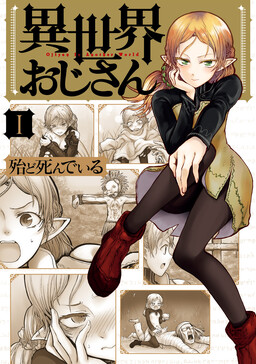
Uncle from Another World
Yu's review of Uncle from Another World — Takafumi's uncle Yosuke wakes from a 17-year coma having been an isekai hero in another world; Takafumi discovers his uncle has magical powers but also deeply embarrassing stories about how he was treated in the other world.
Fantasy / Comedy
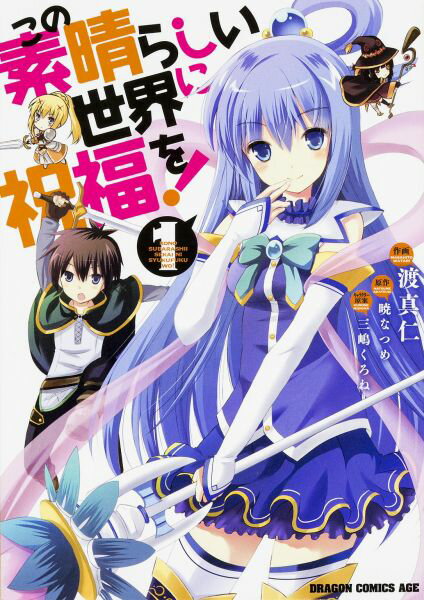
KonoSuba: God's Blessing on This Wonderful World!
Yu's review of KonoSuba — the isekai parody where every party member is disastrously incompetent at something crucial. A useless goddess, an explosion-obsessed mage, a masochistic crusader, and a pathetic protagonist who somehow keeps surviving. The funniest isekai ever made.
Fantasy / Adventure
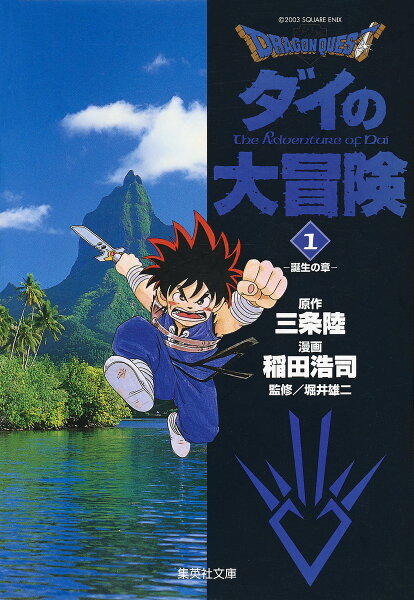
Dragon Quest: The Adventure of Dai
Yu's review of Dragon Quest: The Adventure of Dai — a boy raised on a monster island who always dreamed of being a hero discovers he may be the descendant of a legendary warrior, and sets out to defeat the demon lord threatening the world.
Fantasy / Adventure
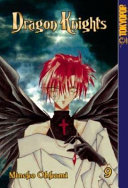
Dragon Knights
A review of Dragon Knights by Mineko Ohkami — a long-running 1990s fantasy manga about three knights serving a dragon lord, blending adventure with comedy and genuine emotional development.
Fantasy / Adventure
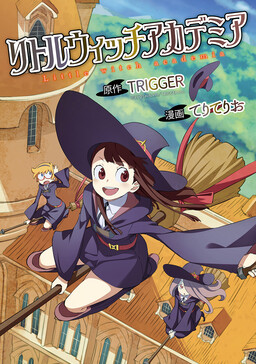
Little Witch Academia
Yu's review of Little Witch Academia — Atsuko Kagari dreamed of being a witch after seeing a performance by the legendary Shiny Chariot; without any magical lineage or natural talent, she enrolls at Luna Nova Magical Academy through pure will; her determination to become what she dreams of is the series' complete premise.
Fantasy
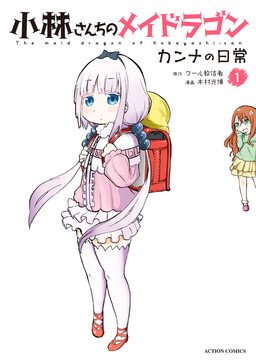
Miss Kobayashi's Dragon Maid: Kanna's Daily Life
Yu's review of Miss Kobayashi's Dragon Maid: Kanna's Daily Life — Kanna, the small dragon child who lives with Kobayashi and Tohru, goes to elementary school; this spinoff follows her daily life, her human friend Saikawa, and her gradual understanding of human childhood; coolkyousinnjya's all-ages spinoff of the original Dragon Maid.
Written by
Yu
Manga Enthusiast from Japan
I grew up in Japan and manga literally saved me during a tough time in elementary school. My English isn't perfect, but my love for manga is real — and I want to share it with you.
Disclosure: This post contains affiliate links. As an Amazon Associate, I earn from qualifying purchases at no extra cost to you.