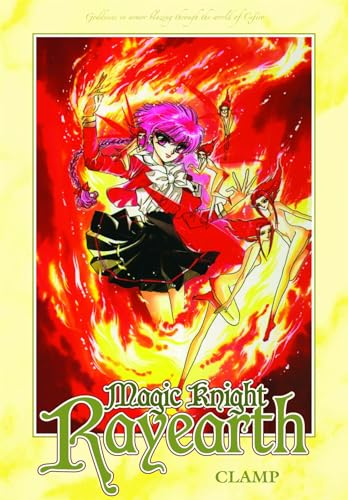
Magic Knight Rayearth Review: A Magical-Girl Manga That Hides Its Real Question in Plain Sight
by CLAMP
Read the first volume. If it doesn't hook you, put it down. It'll hook you.
Buy Magic Knight Rayearth on Amazon →*Affiliate link — I earn a small commission at no extra cost to you.
I read Magic Knight Rayearth in the wrong order, the way most international fans my age did: I watched the 1994 TV anime first as a kid, then read the Tokyopop English manga as a teenager when I found it at a used bookstore in Osaka, then re-read it in the Dark Horse omnibus reissue as an adult. Each time the same ending broke me in a different way.
I'm Yu, and this is one of two or three manga I will always make space for. It is also the manga I wish I could un-read once so I could read it again for the first time.
Quick Take
- CLAMP's Magic Knight Rayearth ran in Nakayoshi from November 1993 to April 1996 — Part 1 and Part 2, three tankōbon volumes each, six total.
- The English manga is complete: Tokyopop published the original 2000s English release; Dark Horse Comics's omnibus reissues are the currently-available editions, with all volumes covered.
- Rated T (Teen) — fantasy violence, magical-girl combat, and a central plot beat around suicide-as-self-sacrifice that is the point of the entire series, not a content warning.
Story Overview
Three Tokyo middle-school girls — Hikaru Shidou, Umi Ryuuzaki, and Fuu Hououji — are on separate school field trips at Tokyo Tower. They have never met. Light pulls them out of Tokyo and drops them into Cephiro, a world that is held together by the will of its "Pillar" — Princess Emeraude — who is now imprisoned by the high priest Zagato.
The three girls are told they are the Magic Knights of legend, summoned to defeat Zagato, free Emeraude, and save the world. They train. They acquire elemental magic (fire, water, wind). They bond with allies (Mokona, Clef, Presea, Caldina, Ascot, Lafarga). They fight through a magical-girl quest structure that, in three volumes, hits every beat of the genre with care and precision.
Then they win. And in the last chapter of Part 1, CLAMP tells them — and the reader — what the rescue mission actually was.
Emeraude was never Zagato's prisoner. She had fallen in love with him. The role of Pillar requires that the wearer's entire heart be devoted to praying for Cephiro; loving another person made the world begin to fail. Because the Pillar cannot abdicate, only die, Emeraude summoned the Magic Knights from another world for one purpose: to come to Cephiro, become powerful enough to defeat her, and end her life — because no Cephiran could be made to do it.
The Magic Knights did not save a princess. They were used as the executioners.
Part 2 (volumes 4-6) is what happens next: three traumatized middle-school girls pulled back to Tokyo, summoned again, and forced to confront whether the system that did this to Emeraude — the system that requires a single person's complete devotion to maintain the world — should be allowed to continue.
Characters
Hikaru Shidou — The protagonist, kendo-club, fourteen years old. CLAMP loads the entire weight of Part 1's ending onto her face. Her courage in Part 1 is uncomplicated. Her response to the truth at the end of Part 1, and what she does about it in Part 2, is the manga's actual argument.
Umi Ryuuzaki — The sharpest of the three. Initially refuses to accept the mission, then accepts it, then has to live with what accepting it meant. The water-magic knight; the most outwardly angry of the trio in Part 2.
Fuu Hououji — The strategist. The wind-magic knight. Her quiet kindness toward the people of Cephiro is the thread CLAMP pulls hardest on in Part 2.
Princess Emeraude — The Pillar of Cephiro. Reveals herself in the final volume of Part 1 as the architect of the entire summoning. One of the most devastating villain-who-isn't-a-villain figures in 1990s manga.
Zagato — High Priest of Cephiro, public antagonist for most of Part 1. His refusal to let Emeraude be the Pillar — his choice to hide her, to fight her summoned executioners — is, retroactively, the most love-poem-shaped act in the manga.
Mokona, Clef, Presea, Caldina, Ascot, Lafarga — The Cephiran cast. CLAMP characters who later cross over into other CLAMP works (most famously Tsubasa: Reservoir Chronicle).
Eagle Vision, Lantis, Geo Metro — Part 2's outside cast: representatives of the three other-world nations now trying to seize the empty Pillar-throne after Emeraude's death.
What I Love About It
What I love about Magic Knight Rayearth is what it's actually about, which most magical-girl manga never get within touching distance of.
It is a story about being instrumentalized. Three girls who wanted to be heroes were brought to another world, given the most heroic mission imaginable, and then used as a way for a system to dispose of an inconvenient woman. The heroism was real. The mission was real. The system underneath was not the system the mission described.
Part 2 is where the manga becomes great. The girls go back to Cephiro and refuse, on principle, to participate in the Pillar system again. They do not accept the inheritance that the world tries to push onto Hikaru. They argue, instead, that a world that requires one person's complete self-erasure to function is a world that should be restructured. CLAMP wrote this in the early 1990s in a magical-girl magazine aimed at preteen girls. It is more politically pointed than most manga twice its length, and it remains so without ever raising its voice.
The art is also some of CLAMP's most luminous early work. The Mashin designs — the elemental mecha the three girls eventually pilot — are gorgeous in a way 1990s mecha rarely were. The costume evolutions of the Knights themselves are still being cosplayed thirty years later.
Memorable Scene ⚠️ Spoiler Warning
The final chapter of Part 1. The girls have defeated Zagato. Emeraude is freed. They are inside the throne chamber. And then Emeraude tells them — slowly, while smiling — what they have actually done, and asks them, also smiling, to finish what they came for.
CLAMP draws Hikaru's face for an entire page. Just her face. No dialogue. The realization arrives in three panels, the last of which is two specific tears she does not try to hide.
It is the most precise moment in the whole series. The choice not to look away — Hikaru's, and the manga's — is the thing I have spent thirty years coming back to.
Pros & Cons
Pros:
- Six volumes, complete, English-licensed in full — Dark Horse's omnibus editions are the recommended way to read it.
- Part 1's ending is one of manga's most precisely engineered structural reveals.
- Part 2 has genuine politics; not many magical-girl manga turn the institution itself into the antagonist.
Cons:
- The first half of Part 1 reads as conventional magical-girl questing; the reveal at the end is the whole reason it exists.
- Part 2 changes tone sharply and not every reader who loved Part 1's adventure register will follow.
- Some 1990s-shoujo conventions in the art (chibi reaction faces, screen-tone effects) will read dated to readers who came to manga in the last decade.
Is Magic Knight Rayearth Worth Reading?
Yes — if you are at all curious about magical-girl manga as a tradition, this is essential, foundational reading. Skip only if magical-girl genre conventions are something you actively dislike on principle.
Who Is This Manga For?
- Cardcaptor Sakura and xxxHolic readers who haven't gone back to early CLAMP yet.
- Anyone who liked Revolutionary Girl Utena's deconstructive instincts and wants the magical-girl version.
- Tsubasa: Reservoir Chronicle readers who want context for the Cephiran cameos.
- Readers who want a short, complete CLAMP work to test the studio before committing to X.
Official English Translation Status
Dark Horse Comics's omnibus editions cover the complete six-volume manga (Part 1 + Part 2). The original early-2000s Tokyopop release is out of print but used copies circulate. Dark Horse's reissues are the practical current way to read the series in English; both print and digital editions are available.
Where to Buy
The Dark Horse omnibus editions are the recommended way in — three big books that contain the entire run with consistent translation and cover art. Available through Amazon, Dark Horse Direct, and major book retailers.
Browse Magic Knight Rayearth on Amazon →
This post contains affiliate links. If you purchase through these links, I may earn a small commission at no extra cost to you. As an Amazon Associate, I earn from qualifying purchases.
*Affiliate link — I earn a small commission at no extra cost to you.
More Manga You Might Like
Fantasy / Magical Girl
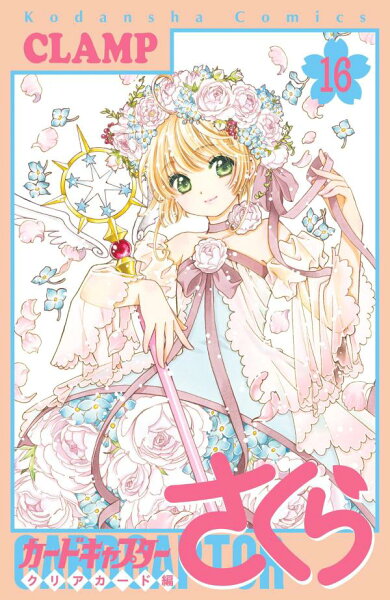
Cardcaptor Sakura
Yu's review of Cardcaptor Sakura — a ten-year-old girl accidentally releases the Clow Cards, has to capture them all, transforms them into her own, and along the way the manga quietly becomes one of CLAMP's warmest, most generous stories about love.
Fantasy
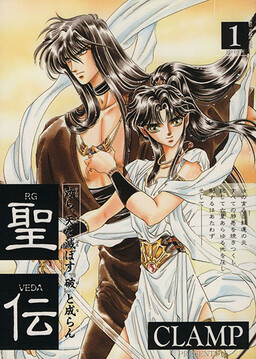
RG Veda
Yu's review of RG Veda — a prophecy states that six stars will gather to overthrow the god-king Taishakuten; Yasha-oh, a warrior king, discovers a child named Ashura who may be the catalyst; CLAMP's epic fantasy based on Hindu and Buddhist mythology about a destined tragedy that all six stars are walking toward.
Fantasy / Slice of Life
The Star of Cottonland
The Star of Cottonland follows Chi, a small stray kitten who believes with complete sincerity that she is a human child temporarily in cat form — Yumiko Oshima's beloved shojo classic about identity, belonging, and the particular consciousness of cats.
Fantasy / Action
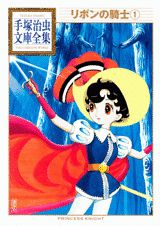
Princess Knight
Tezuka's foundational work that gave shojo manga its template — a princess raised as a prince, fighting for her kingdom and her heart.
Fantasy / Supernatural
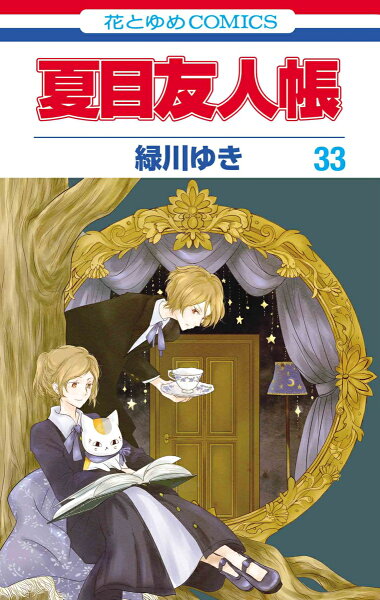
Natsume's Book of Friends
Yu's review of Natsume's Book of Friends — a teenager who can see spirits inherits a book from his deceased grandmother containing the names of spirits she had bound to her, and must return those names while navigating a world of supernatural beings and the human world he never quite fit into.
Romance / Fantasy
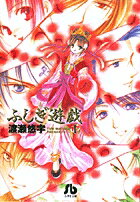
Fushigi Yugi
A review of Fushigi Yugi, the classic isekai romance manga about a girl transported to ancient China who becomes the Priestess of Suzaku.
Written by
Yu
Manga Enthusiast from Japan
I grew up in Japan and manga literally saved me during a tough time in elementary school. My English isn't perfect, but my love for manga is real — and I want to share it with you.
Disclosure: This post contains affiliate links. As an Amazon Associate, I earn from qualifying purchases at no extra cost to you.