
Puella Magi Madoka Magica Review: Three Wishes and Everything They Cost
by Magica Quartet / Hanokage
Read the first volume. If it doesn't hook you, put it down. It'll hook you.
Buy Puella Magi Madoka Magica on Amazon →*Affiliate link — I earn a small commission at no extra cost to you.
Quick Take
- The deconstruction of the magical girl genre that redefined what anime and manga could do with the premise
- Three volumes, complete — each chapter is a revelation, and the final revelation changes everything
- The manga adaptation captures the story; the anime's visual direction is the ideal form, but the manga is the necessary text for readers
Who Is This Manga For?
- Readers who want magical girl manga that interrogates its own premise
- Fans of the anime who want the source text
- Anyone interested in genre deconstruction done with genuine craft
- Readers who can handle psychological horror in service of something meaningful
Content Warnings & Age Rating
Age Rating: T (Teen) Content Warnings: Characters die; the nature of magical girl contracts involves dark psychological content; grief and despair are central themes
The content is not gratuitously graphic but it is genuinely disturbing.
Yu's Rating
| Category | Score |
|---|---|
| Story Depth | ★★★★★ |
| Art Style | ★★★★☆ |
| Character Development | ★★★★★ |
| Accessibility for Non-Japanese Readers | ★★★★★ |
| Reread Value | ★★★★★ |
Story Overview
Madoka Kaname is an ordinary middle school girl. She meets Kyubey — a small, cat-like creature — and Homura Akemi, a transfer student who warns her away from Kyubey. Kyubey offers a contract: one wish, any wish, in exchange for becoming a magical girl and fighting witches.
Madoka hesitates.
Across three volumes, the series reveals what the magical girl contract actually costs, what witches are, what Kyubey actually is, and what Homura is trying to prevent. Each revelation reframes everything that preceded it.
The series is a tragedy. It is also, in the final moments, something else.
Characters
Madoka Kaname — Her passivity — the fact that she observes more than she acts for most of the series — is not a weakness but a structural choice. She is the witness to what the magical girl system does to people, and the series needs her to witness it fully before she can respond.
Homura Akemi — The series' most complete character; what she knows, why she knows it, and what she has done with that knowledge is the revelation that makes the entire series cohere.
Mami Tomoe — The magical girl who shows Madoka and Sayaka what the life looks like in its good aspects; her fate establishes what the series actually is.
Kyubey — One of fiction's great villains — not because he is cruel but because he is not. His logic is completely rational. His ethics are alien. The series' most unsettling question is what to call something that causes enormous suffering without malice.
Art Style
Hanokage's manga adaptation works within the constraints of the anime's distinctive visual design — the witch labyrinth sequences, which in the anime used a completely different visual language, are adapted into manga panels with varying success. The character designs are faithful and expressively rendered.
Cultural Context
Madoka Magica appeared in 2011 and immediately generated the "dark magical girl" as a genre category — before Madoka, the deconstruction of magical girl tropes existed but had not crystallized. After Madoka, every magical girl work existed in conversation with it. The series engages with how magical girl manga and anime had used the genre's conventions without examining their implications.
What I Love About It
The moment when Homura's timeline is revealed — not just what happened but how many times it happened and what she chose each time. It reframes every scene that preceded it and makes the reader understand what they were watching while they were watching something else.
What English-Speaking Fans Say
Madoka Magica is one of the most discussed anime/manga works of its decade in English — the "Mami" scene's immediate internet impact, the Homura reveal's sustained discussion, and the ending's debate about what it actually means have generated a body of fan analysis that rivals much longer series. Readers who encounter the manga after the anime describe it as revealing structure they missed in the animation's visual complexity.
Memorable Scene ⚠️ Spoiler Warning
Homura's final declaration — what she does at the series' end and what she says about it — and the specific ambiguity of what the ending actually means for the world the series has built is what the series' entire investment pays off toward.
Similar Manga
- Magical Girl Raising Project — Magical girl deconstruction, darker tone
- Magical Girl Site — Dark magical girl, similar structural questioning
- Revolutionary Girl Utena — Genre deconstruction, psychological depth
- From the New World — Hidden horror beneath apparent peace
Reading Order / Where to Start
Volume 1 — do not read ahead; the series is structured as revelation.
Official English Translation Status
Yen Press published the complete 3-volume manga. All volumes available. Multiple spinoff manga also published.
Pros & Cons
Pros
- 3 volumes — complete and perfectly paced
- Every character serves the story's structure with precision
- The Homura revelation is among manga's finest constructed surprises
- Complete in English with spinoffs available
Cons
- The anime is the superior version for many elements the manga compresses
- Some readers find the pacing rushed in the final volume
- The content is genuinely dark — not appropriate for younger readers despite the rating
Format Comparison
| Format | Notes |
|---|---|
| Individual Volumes | Yen Press; standard |
| Digital | Available |
Where to Buy
Read the first volume. If it doesn't hook you, put it down. It'll hook you.
This post contains affiliate links. If you purchase through these links, I may earn a small commission at no extra cost to you. As an Amazon Associate, I earn from qualifying purchases.
*Affiliate link — I earn a small commission at no extra cost to you.
More Manga You Might Like

Fantasy / Horror
Magia Record: Puella Magi Madoka Magica Side Story
Yu's review of Magia Record — a side story set in the Madoka Magica universe follows Iroha Tamaki, a magical girl searching for her missing sister, in the city of Kamihama where magical girls gather seeking a rumor about salvation; maintains the original series' dark psychological atmosphere while building an independent narrative.

Fantasy / Supernatural
xxxHOLiC
Yu's review of xxxHOLiC — a high school student cursed with the ability to see spirits finds a mysterious shop run by the dimension witch Yūko, who agrees to remove his power in exchange for becoming her shop worker.

Fantasy / Mystery
Pandora Hearts
Yu's review of Pandora Hearts — a nobleman's son is cast into a prison dimension called the Abyss on his fifteenth birthday, returns with a powerful chain partner, and unravels a conspiracy that rewrote the history of his world.
Fantasy / Magical Girl
Cardcaptor Sakura
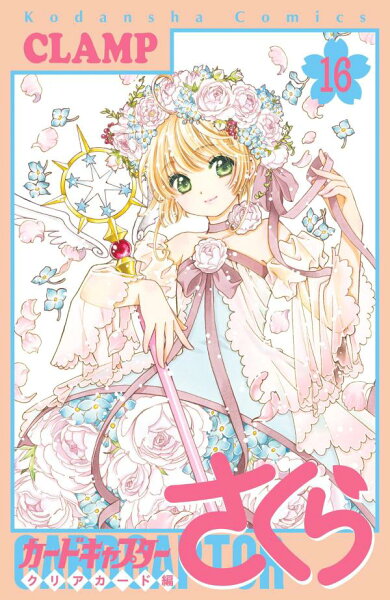
Yu's review of Cardcaptor Sakura — a ten-year-old girl accidentally releases the Clow Cards, has to capture them all, transforms them into her own, and along the way the manga quietly becomes one of CLAMP's warmest, most generous stories about love.

Fantasy / Mystery
Are You Alice?
A review of Are You Alice? — a dark, surreal reimagining of Alice in Wonderland where a nameless boy is given the name Alice and must participate in a game he didn't choose, in a Wonderland that has been running that game for longer than anyone remembers.
Fantasy
Sally the Witch
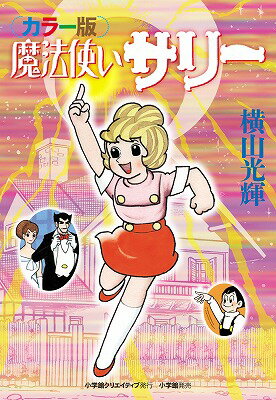
Sally the Witch is a princess from the magical world who chooses to live among ordinary humans — a manga that invented the magical girl genre and established every template that followed.
Written by
Yu
Manga Enthusiast from Japan
I grew up in Japan and manga literally saved me during a tough time in elementary school. My English isn't perfect, but my love for manga is real — and I want to share it with you.
Disclosure: This post contains affiliate links. As an Amazon Associate, I earn from qualifying purchases at no extra cost to you.