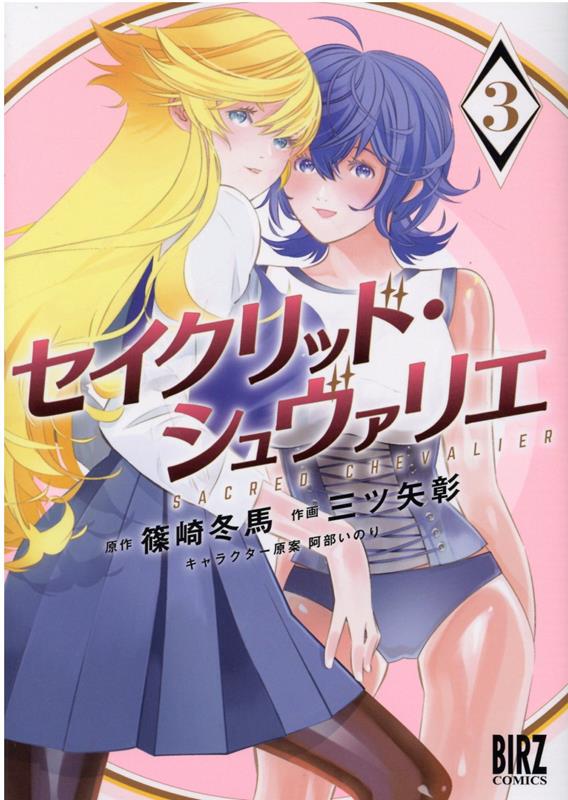
Le Chevalier D'Eon Review: Versailles, Demons, and a Secret That Changes Who Gets to Exist
by Tou Ubukata (story), Kiriko Yumeji (art)
Read the first volume. If it doesn't hook you, put it down. It'll hook you.
Buy Le Chevalier D'Eon on Amazon →*Affiliate link — I earn a small commission at no extra cost to you.
His sister was murdered and her soul is possessing his body. Versailles has no idea who it's dealing with.
Quick Take
- A manga adaptation of the Production I.G anime, set in 18th-century France with supernatural conspiracies layered over real historical politics
- The historical detail is genuine; the supernatural elements are genuinely dark
- 10 complete volumes — a full story with a specific aesthetic
Who Is This Manga For?
- Readers who want historical fantasy with real political texture
- Fans of the anime who want the manga version's interpretation
- People interested in 18th-century European settings in manga
- Anyone who wants supernatural intrigue in a meticulously dressed historical setting
Content Warnings & Age Rating
Age Rating: T (Teen) Content Warnings: Historical violence, political conspiracy, supernatural horror, character death
The tone is dark without being graphic — appropriate to the setting and the source material.
Yu's Rating
| Category | Score |
|---|---|
| Story Depth | ★★★★☆ |
| Art Style | ★★★★☆ |
| Character Development | ★★★☆☆ |
| Accessibility for Non-Japanese Readers | ★★★☆☆ |
| Reread Value | ★★★☆☆ |
Story Overview
D'Eon de Beaumont is a French royal spy in the mid-18th century — the historical figure was real, a famous cross-dresser who served as a spy for King Louis XV. The manga takes this history and builds a supernatural conspiracy around it.
D'Eon's sister Lia was murdered in mysterious circumstances. Her soul now inhabits his body, taking control at moments of crisis to fight with preternatural skill. The investigation into Lia's death leads D'Eon through the court of Versailles, into the political machinery of the French royal family, and toward an occult conspiracy involving alchemy and resurrected corpses animated by poetry.
The story deploys real historical figures — the Pompadour, Louis XV, various ministers — against this supernatural backdrop, which creates a specific pleasure for readers who know the history and a functional intrigue for those who don't.
Characters
D'Eon de Beaumont — The historical figure transformed: a young man whose identity is complicated by the soul he carries, whose dual nature is handled with more nuance than the premise requires.
Lia de Beaumont — Present primarily through her possession of D'Eon, but her character is established through what she does in those moments and what her death meant.
Robin — D'Eon's companion whose loyalties and origins are developed across the series.
Historical figures — The Pompadour is the most distinctive supporting character — her real historical complexity is partially preserved.
Art Style
Yumeji's art is elegant and period-appropriate — the costume design for 18th-century French court fashion is detailed and visually rich. Character designs are attractive and distinct. The supernatural sequences are drawn in a different register from the political scenes, creating effective tonal contrast. The overall visual quality is high throughout.
Cultural Context
D'Eon de Beaumont was a real historical figure — a spy for Louis XV who lived as a woman for the latter part of his life, creating centuries of debate about his actual identity. The manga uses this historical ambiguity as the supernatural premise's foundation: the question of who inhabits D'Eon's body mirrors the real question about who D'Eon actually was.
18th-century France provides manga with rich visual material — the elaborate court fashion, the political architecture, the specific tensions of a monarchy moving toward revolution — that few other historical settings match.
What I Love About It
The scenes in Versailles — the court scenes where D'Eon navigates real political structures — are where the manga earns its historical detail. The supernatural conspiracy is more interesting when it's entangled with the politics than when it operates independently. Ubukata clearly researched the period and it shows.
What English-Speaking Fans Say
The anime is more widely known than the manga adaptation. Readers who found the manga often through the anime note that the two handle the material differently — the manga has a distinct visual approach that Yumeji brings independently of the anime's style. The historical atmosphere is consistently praised. The 10-volume completion is appreciated.
Memorable Scene ⚠️ Spoiler Warning
The scene where D'Eon fully understands the conspiracy's scope — what it was doing, who authorized it, and what his sister's death actually meant in the context of the larger plan — is where the historical and supernatural threads become one. Ubukata ties the politics and the supernatural together at that moment and the story justifies both elements simultaneously.
Similar Manga
| Title | Its Approach | How Le Chevalier D'Eon Differs |
|---|---|---|
| Rose of Versailles | 18th-century France, gender and identity | Rose of Versailles is more romantic and dramatic; Le Chevalier is more supernatural thriller |
| Trinity Blood | Gothic supernatural in a historical-fantasy Europe | Trinity Blood is future-set; Le Chevalier is historically grounded |
| Red River | Historical fiction with supernatural elements | Red River is ancient world-focused; Le Chevalier is specifically 18th-century French |
Reading Order / Where to Start
Volume 1, straight through. The historical context is established gradually.
Official English Translation Status
Del Rey published all 10 volumes in English. Complete and available.
Pros & Cons
Pros
- Genuine historical detail in the setting and political structure
- The supernatural conspiracy is well-integrated with real history
- Yumeji's art is visually rich
- Complete 10-volume story
Cons
- Requires engagement with 18th-century French political context to fully appreciate
- The manga and anime differ enough to potentially confuse readers who know one before the other
- The historical density can slow the story in middle volumes
- Character development is secondary to plot mechanics
Is Le Chevalier D'Eon Worth Reading?
For historical fantasy readers with interest in 18th-century Europe — yes. The period detail and supernatural integration make it distinctive.
Format Comparison
| Format | Pros | Cons |
|---|---|---|
| Physical | Complete 10-volume set; rich art rewards print | — |
| Digital | More accessible | — |
| Omnibus | No omnibus available | — |
Where to Buy
Read the first volume. If it doesn't hook you, put it down. It'll hook you.
This post contains affiliate links. If you purchase through these links, I may earn a small commission at no extra cost to you. As an Amazon Associate, I earn from qualifying purchases.
*Affiliate link — I earn a small commission at no extra cost to you.
More Manga You Might Like

Fantasy / Romance
Sakura Hime: The Legend of Princess Sakura
A review of Sakura Hime: The Legend of Princess Sakura — Arina Tanemura's twelve-volume historical fantasy shojo following a princess who discovers she is descended from the moon and carries a sword that can destroy yokai — and everything she cares about.

Fantasy / Historical
Onmyoji
Onmyoji is Reiko Okano's manga adaptation of Baku Yumemakura's novel series about Abe no Seimei, the legendary Heian-era onmyoji (yin-yang master), and his companion Minamoto no Hiromasa — a supernatural historical manga that gave the famous exorcist an unexpected depth.
Fantasy / Supernatural
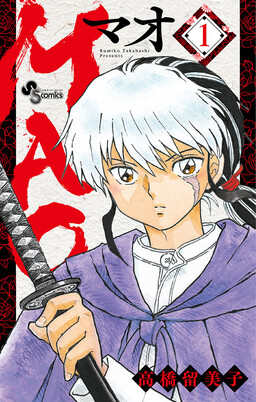
Mao
Yu's review of Mao — middle school girl Nanoka Kiba can slip between present-day Tokyo and Taisho-era Japan, where she encounters Mao, an onmyouji cursed with immortality who is searching for the source of his curse; together they investigate supernatural cases while pursuing the connection that links their lives across a century.
Romance / Fantasy
The Remarried Empress
A review of The Remarried Empress, the fantasy manhwa about an empress who divorces her faithless emperor and starts a new life with a worthy king.
Fantasy / Supernatural
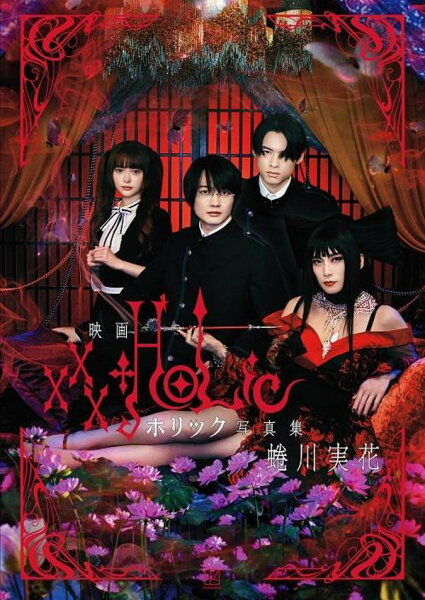
xxxHOLiC
Yu's review of xxxHOLiC — a high school student cursed with the ability to see spirits finds a mysterious shop run by the dimension witch Yūko, who agrees to remove his power in exchange for becoming her shop worker.
Fantasy / Adventure
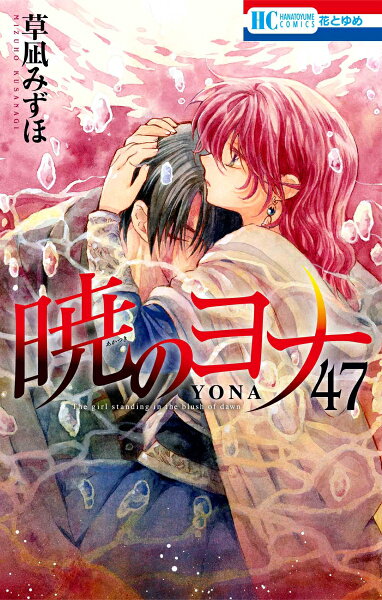
Yona of the Dawn
Yu's review of Yona of the Dawn — a sheltered princess witnesses her father's murder, flees the palace with her bodyguard, and begins the journey to reclaim her kingdom and herself.
Written by
Yu
Manga Enthusiast from Japan
I grew up in Japan and manga literally saved me during a tough time in elementary school. My English isn't perfect, but my love for manga is real — and I want to share it with you.
Disclosure: This post contains affiliate links. As an Amazon Associate, I earn from qualifying purchases at no extra cost to you.