
Kannagi Review: A Shrine Maiden Spirit Comes to Life from a Wood Carving and Moves In
by Eri Takenashi
Read the first volume. If it doesn't hook you, put it down. It'll hook you.
Buy Kannagi: Crazy Shrine Maidens on Amazon →*Affiliate link — I earn a small commission at no extra cost to you.
Quick Take
- The supernatural roommate comedy premise is elevated by Nagi being a genuinely dignified character whose pride is played for comedy without being diminished — she is a god who has fallen on hard times and knows it
- Takenashi's art is distinctive and the comedic timing is sharp
- 13 volumes complete; one of the better supernatural romantic comedies of its era
Who Is This Manga For?
- Readers who want supernatural romantic comedy with a heroine who has real personality
- Anyone interested in Shinto imagery and shrine maiden aesthetics in comedic context
- Fans of "supernatural being moves in" romantic comedy genre
- Readers looking for complete longer-form supernatural comedy
Content Warnings & Age Rating
Age Rating: T (Teen) Content Warnings: Supernatural creatures and purification battles; comedic romantic situations; shrine maiden themes
T rating — supernatural comedy within teen standards.
Yu's Rating
| Category | Score |
|---|---|
| Story Depth | ★★★☆☆ |
| Art Style | ★★★★★ |
| Character Development | ★★★★☆ |
| Accessibility for Non-Japanese Readers | ★★★★☆ |
| Reread Value | ★★★★☆ |
Story Overview
Jin Mikuriya carves a figure from a sacred tree that has been cut down. When the carving is complete, it becomes Nagi — a land goddess associated with that tree, now incarnated in the carved form. Nagi has lost most of her divine power because her sacred tree was removed, and she needs Jin's help to recover it.
What this means practically: a shrine maiden goddess with significant dignity and minimal power is living with a high school boy, fighting impurity creatures that have appeared in the area since the tree was removed, and managing the significant gap between her self-image as a divine being and her current circumstances.
The series balances the supernatural comedy — Nagi's dignity versus her actual situation — with the gradually developing relationship between Jin and Nagi and with a broader mythology about impurity, sacred sites, and what happens to gods when their anchoring places disappear.
Characters
Nagi — A goddess who is accustomed to reverence and is getting very little of it; her dignity is genuine and the comedy comes from the gap between her expectations and her circumstances, not from mocking her.
Jin — The art student who accidentally summoned her and is now responsible for her; his relationship with Nagi develops from obligation to genuine care.
Tsugumi — Jin's childhood friend whose feelings for Jin create the romantic tension that the series develops alongside the supernatural plot.
Art Style
Takenashi's art is one of the series' standout qualities — distinctive character designs with expressive faces, Nagi's shrine maiden design is immediately iconic, and the comedic panels have strong timing. The impurity creatures are designed with real visual imagination. The art improved significantly over the series' run.
Cultural Context
Kannagi draws from Shinto concepts of land gods (kunitsukami) — divine beings associated with specific natural sites. The premise of a god losing power when their sacred site is removed reflects actual Shinto beliefs about the relationship between divine beings and their earthly anchors. The impurity (kegare) that Nagi fights is also a genuine Shinto concept. The series uses this material for comedy while maintaining basic respect for the concepts.
What I Love About It
Nagi's dignity. She knows she's a god who has been reduced to living in a teenage boy's house and fighting small monsters. She does not pretend otherwise. But she also doesn't abandon the dignity that comes with knowing what she actually is. The comedy comes from that gap, and she is never the butt of a joke that diminishes her fundamental character.
What English-Speaking Fans Say
Western readers describe Kannagi as an underappreciated supernatural romantic comedy — specifically noted for Nagi being a more interesting and fully realized character than similar "supernatural girl moves in" heroines, for Takenashi's art being distinctive and expressive, and for the mythology underpinning the comedy being handled with care. Recommended alongside Kamisama Kiss.
Memorable Scene ⚠️ Spoiler Warning
The scenes where Nagi's actual divine power manifests — when the comedy gives way and she is unmistakably what she claims to be — are the series' most striking tonal shifts.
Similar Manga
- Kamisama Kiss — Shrine and divine being romance with similar warm dynamic
- Urusei Yatsura — Classic supernatural girl moves in romantic comedy
- The World is Still Beautiful — Supernatural being in human world romance
- Noragami — God-in-human-world mythology with more serious tone
Reading Order / Where to Start
Volume 1 — Nagi's emergence from the carving, her situation, and the first impurity battle establish the premise.
Official English Translation Status
Yen Press published the complete English series. All 13 volumes available.
Pros & Cons
Pros
- Nagi is a well-realized and funny protagonist
- Takenashi's art is distinctive and expressive
- Shinto mythology used with genuine care
- Complete in 13 volumes
Cons
- Romantic triangle takes time to develop
- Supernatural threat plot is secondary to the comedy
- Some readers may find the pacing uneven in the middle volumes
Format Comparison
| Format | Notes |
|---|---|
| Individual Volumes | Yen Press; complete series |
| Digital | Available |
Where to Buy
Read the first volume. If it doesn't hook you, put it down. It'll hook you.
This post contains affiliate links. If you purchase through these links, I may earn a small commission at no extra cost to you. As an Amazon Associate, I earn from qualifying purchases.
*Affiliate link — I earn a small commission at no extra cost to you.
More Manga You Might Like
Fantasy
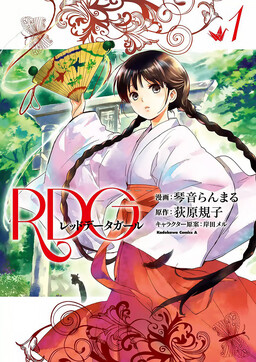
Red Data Girl
Yu's review of Red Data Girl — Izumiko Suzuhara has grown up at a mountain shrine; she destroys electronic devices by touch; she's an endangered shrine maiden (yorishiro) for a powerful deity; she enters a school that serves as a hub for supernatural politics; manga adaptation of Noriko Ogiwara's light novel.
Fantasy / Romance
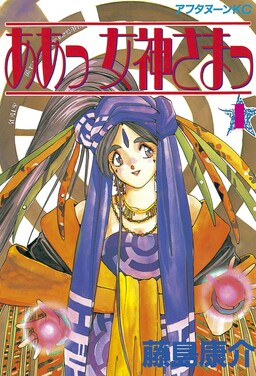
Oh My Goddess!
Yu's review of Oh My Goddess! — Keiichi Morisato misdials a goddess helpline and Belldandy appears in his dorm room; she grants him one wish and he wishes for her to stay with him; she does, and the series follows their life together as other goddesses and demons complicate their quiet romance.

Fantasy / Romance
Kaiju Girl Caramelise
Yu's review of Kaiju Girl Caramelise — Kuroe Akaishi has always been alone because strong emotions cause her to transform into a giant kaiju; when a popular boy notices her, the transformations start happening at school; a comedy-romance about a girl whose heart is literally too big to contain.
Fantasy / Romance
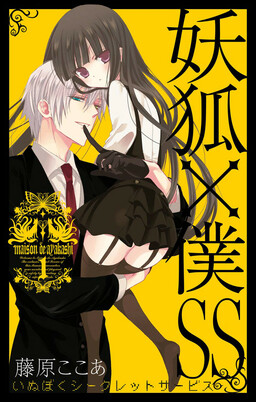
Inu x Boku SS
Yu's review of Inu x Boku SS — Ririchiyo Shirakiin, a half-youkai girl whose sharp tongue makes connection impossible, moves into Maison de Ayakashi, an apartment for those with supernatural heritage; her Secret Service agent Soushi Miketsukami is assigned to protect her and is impossibly devoted — and his devotion is not a performance.
Fantasy / Romance
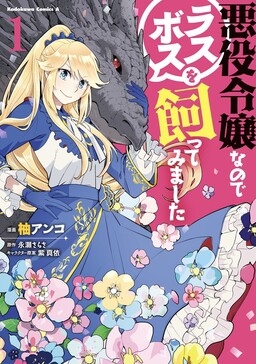
I'm the Villainess, So I'm Taming the Final Boss
Yu's review of I'm the Villainess, So I'm Taming the Final Boss — Aileen reincarnates as the villainess of an otome game; instead of trying to avoid the bad ending passively, she decides the best strategy is to capture the demon lord Claude — the game's final boss — and make him her ally.

Fantasy / Supernatural
Tokyo Babylon
Yu's review of Tokyo Babylon — Subaru Sumeragi is the 13th head of Japan's most powerful onmyoji clan, sixteen years old and gentle, who uses his spiritual ability to take on cases involving Tokyo's supernatural problems; his twin sister Hokuto accompanies him, as does Seishirou Sakurazuka, who claims to be his friend.
Written by
Yu
Manga Enthusiast from Japan
I grew up in Japan and manga literally saved me during a tough time in elementary school. My English isn't perfect, but my love for manga is real — and I want to share it with you.
Disclosure: This post contains affiliate links. As an Amazon Associate, I earn from qualifying purchases at no extra cost to you.