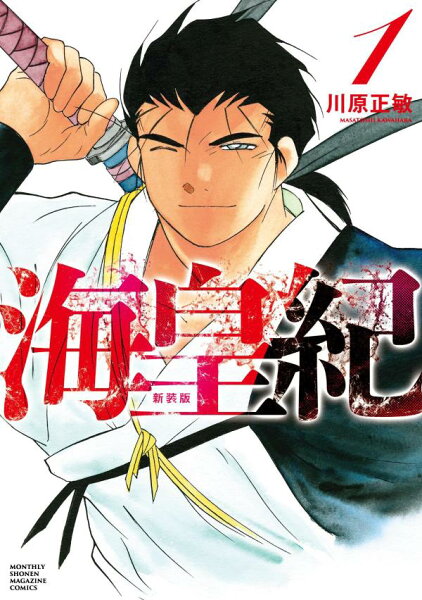
Kaiouki Review: The Naval Fantasy Manga That Treated the Ocean Like a Playable Continent
by Masatoshi Kawahara
Read the first volume. If it doesn't hook you, put it down. It'll hook you.
Buy Kaiouki on Amazon →*Affiliate link — I earn a small commission at no extra cost to you.
A continent is land. A continent of water is something else. The manga understood that and built its fantasy on top of it.
Quick Take
- Kazuko Kawahara's 45-volume fantasy from Monthly Shonen Magazine — Fan Gunnar's naval-tactical career in a sea-defined fantasy world
- Combines naval warfare's strategic depth with fantasy worldbuilding in a long-form epic
- Among the most extensive maritime-fantasy manga in the medium
Who Is This Manga For?
- Naval fantasy readers who want strategy depicted at scale
- Long-form fantasy enthusiasts who appreciate sustained worldbuilding
- Tactical fiction fans who want the strategic depth of historical naval drama applied to fantasy
- Anyone interested in what a fantasy world looks like when the ocean is its primary terrain
Content Warnings & Age Rating
Age Rating: T (Teen) Content Warnings: Naval combat, occasional intensity, period-style political maneuvering.
Suitable for most readers.
Yu's Rating
| Category | Score |
|---|---|
| Story Depth | ★★★★☆ |
| Art Style | ★★★★☆ |
| Character Development | ★★★★☆ |
| Accessibility for Non-Japanese Readers | ★★★☆☆ |
| Reread Value | ★★★★☆ |
Story Overview
Fan Gunnar is a young man in a fantasy world where political power is contested across vast ocean expanses. Naval tactics, ship design, and the politics of the maritime powers shape every conflict. Gunnar's tactical brilliance — his ability to read situations and design responses — drives his rise from local figure into someone whose decisions affect dynasties.
The structure is conventional epic-fantasy but with naval warfare as its primary action mode. Each major arc involves a different political situation requiring tactical resolution: fleet engagements, sieges of port cities, the politics of alliances among naval powers. Kawahara depicts these with attention to actual naval-warfare logic — wind, distance, supply chains, command hierarchies all matter.
Across 45 volumes, the world becomes lived-in. Different cultures around the ocean develop, the politics shifts as victories and defeats reshape power structures, and Gunnar's career has phases that include both rises and difficult periods. The series respects its scale.
Characters
Fan Gunnar: A protagonist whose tactical intelligence is the series' through-line — his growth across decades is depicted with patience.
The political-rival cast: Each significant antagonist represents a different naval power and a different strategic philosophy.
The crew and allies: Long-running supporting characters develop alongside Gunnar across the long timeline.
Art Style
Kawahara's art handles naval scenes with attention to ship design and tactical positioning — readers can follow battles spatially, understand why certain moves matter, see the physical scale of fleet engagements. Character art is consistent and individuated across the long run.
Cultural Context
Kaiouki ran from 1998 to 2010 in Monthly Shonen Magazine. The series belongs to Magazine's strong tradition of long-form fantasy and historical work — alongside works like Vagabond (in different magazine context) — and to the broader Japanese fascination with naval history that produced classics like Yamato Takeru and various Japanese-history sea-battle series.
The series' fantasy-world setting allows it to engage with naval-warfare logic without being constrained to specific historical reality, which is one of its creative strengths.
What I Love About It
I love that the ocean is the world.
Most fantasy manga treat the ocean as a barrier or a transport space — something to cross to reach the next location. Kaiouki treats the ocean as the primary terrain, with land masses being secondary geography around it. The choice reorganizes everything: politics works differently when supremacy is naval, cultures develop differently when ports rather than capitals are the central spaces, and tactics work differently when distances are measured in days of sailing. The commitment to the premise is the series' creative core.
What English-Speaking Fans Say
Limited international awareness without translation. Among Japanese fantasy readers familiar with Magazine's catalog, regarded as one of the magazine's defining 2000s fantasy works.
Memorable Scene ⚠️ Spoiler Warning
A fleet engagement where Gunnar's tactical reading of an opposing admiral's psychology determines the outcome before the actual combat — and the recognition that naval warfare at scale is decided by such readings as much as by raw force. The scene captures the series' strategic-fiction commitment.
Similar Manga
| Title | Its Approach | How Kaiouki Differs |
|---|---|---|
| One Piece | Pirate fantasy with adventure focus | Kaiouki is more strategic and less adventure-comedic |
| Vinland Saga | Historical naval epic with Viking setting | Kaiouki is fantasy rather than historical |
| Drifters | Historical figures in fantasy warfare | Kaiouki is original-world fantasy with naval focus |
Reading Order / Where to Start
Volume 1. The world's logic depends on the foundation.
Official English Translation Status
Kaiouki has no official English translation.
Pros & Cons
Pros
- Among the most strategically committed naval fantasy manga
- 45 volumes of sustained worldbuilding
- Tactical fiction depth rare in fantasy manga
- Complete with a satisfying conclusion
Cons
- No English translation
- Naval-warfare context requires interest
- 45-volume commitment is substantial
- Strategic pacing won't satisfy readers wanting tight action
Is Kaiouki Worth Reading?
For naval fantasy and tactical fiction readers, yes — this is among the most committed long-form works in the niche. For readers wanting fast pacing or unfamiliar with naval-warfare conventions, the strategic emphasis may feel slow. As long-form strategic fantasy, it earns its scale.
Format Comparison
| Format | Notes |
|---|---|
| Physical | Japanese editions available |
| Digital | Available in Japanese |
| Omnibus | Collected editions available |
Where to Buy
No English release yet. That just means you find it before everyone else does.
*Affiliate link — I earn a small commission at no extra cost to you.
More Manga You Might Like
Fantasy / Adventure
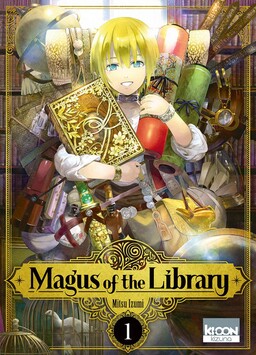
Magus of the Library
Yu's review of Magus of the Library — Theo is a boy of mixed race in a world where the Great Library of the Central Archive controls all knowledge; he loves books but is barred from reading in his village's library because of his half-elf heritage; when a Kafna named Sedona arrives, she sees in him a potential that could change his path.
Fantasy / Adventure
Magi: The Labyrinth of Magic
A review of Shinobu Ohtaka's Magi — the 37-volume Weekly Shōnen Sunday adventure (2009–2017) that starts as an Arabian Nights riff and ends as one of the most politically serious long-form shōnen of its decade. Complete in English from VIZ.
Fantasy / Adventure
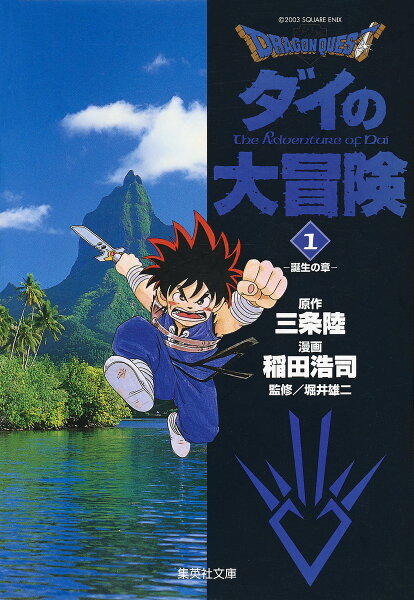
Dragon Quest: The Adventure of Dai
Yu's review of Dragon Quest: The Adventure of Dai — a boy raised on a monster island who always dreamed of being a hero discovers he may be the descendant of a legendary warrior, and sets out to defeat the demon lord threatening the world.

Fantasy / Adventure
Gekkou Jourei
Gekkou Jourei is Kazuhiro Fujita's 29-volume fantasy series — Iwasaki Tsukihiko, a high schooler thrust into a magical conflict where the moonlight has driven fairy-tale characters mad and only certain humans can restore them — a Sunday classic from the author of Ushio to Tora and Karakuri Circus.
Fantasy / Adventure
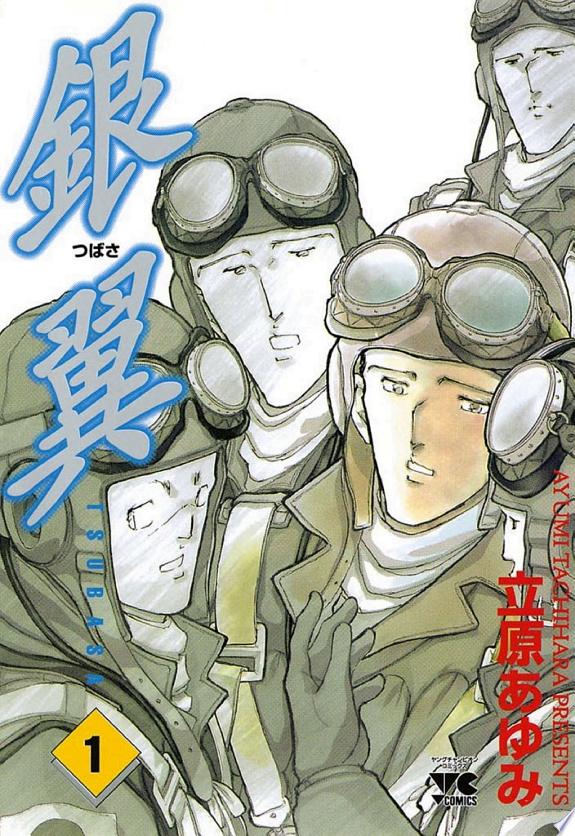
Tsubasa Reservoir Chronicle
Yu's review of Tsubasa Reservoir Chronicle — a young excavator must travel across parallel dimensions to recover the scattered feathers containing the memories of Princess Sakura, paying an impossible price to do so.
Fantasy / Adventure
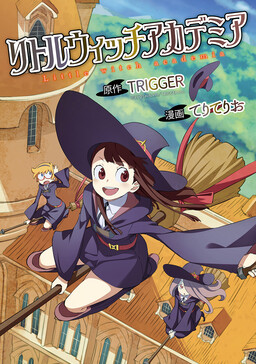
Little Witch Academia
Yu's review of Little Witch Academia — Atsuko Kagari dreamed of being a witch after seeing a performance by the legendary Shiny Chariot; without any magical lineage or natural talent, she enrolls at Luna Nova Magical Academy through pure will; her determination to become what she dreams of is the series' complete premise.
Written by
Yu
Manga Enthusiast from Japan
I grew up in Japan and manga literally saved me during a tough time in elementary school. My English isn't perfect, but my love for manga is real — and I want to share it with you.