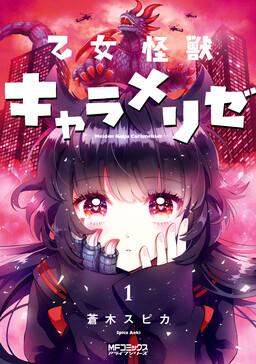
Kaiju Girl Caramelise Review: A Shy High School Girl Transforms Into a Giant Monster When She Falls in Love
by Spica Aoki
Read the first volume. If it doesn't hook you, put it down. It'll hook you.
Buy Kaiju Girl Caramelise on Amazon →*Affiliate link — I earn a small commission at no extra cost to you.
Quick Take
- A romantic comedy that takes "my heart is too big for my body" as a literal premise — Kuroe transforms into a kaiju when her emotions overwhelm her, and the comedy of trying to hide this while falling in love is executed with genuine charm
- 6 volumes complete; a compact, satisfying romantic arc that doesn't overstay its welcome
- Spica Aoki delivers a premise that sounds absurd but works because Kuroe's embarrassment and longing are played completely sincerely
Who Is This Manga For?
- Readers who want romance-comedy with a supernatural twist
- Anyone who enjoys the "protagonist has to hide something embarrassing" comedy structure
- Fans of kaiju content in unexpected genres
- Readers who want a complete romance arc without long-term commitment
Content Warnings & Age Rating
Age Rating: T (Teen) Content Warnings: Kaiju transformation sequences; mild property destruction (buildings, streets); romantic embarrassment is the series' primary comedy source
A genuine T rating — the kaiju content is comedic rather than violent.
Yu's Rating
| Category | Score |
|---|---|
| Story Depth | ★★★☆☆ |
| Art Style | ★★★★☆ |
| Character Development | ★★★★☆ |
| Accessibility for Non-Japanese Readers | ★★★★★ |
| Reread Value | ★★★★☆ |
Story Overview
Kuroe Akaishi has spent her school years carefully managing her emotions because strong feelings cause her to transform into Harugon — a giant kaiju. She keeps her distance from people to keep herself under control and everyone around her safe.
Then Arata Minami, the most popular boy in school, sees her eating alone and decides to talk to her. Kuroe's control immediately begins to fail.
The series follows Kuroe's attempts to manage her feelings for Arata while maintaining the secret of what she becomes when those feelings overwhelm her — complicated by the fact that Harugon has become a beloved figure in the city, and Arata is fascinated by kaiju.
Characters
Kuroe Akaishi — Her isolation before the series begins is portrayed with genuine sympathy — she is not antisocial by choice but by necessity, and her longing for connection that she believes she can never have gives the comedy its emotional foundation.
Arata Minami — A popular boy who is drawn to Kuroe specifically because she is different from everyone else, and who separately is fascinated by Harugon — his not-yet-connected interest in both aspects of the same person is the series' central dramatic irony.
Harugon — The kaiju alter-ego, who the city has begun treating as a local protector figure — the gap between how Harugon is received publicly and Kuroe's private terror of exposure is consistently funny.
Art Style
Aoki's art sells the tonal mixture — Kuroe's embarrassed human expressions are drawn with genuine warmth, and the kaiju transformation sequences are dynamic and visually distinct from the slice-of-school-life art around them. The size contrast between kaiju and city is used for comedic effect rather than spectacle.
Cultural Context
Kaiju — giant monsters in the Godzilla tradition — are a significant part of Japanese popular culture, and the comedy of applying kaiju transformation to a shojo romance premise draws on readers' familiarity with both genres. The kaiju-as-beloved-city-figure subplot plays with Japan's relationship to its monster mythology.
What I Love About It
The series makes Kuroe's longing feel completely real despite the absurd premise. She is a girl who has been alone and wants not to be alone, and the obstacle between her and connection is her own body's honesty about her feelings — which is a completely sincere metaphor regardless of how literally it's applied.
What English-Speaking Fans Say
Western readers describe Kaiju Girl Caramelise as one of the more charming short romance manga they've encountered — the premise delivers consistent comedy while the emotional core remains genuine. The six-volume length is specifically praised for giving the romance time to develop without overstaying its welcome.
Memorable Scene ⚠️ Spoiler Warning
The sequence where Arata begins connecting the dots between Kuroe and Harugon — and his reaction when the full picture assembles — is the series' most emotionally satisfying moment because his response is exactly what Kuroe's fear had made impossible to expect.
Similar Manga
- My Hero Academia — Power that's hard to control, similar emotional stakes around being seen
- The Ancient Magus' Bride — Supernatural-meets-human-feeling fantasy romance
- I Am a Hero — Large monster content in contemporary Japan setting (different tone)
- Komi Can't Communicate — Isolated protagonist learning connection, similar warmth
Reading Order / Where to Start
Volume 1 — Kuroe's situation and the beginning of her relationship with Arata are established immediately.
Official English Translation Status
Yen Press published all 6 volumes. Complete and available.
Pros & Cons
Pros
- Absurd premise executed with genuine emotional sincerity
- Six-volume complete arc with satisfying resolution
- Comedy and romance balance effectively throughout
- Accessible and charming regardless of kaiju or romance genre experience
Cons
- Six volumes means limited depth compared to longer series
- The premise requires accepting the literal-metaphor logic
- Some readers will want more kaiju action than the series provides
Format Comparison
| Format | Notes |
|---|---|
| Individual Volumes | Yen Press; complete |
| Digital | Available |
Where to Buy
Read the first volume. If it doesn't hook you, put it down. It'll hook you.
This post contains affiliate links. If you purchase through these links, I may earn a small commission at no extra cost to you. As an Amazon Associate, I earn from qualifying purchases.
*Affiliate link — I earn a small commission at no extra cost to you.
More Manga You Might Like
Fantasy / Comedy
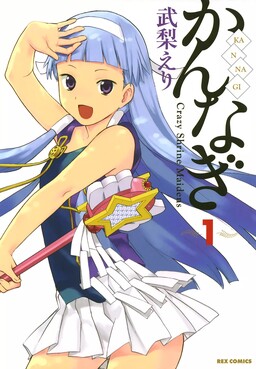
Kannagi: Crazy Shrine Maidens
Yu's review of Kannagi — Mikuriya Jin carves a wooden figure from a sacred tree and it comes to life as Nagi, the local land god in the form of a shrine maiden; Nagi has lost much of her power and must rely on Jin while fighting 'impurity' creatures that have appeared in the area.
Fantasy / Romance
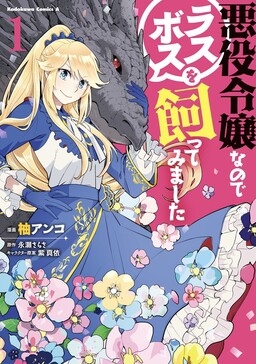
I'm the Villainess, So I'm Taming the Final Boss
Yu's review of I'm the Villainess, So I'm Taming the Final Boss — Aileen reincarnates as the villainess of an otome game; instead of trying to avoid the bad ending passively, she decides the best strategy is to capture the demon lord Claude — the game's final boss — and make him her ally.

Fantasy / Romance
Otome Youkai Zakuro
Yu's review of Otome Youkai Zakuro — in Meiji-era Japan, the Ministry of Spirit Affairs pairs human military officers with half-youkai girls to handle supernatural cases; Agemaki Kei, who is afraid of youkai, is paired with the sharp-tongued Zakuro; their partnership generates the series' central romance.
Fantasy / Comedy
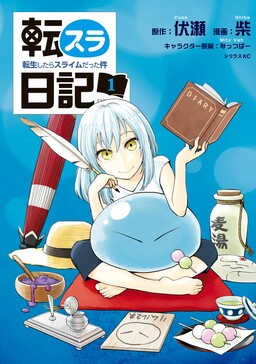
That Time I Got Reincarnated as a Slime: Slime Diaries
Yu's review of Slime Diaries — a spinoff from That Time I Got Reincarnated as a Slime following Rimuru and the people of Tempest through daily life; farming festivals, cooking competitions, seasonal celebrations, and the small situations that don't make it into the main series.
Fantasy / Isekai
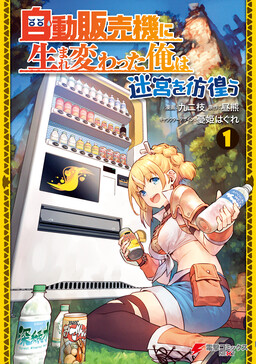
Reborn as a Vending Machine, I Now Wander the Dungeon
Yu's review of Reborn as a Vending Machine, I Now Wander the Dungeon — a vending machine enthusiast who dies in a vending machine accident is reborn as an actual vending machine in a dungeon-layered fantasy world; unable to speak except through vending machine phrases, he must survive, help those who find him, and slowly build a new life from the most absurd starting position in isekai fiction.
Fantasy / Romance
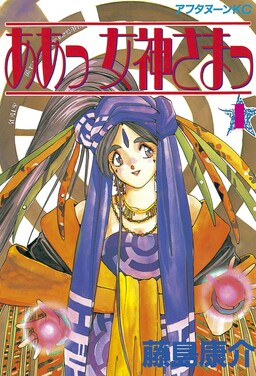
Oh My Goddess!
Yu's review of Oh My Goddess! — Keiichi Morisato misdials a goddess helpline and Belldandy appears in his dorm room; she grants him one wish and he wishes for her to stay with him; she does, and the series follows their life together as other goddesses and demons complicate their quiet romance.
Written by
Yu
Manga Enthusiast from Japan
I grew up in Japan and manga literally saved me during a tough time in elementary school. My English isn't perfect, but my love for manga is real — and I want to share it with you.
Disclosure: This post contains affiliate links. As an Amazon Associate, I earn from qualifying purchases at no extra cost to you.