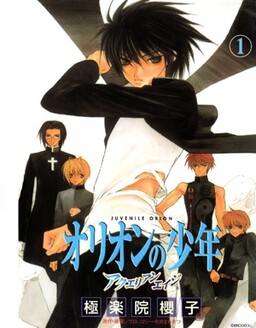
Juvenile Orion Review: High School Students Awakening as Supernatural Warriors in an Ancient War
by Sakurako Gokurakuin
Read the first volume. If it doesn't hook you, put it down. It'll hook you.
Buy Juvenile Orion on Amazon →*Affiliate link — I earn a small commission at no extra cost to you.
Quick Take
- A manga adaptation of the Aquarian Age card game mythology — the ancient supernatural conflict framework gives the high school setting an unusual backstory
- The bishonen cast of supernatural warriors is the series' primary draw alongside the heroine's central role in the conflict
- 5 volumes complete; short complete supernatural fantasy from early 2000s
Who Is This Manga For?
- Readers who want supernatural warrior awakening stories with shojo character aesthetics
- Anyone interested in how card game universes translate into manga narrative
- Fans of "ordinary girl at center of supernatural conflict" romance-fantasy structure
- Readers looking for short complete early 2000s fantasy
Content Warnings & Age Rating
Age Rating: T (Teen) Content Warnings: Supernatural conflict with action violence; high school setting with hidden fantasy elements; mild romantic content
T rating — fantasy action within teen standards.
Yu's Rating
| Category | Score |
|---|---|
| Story Depth | ★★★☆☆ |
| Art Style | ★★★★☆ |
| Character Development | ★★★☆☆ |
| Accessibility for Non-Japanese Readers | ★★★★☆ |
| Reread Value | ★★★☆☆ |
Story Overview
Mana Kisaragi's childhood is marked by Naoya's departure — they were close, he left, he has been absent. When Naoya returns to their high school, something has changed about him.
The change is that he and the circle of boys around him are Erasers — supernatural warriors in the Aquarian Age, an ancient conflict between different supernatural factions: WIZ-DOM, Darklore, Arayashiki, and Eraser. They have awakened to their supernatural nature.
Mana is important to this conflict in ways she doesn't initially understand. The reunion with Naoya is complicated by the war that she has inadvertently entered by returning to his sphere.
Characters
Mana Kisaragi — The heroine whose significance to the supernatural conflict is gradually revealed; her relationship with Naoya is the emotional center of the series.
Naoya — The childhood friend whose return and changed nature creates the series' central romantic and supernatural tension.
The Eraser group — Supernatural warriors with distinct personalities and abilities who form the series' ensemble.
Art Style
Gokurakuin's art has the early 2000s bishonen quality of supernatural shojo — character designs that prioritize attractive supernatural warriors, action sequences that balance battle content with visual appeal. The art suits the hybrid romance-fantasy genre.
Cultural Context
Juvenile Orion is based on the Aquarian Age trading card game, which provided the supernatural faction framework. The card game to manga adaptation was common in the early 2000s, and Gokurakuin's version uses the mythological underpinning effectively even for readers unfamiliar with the source game.
What I Love About It
The size of the supernatural conflict contrasted with the intimate scale of the actual story. The Aquarian Age conflict is ancient and enormous — and what actually matters to the series is two people who knew each other as children navigating what they have become as supernatural warriors.
What English-Speaking Fans Say
Western readers describe Juvenile Orion as a pleasant early 2000s supernatural romance — specifically noted for the bishounen aesthetic being well-executed, for the Aquarian Age mythology giving the series more worldbuilding than comparable titles, and for the five-volume format being complete. Recommended for early 2000s shojo fantasy fans.
Memorable Scene ⚠️ Spoiler Warning
The clarification of Mana's actual role in the Aquarian Age conflict — and why she specifically is at the center of everything — gives the series' supernatural politics a personal emotional anchor.
Similar Manga
- Mythical Detective Loki Ragnarok — Supernatural mythology in contemporary Japan setting
- Tokyo Babylon — Contemporary supernatural conflict with character relationships central
- DN Angel — Supernatural awakening in high school with similar romance-fantasy balance
- Ceres, Celestial Legend — Supernatural inheritance plot with similar heroine position
Reading Order / Where to Start
Volume 1 — Naoya's return, Mana's situation, and the first revelation of the Aquarian Age conflict establish the world.
Official English Translation Status
Tokyopop published the complete English series. All 5 volumes available (may require secondhand purchase as Tokyopop is defunct).
Pros & Cons
Pros
- Complete in 5 volumes — short and accessible
- Aquarian Age mythology gives the series unusual depth
- Art suits the supernatural fantasy aesthetic
- The childhood friend reunion structure works
Cons
- Tokyopop volumes may require secondhand purchase
- Card game origin means some worldbuilding gaps
- Familiar genre formula
Format Comparison
| Format | Notes |
|---|---|
| Individual Volumes | Tokyopop; complete series (secondhand) |
| Digital | Limited availability |
Where to Buy
Read the first volume. If it doesn't hook you, put it down. It'll hook you.
This post contains affiliate links. If you purchase through these links, I may earn a small commission at no extra cost to you. As an Amazon Associate, I earn from qualifying purchases.
*Affiliate link — I earn a small commission at no extra cost to you.
More Manga You Might Like
Fantasy / Action
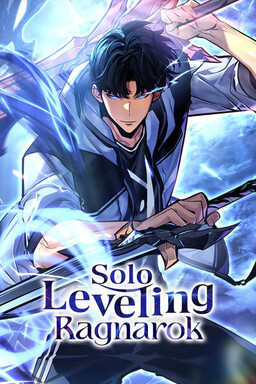
Solo Leveling
Yu's review of Solo Leveling — Sung Jinwoo is the weakest hunter in a world where gates to dungeons have opened and hunters fight the monsters within; after a near-fatal mission, he receives a mysterious system that allows only him to grow stronger — endlessly, without limit.

Fantasy / Action
Lucifer and the Biscuit Hammer
Yu's review of Lucifer and the Biscuit Hammer — Yuuhi Amamiya, a university student who doesn't care about much of anything, is told by a lizard that he is a 'Beast Knight' destined to save the world; he's more interested in the plan of Princess Samidare to save the world herself — so she can destroy it after.
Fantasy / Action
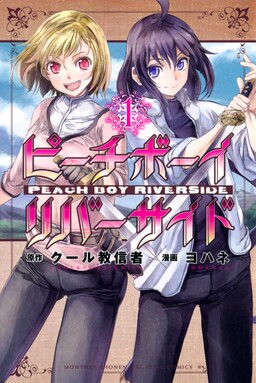
Peach Boy Riverside
Yu's review of Peach Boy Riverside — Princess Sally Salami leaves her sheltered life to see the world; she encounters Mikoto, a young man with the power to destroy oni, who is driven by hatred; Sally's compassion and Mikoto's hatred are placed in constant tension as they navigate a world where the line between humans and monsters is not clear.
Fantasy
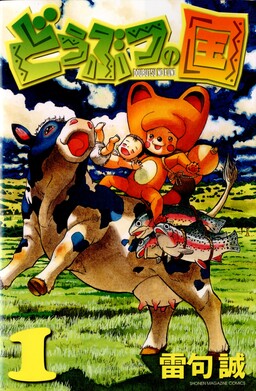
Animal Land
Yu's review of Animal Land — in a world where humans are extinct and animals communicate only within their own species, a tanuki named Monoko finds a human baby she cannot understand but raises anyway; as Taroza grows, he discovers he can speak to all animals, and begins to challenge the world's fundamental law that predators must eat prey.
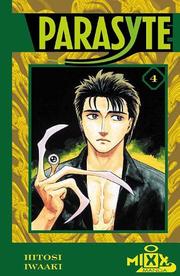
Fantasy / Comedy
Vampire Game
Yu's review of Vampire Game — Duzell, the Vampire King, was killed a century ago by the Holy King Phelios; reincarnated as a small cat, he finds Princess Ishtar, descendant of Phelios, and bonds with her intending to eventually use her to reincarnate fully and achieve revenge; Ishtar, who is oblivious and strong-willed, adopts him as a pet.
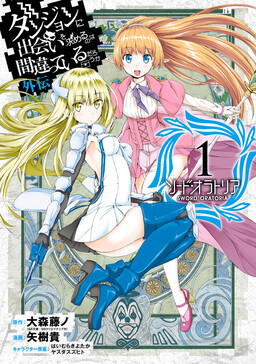
Fantasy
Is It Wrong to Try to Pick Up Girls in a Dungeon? On the Side: Sword Oratoria
Yu's review of Sword Oratoria — the DanMachi spinoff following Aiz Wallenstein, the Sword Princess whose reputation bell encounters are afraid of; the series follows her and the Loki Familia in the dungeon's deeper floors, covering events that parallel and intersect the main DanMachi series from a different perspective.
Written by
Yu
Manga Enthusiast from Japan
I grew up in Japan and manga literally saved me during a tough time in elementary school. My English isn't perfect, but my love for manga is real — and I want to share it with you.
Disclosure: This post contains affiliate links. As an Amazon Associate, I earn from qualifying purchases at no extra cost to you.