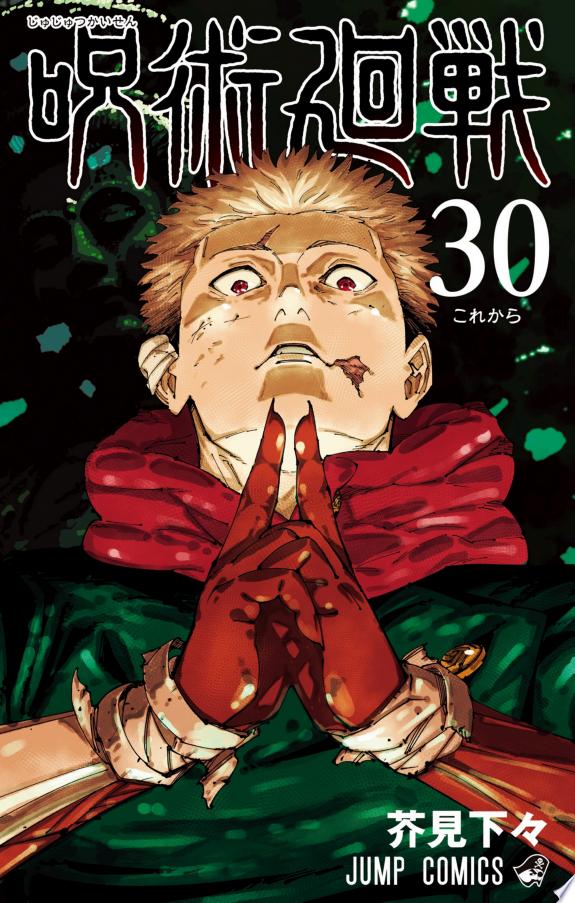
Jujutsu Kaisen Review: The Manga That Refuses to Let Anyone Be Safe
by Gege Akutami
Read the first volume. If it doesn't hook you, put it down. It'll hook you.
Buy Jujutsu Kaisen on Amazon →*Affiliate link — I earn a small commission at no extra cost to you.
Quick Take
- A shonen manga that plays by its own rules — no one is safe, no death is undone, no victory is clean
- Features some of the most technically impressive fight choreography in the medium
- 27 volumes, complete — the full story is there, including one of the most emotionally punishing final acts in recent manga
Who Is This Manga For?
Jujutsu Kaisen is for you if:
- You want a manga with real consequences — where losses stay lost and sacrifices matter
- You love technically complex fights where strategy and power interact in interesting ways
- You're okay with your favorite characters dying
- You want something darker and more modern than classic shonen, without losing the emotional core
Content Warnings & Age Rating
Age Rating: M (Mature) Content Warnings: Extreme violence and gore, death of major and beloved characters, psychological horror, body horror, disturbing curse designs
This is not a manga for younger readers. Jujutsu Kaisen is significantly darker than standard shonen fare. Characters die. Beloved characters die. The world is genuinely cruel, and the story doesn't soften it.
Yu's Rating
| Category | Score |
|---|---|
| Story Depth | ★★★★★ |
| Art Style | ★★★★★ |
| Character Development | ★★★★★ |
| Accessibility for Non-Japanese Readers | ★★★★☆ |
| Reread Value | ★★★★★ |
Story Overview
Negative human emotions — fear, grief, hatred, resentment — accumulate into something physical. This energy is called cursed energy, and from it emerge cursed spirits: malevolent creatures that prey on ordinary people who can't see them.
Yuji Itadori is a physically exceptional high school student with no connection to the world of jujutsu sorcery — until he swallows a finger. Not just any finger: a cursed object belonging to Ryomen Sukuna, the undisputed king of curses, an ancient evil of incomprehensible power. Swallowing it gives Sukuna a vessel. It also sentences Yuji to death.
The decision made by the higher-ups of jujutsu society: Yuji's execution is postponed until he has consumed all of Sukuna's scattered fingers, which will concentrate Sukuna's power in one place for a more complete exorcism. In the meantime, Yuji is enrolled at Tokyo Jujutsu High School to learn sorcery and complete his mission.
He knows he's going to die. He does it anyway. Because doing the right thing now matters, regardless of what comes later.
Characters
Yuji Itadori — Genuinely good-natured in a way that Jujutsu Kaisen consistently puts under pressure. His defining belief — that people deserve a "proper death," free from curses — becomes increasingly difficult to hold as the story forces him to witness how rarely people get what they deserve.
Megumi Fushiguro — The Shadow Sorcerer, pragmatic and morally complicated. His relationship with Yuji is the emotional spine of the series. Where Yuji believes in the worth of every life, Megumi makes calculated decisions about whose lives to prioritize — and the tension between them is never resolved cleanly.
Nobara Kugisaki — Fierce, confident, completely committed to her own sense of self. Her arc is one of the most brutally handled in the series, and I won't say more.
Satoru Gojo — The strongest sorcerer alive, immediately recognizable by his blindfold. His presence redefined what a mentor character could be in shonen manga. His removal from the story is one of the most shocking structural decisions Akutami makes.
Nanami Kento — The salary-man sorcerer. Workmanlike, deadpan, absolutely committed to protecting his students. What happens to him during the Shibuya Incident is devastating specifically because of how much time the series spent building your affection for him.
Ryomen Sukuna — The villain who inhabits the protagonist. His relationship with Yuji — contemptuous, occasionally interested — is one of the most unusual protagonist/antagonist dynamics in manga.
Art Style
Akutami's art is kinetic and expressive, with fight sequences that are among the most technically impressive in contemporary manga. The choreography of battles — particularly those involving Gojo's ability to manipulate space and infinity — requires genuinely creative visual solutions that Akutami pulls off consistently.
Curse designs are inventive and genuinely unsettling. The special-grade curses in particular feel like they come from real nightmare logic.
The art becomes noticeably more refined and confident as the series progresses. The Shibuya Incident arc and final arc are visually spectacular.
Cultural Context
Cursed energy from negative emotion has deep roots in Japanese folk religion. The concept of tatari — curse or divine punishment arising from resentment — is ancient in Japanese culture. The spirits called onryō (vengeful ghosts) and goryō (spirits of the dead who cause calamity) are familiar from classical Japanese literature. Akutami grounds Jujutsu Kaisen in this tradition.
Jujutsu (呪術) literally means "curse technique" — the word used in the title combines the kanji for curse/spell with the kanji for technique/art. Traditional jujutsu is a martial art, but the wordplay connects the series to actual spiritual practice.
The institutional conflict between the conservative jujutsu hierarchy and younger sorcerers reflects Japanese anxieties about rigid generational power structures — the sense that entrenched authority protects itself at the cost of the people it should serve.
What I Love About It
There is a moment where a character I loved — someone I had spent twenty volumes caring about — dies suddenly, in the middle of a conversation, without a dramatic last stand.
I put the manga down. I picked it up again. I kept reading because I had to, but I was reading through a kind of grief.
Later I understood: that's what the manga was asking. What do you do when the world is genuinely unfair? When good people die badly and bad people flourish? Yuji keeps asking that question from volume 1, and the story never lets him find an easy answer.
I didn't find it easy either. That's why it's great.
What English-Speaking Fans Say
Jujutsu Kaisen has one of the most active Western fanbases of any currently-released manga. The Shibuya Incident arc in particular generated enormous discussion — it's the kind of event-driven storytelling that leaves readers genuinely stunned.
Common praise: the fights, the character writing, the willingness to commit to consequences. Common criticisms: the final arc's pacing was divisive, and some readers felt certain character deaths undermined the emotional investment of earlier arcs.
The consensus: one of the best manga of its generation, even if the ending divided people.
Memorable Scene ⚠️ Spoiler Warning
Nanami's death during Shibuya.
Nanami has been injured before. He's a pragmatic character who understands risk. When he appears during the Shibuya arc, battered and exhausted, he tells Yuji simply: "You've got it from here."
Then he is killed. The scene is short. There is no heroic last stand, no final speech. He dies the way people die in war — suddenly, before anyone is ready.
Yuji witnesses it. The impact on him — and on the reader — is not softened by any narrative kindness.
Akutami plays it completely straight, and that honesty is what makes it so devastating.
Similar Manga
If you liked Jujutsu Kaisen, try:
- Bleach — Clearly an influence on JJK, similar supernatural sorcerer-vs-monster structure
- Demon Slayer — Darker, but more emotionally accessible; similar structure of humans fighting supernatural threats
- Tokyo Ghoul — Also about humans with supernatural powers navigating a brutal world
- Chainsaw Man — Same generation, similarly refuses to protect its characters
Reading Order / Where to Start
Start from Volume 1. The early volumes establish character relationships that make the later devastation meaningful.
Arc breakdown:
- Vol. 1–8: Intro and Kyoto Sister-School arc — establishes the world
- Vol. 9–16: Shibuya Incident — where the series becomes extraordinary
- Vol. 17–27: Final arc — divisive but powerful
If you can handle Volume 1, you can handle the series. It establishes the rules and breaks one of them almost immediately.
Official English Translation Status
Status: Complete English Volumes: 27 (all volumes available) Translator: VIZ Media Translation Quality: Excellent throughout
The complete series is available in English now.
Pros & Cons
Pros
- Some of the best fight choreography in manga — technically impressive and visually stunning
- Real consequences — the deaths mean something because they stay dead
- Gojo, Nanami, and Yuji are three of the best-written shonen characters of their decade
- Complete at 27 volumes
Cons
- The final arc pacing was divisive — some readers found it rushed
- Very dark — not appropriate for younger readers or those sensitive to sudden character deaths
- Some Shibuya aftermath pacing issues
- The complexity of technique explanations can be confusing
Format Comparison
| Format | Volumes | Price per vol. (approx.) | Best for |
|---|---|---|---|
| Paperback (individual) | 27 vols | ~$10–12 | Collecting |
| Kindle | 27 vols | ~$7–9 | Convenient read-through |
Recommendation: 27 volumes is very readable in either format. Kindle is the fastest way in; paperback is satisfying to own.
Where to Buy
Read the first volume. If it doesn't hook you, put it down. It'll hook you.
This post contains affiliate links. If you purchase through these links, I may earn a small commission at no extra cost to you. As an Amazon Associate, I earn from qualifying purchases.
*Affiliate link — I earn a small commission at no extra cost to you.
More Manga You Might Like
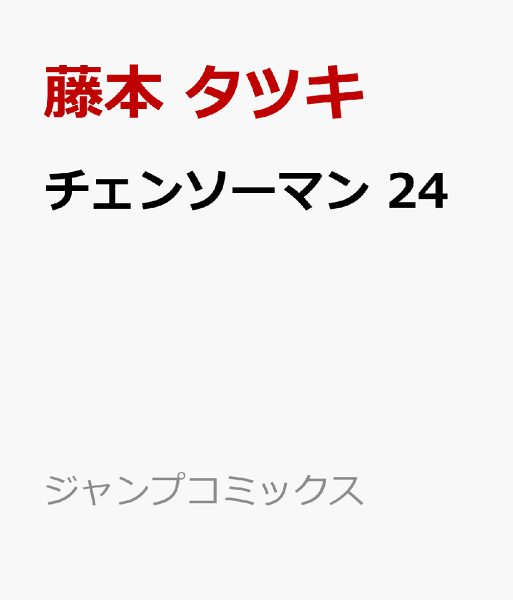
Action / Dark Fantasy
Chainsaw Man
Yu's review of Chainsaw Man — Tatsuki Fujimoto's brutal, tender story about a boy who just wants toast with jam, a warm bed, and someone who likes him. The universe makes this as hard as possible. Part 1 is one of the best things I've ever read.
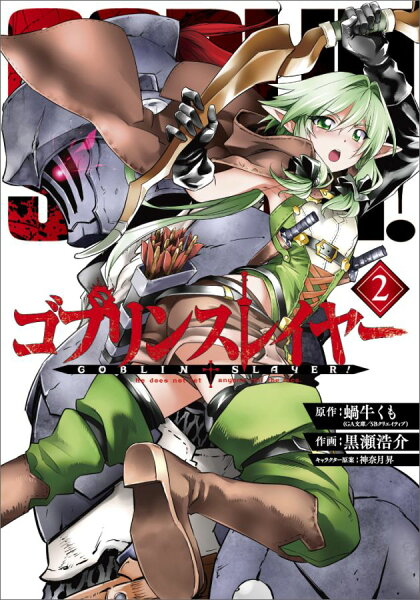
Fantasy / Dark
Goblin Slayer
Yu's review of Goblin Slayer — a manga about a warrior who kills only goblins, obsessively, methodically, because of what goblins did to him. The opening chapter is one of the most graphic in manga. What follows is a dark fantasy about trauma and obsession.
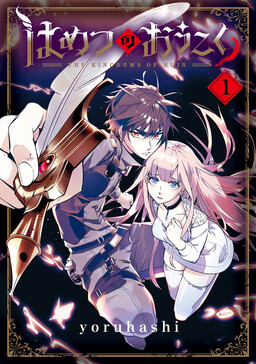
Fantasy / Action
The Kingdoms of Ruin
Yu's review of The Kingdoms of Ruin — after technology advanced enough to make magic unnecessary, humanity systematically exterminated all witches; the sole surviving human apprentice of the greatest witch witnesses her death and swears revenge against a civilization that killed the person who gave him everything; a dark fantasy revenge narrative with genuine emotional stakes.
Fantasy / Action
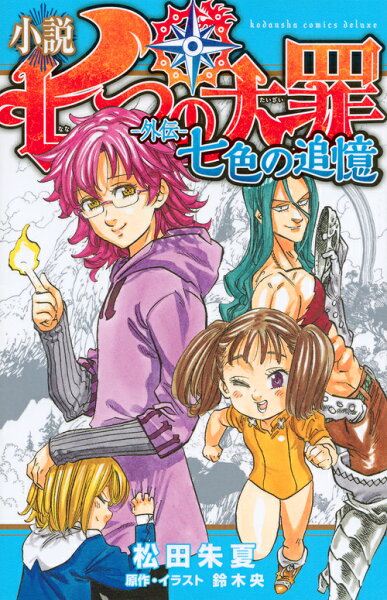
Seven Deadly Sins
Yu's review of Seven Deadly Sins — a princess secretly seeks the legendary Seven Deadly Sins, a group of powerful and disgraced knights, to save her kingdom from a corrupted Holy Knights order.

Fantasy / Action
Roll Over and Die: I Will Fight for an Ordinary Life with My Love and Cursed Sword!
Yu's review of Roll Over and Die — Flum Apricot is the only member of her party without a special ability; her party abandons her to die in a dungeon; she survives through a cursed sword that works by inflicting permanent injuries on her and by using the Reversal ability that turns her weakness into something else entirely.
Fantasy / Action
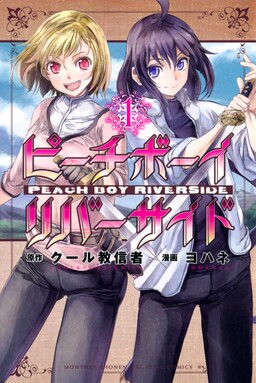
Peach Boy Riverside
Yu's review of Peach Boy Riverside — Princess Sally Salami leaves her sheltered life to see the world; she encounters Mikoto, a young man with the power to destroy oni, who is driven by hatred; Sally's compassion and Mikoto's hatred are placed in constant tension as they navigate a world where the line between humans and monsters is not clear.
Written by
Yu
Manga Enthusiast from Japan
I grew up in Japan and manga literally saved me during a tough time in elementary school. My English isn't perfect, but my love for manga is real — and I want to share it with you.
Disclosure: This post contains affiliate links. As an Amazon Associate, I earn from qualifying purchases at no extra cost to you.