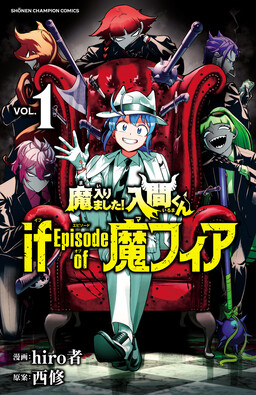
Welcome to Demon School, Iruma-kun! Review: A Human Boy Secretly Enrolled in a Demon School Has to Pretend to Be a Demon
by Osamu Nishi
Read the first volume. If it doesn't hook you, put it down. It'll hook you.
Buy Welcome to Demon School! Iruma-kun on Amazon →*Affiliate link — I earn a small commission at no extra cost to you.
Quick Take
- One of the most consistently wholesome and charming ongoing shonen series — the comedy of Iruma's desperate attempts to blend in while being the most talented student in the school never loses its energy
- The demon world world-building is specific and delightful — Babyls Demon School is a fully realized institution with its own culture, hierarchy, and comedic logic
- 20+ volumes ongoing in English; one of the most recommended ongoing series for readers who want shonen energy without darkness
Who Is This Manga For?
- Readers who want wholesome fantasy comedy without the dark elements typical of demon-world series
- Anyone who enjoys school-setting manga with ensemble cast and genuine warmth
- Fans of shonen that earns its emotional moments through consistent comedy rather than trauma
- Readers who want ongoing series with reliable charm per volume
Content Warnings & Age Rating
Age Rating: T (Teen) Content Warnings: Fantasy school setting with demon world culture; some combat in school events; the premise of a human child being sold by his parents is treated as backstory rather than examined for darkness
A very gentle T rating — this is warm, cheerful fantasy comedy throughout.
Yu's Rating
| Category | Score |
|---|---|
| Story Depth | ★★★★☆ |
| Art Style | ★★★★☆ |
| Character Development | ★★★★★ |
| Accessibility for Non-Japanese Readers | ★★★★★ |
| Reread Value | ★★★★☆ |
Story Overview
Iruma Suzuki has spent his life being used by his selfish parents. When they sell him to the powerful demon Sullivan, Iruma expects the worst. Instead, Sullivan wants something unexpected: a grandson to spoil.
Enrolled at Babyls Demon School — where humans are theoretically prey — Iruma must hide his human nature while navigating demon school life. The problem: he keeps accidentally appearing incredibly talented. His reflexive compliance, trained by years of doing whatever his parents demanded, reads as supernatural instinct in combat situations. His genuine kindness reads as terrifying confidence.
The school's most feared delinquent, Asmodeus Alice, becomes his devoted friend after a single incident. The chaotic Valac Clara attaches herself to him next. The demon school, expecting food, ends up with its most beloved student.
Characters
Iruma Suzuki — A protagonist whose specific damage — a lifetime of doing whatever others demand — accidentally makes him exceptional in a world where confidence is power. His genuine growth from someone who has never had anything of his own to someone who claims the demon school as his place is the series' emotional spine.
Asmodeus Alice — His first friend, whose devoted loyalty to Iruma after being defeated in the series' opening incident is both comedic and genuinely touching — he chose Iruma, and that choice defines him.
Valac Clara — The chaos engine of the ensemble whose cheerful absurdity provides the series' most reliable comedy.
Sullivan (Grandpa) — The most powerful demon who wanted a grandson more than anything else, and whose delight in spoiling Iruma is the series' warmest running element.
Art Style
Nishi's art handles the demon world with detailed design — the various demon forms, the school's architecture, the magical effects — with consistent charm. Character expressions are expressive and comedic, and the school event sequences (particularly the annual Harvest Festival) are drawn with genuine spectacle.
Cultural Context
The premise inverts the typical human-in-a-demon-world narrative — rather than a human who is powerful and feared, Iruma is genuinely not powerful but is treated as if he is. The Japanese school culture dynamics — senpai-kohai relationships, class rankings, school events — are all translated into demon equivalents that work as both parody and sincere version of the source material.
What I Love About It
The series takes its premise seriously enough to let Iruma actually grow. He is not simply a punchline — his friendships are real, his achievements are earned through genuine effort and clever use of his specific situation, and the moment when he first claims something for himself is genuinely moving because the series took time to establish what it meant for him to have nothing.
What English-Speaking Fans Say
Western readers describe Iruma-kun as one of the most reliably charming ongoing shonen series — specifically praised for its warmth, its refusal to introduce unnecessary darkness, and Iruma's character arc which is more emotionally substantive than the comedy exterior suggests. The anime adaptation is also praised as faithful and well-made.
Memorable Scene ⚠️ Spoiler Warning
The Harvest Festival arc — where Iruma leads a group in a competitive school event that tests genuine leadership and tactics — and the specific moment when he realizes he is the one everyone is following, is the series' most satisfying demonstration of how far he has come from the person who was sold by his parents.
Similar Manga
- The Devil is a Part-Timer! — Demons in human world, different dynamic
- Miss Kobayashi's Dragon Maid — Non-human characters in domestic warmth
- KonoSuba — Fantasy comedy with ensemble energy
- Beelzebub — Demon baby in human school, different register
Reading Order / Where to Start
Volume 1 — Iruma's arrival at Sullivan's home and first day at Babyls are established immediately.
Official English Translation Status
Vertical Inc. (Kodansha) publishes the ongoing English series. 20+ volumes currently available.
Pros & Cons
Pros
- Consistently warm and charming — one of the most reliable mood-lifters in ongoing manga
- Iruma's character development is genuinely moving
- Demon school world-building is detailed and delightful
- Ensemble cast has something for every type of reader
Cons
- Ongoing with no resolution yet — the series is long
- The darkness of Iruma's backstory is occasionally gestured at without being fully examined
- Readers wanting action-forward shonen will find the comedy-first approach too gentle
Format Comparison
| Format | Notes |
|---|---|
| Individual Volumes | Vertical/Kodansha; ongoing in English |
| Digital | Available |
Where to Buy
Read the first volume. If it doesn't hook you, put it down. It'll hook you.
This post contains affiliate links. If you purchase through these links, I may earn a small commission at no extra cost to you. As an Amazon Associate, I earn from qualifying purchases.
*Affiliate link — I earn a small commission at no extra cost to you.
More Manga You Might Like
Fantasy
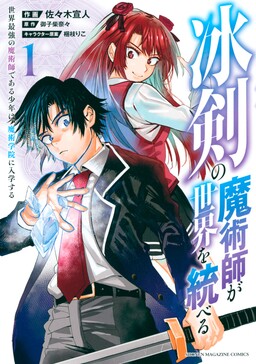
The Iceblade Sorcerer Shall Rule the World
Yu's review of The Iceblade Sorcerer Shall Rule the World — Ray White is the legendary Iceblade Sorcerer, one of seven great mages; he enrolls at the Royal Magic Academy as an ordinary student, hiding his identity; the academy is divided between noble students who look down on commoners; Nana Mikoshiba's magic school manga about the overpowered commoner who reveals himself gradually.
Fantasy / Comedy
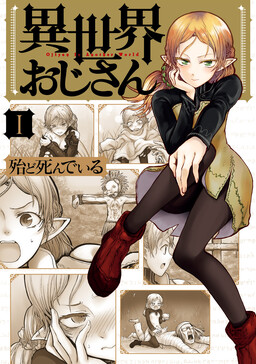
Uncle from Another World
Yu's review of Uncle from Another World — Takafumi's uncle Yosuke wakes from a 17-year coma having been an isekai hero in another world; Takafumi discovers his uncle has magical powers but also deeply embarrassing stories about how he was treated in the other world.
Fantasy / Romance
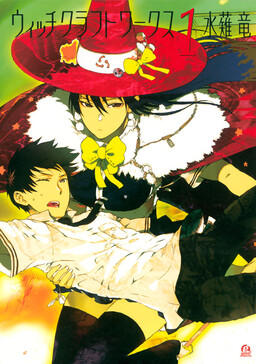
Witch Craft Works
Yu's review of Witch Craft Works — Honoka Takamiya is an ordinary high school student who accidentally discovers that Ayaka Kagari, the school's most beautiful and admired girl, is a powerful witch who has been his secret bodyguard; the revelation upends his understanding of his entire life.
Fantasy / Isekai
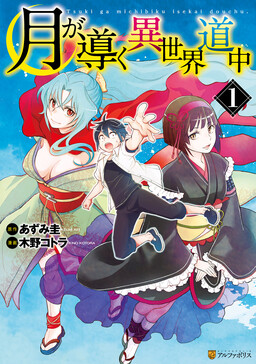
Tsukimichi: Moonlit Fantasy
Yu's review of Tsukimichi: Moonlit Fantasy — Makoto Misumi is transported to another world, but the goddess who was supposed to guide him finds him unattractive and banishes him to the wasteland at the world's edge; he then proceeds to build his own civilization there, befriending monsters and demi-humans while becoming absurdly powerful in ways even the gods didn't expect.
Fantasy / Comedy
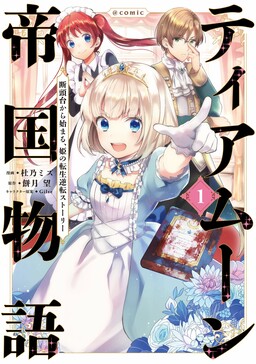
Tearmoon Empire
Yu's review of Tearmoon Empire — Princess Mia was guillotined by revolutionaries for her selfish, incompetent rule; she wakes up at age twelve with her diary showing her future death and the determination to avoid it; the comedy comes from her self-serving attempts to be 'better' creating a reputation for saintly wisdom she does not actually possess.
Fantasy / Isekai
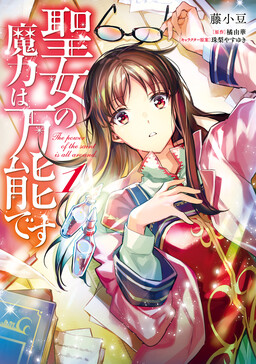
The Saint's Magic Power is Omnipotent
Yu's review of The Saint's Magic Power is Omnipotent — Sei is an overworked office worker who is summoned to a fantasy kingdom as a Saint; the kingdom ignores her in favor of the other woman summoned simultaneously; Sei decides she doesn't mind and spends her time making potions and learning herbalism; eventually the kingdom realizes what they overlooked.
Written by
Yu
Manga Enthusiast from Japan
I grew up in Japan and manga literally saved me during a tough time in elementary school. My English isn't perfect, but my love for manga is real — and I want to share it with you.
Disclosure: This post contains affiliate links. As an Amazon Associate, I earn from qualifying purchases at no extra cost to you.