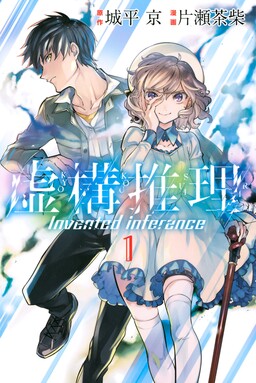
In/Spectre Review: The Goddess of Wisdom for Youkai and the Man Who Cannot Die
by Kyo Shirodaira / Chasiba Katase
Read the first volume. If it doesn't hook you, put it down. It'll hook you.
Buy In/Spectre on Amazon →*Affiliate link — I earn a small commission at no extra cost to you.
Quick Take
- The supernatural mystery manga built on a genuinely unusual premise: solving youkai cases not through fighting but through Kotoko constructing a convincing false narrative that satisfies the supernatural world's need for an explanation
- Kotoko is one of the most intellectually engaging protagonists in recent manga — her solutions involve elaborate logical arguments, and the series commits to showing the entire argument
- Ongoing; for readers who want supernatural mystery with genuine intellectual content
Who Is This Manga For?
- Readers who want supernatural manga where the solutions involve thought rather than combat
- Anyone who enjoys protagonists who are clever rather than physically powerful
- Fans of youkai and Japanese supernatural folklore as world-building material
- Readers who want ongoing mystery manga where arcs have satisfying individual resolutions
Content Warnings & Age Rating
Age Rating: T (Teen) Content Warnings: Supernatural violence in some arcs; horror atmosphere in certain cases; the youkai world has its own violence; some romantic content between Kotoko and Kurou
The T rating is accurate. The series' darkness is atmospheric rather than graphic.
Yu's Rating
| Category | Score |
|---|---|
| Story Depth | ★★★★★ |
| Art Style | ★★★★☆ |
| Character Development | ★★★★☆ |
| Accessibility for Non-Japanese Readers | ★★★★☆ |
| Reread Value | ★★★★☆ |
Story Overview
Kotoko Iwanaga has been the Goddess of Wisdom for the youkai of her region since she was eleven years old. She gave her right eye and left leg to the spirits in exchange for the position. They come to her with disputes, mysteries, and the problems that arise when the human and spirit worlds intersect in unresolved ways.
Her methods are not what you would expect from someone mediating between worlds. She cannot fight supernatural entities. What she can do is talk — construct an argument, a narrative, a chain of reasoning that satisfies the logic the supernatural world requires. Youkai are entities that exist within human belief; if Kotoko can construct a story that explains what happened in a way that fits the spirit's need for meaning, the case is closed.
She recruits Kurou Sakuragawa to help. Kurou has eaten the flesh of mermaid and kappa — mythological creatures whose flesh grants abilities to humans. He heals from anything. This makes him useful in situations that require physical intervention and makes him someone the youkai world has reason to pay attention to.
Their relationship develops from utilitarian partnership to something more complicated as the series' longer arcs engage with the specific mystery of Kurou's family and the limits of Kotoko's ability to construct satisfying fictions.
Characters
Kotoko Iwanaga — Small, blunt, romantically direct about her interest in Kurou, and intellectually formidable. Her explanations — which the series presents in full — are the series' most distinctive element. She argues at length and the arguments are worth following.
Kurou Sakuragawa — His specific form of resignation — someone who cannot die and has stopped attaching too much importance to the question — is a complement to Kotoko's energy. His family history, involving the mythological creatures whose flesh gave him his abilities, is the series' long-form mystery.
Art Style
Chasiba Katase's art handles the dual register of the series well — the ordinary high school and urban environments where the human world unfolds, and the more visually elaborate space where supernatural entities manifest. Character expressions carry the intellectual content of Kotoko's arguments effectively.
Cultural Context
In/Spectre draws on the rich tradition of Japanese youkai folklore — kappa, tengu, kirin, and dozens of named supernatural entities with specific characteristics and histories. The series uses this tradition as world-building material while inventing its own rules for how the supernatural and human worlds interact. The original light novel by Kyo Shirodaira was adapted into manga by Chasiba Katase; the manga version is the most widely read form in English.
What I Love About It
The extended argument sequences. When Kotoko must construct a false narrative to satisfy a supernatural entity, the series shows the entire construction — the premises she identifies, the narrative threads she weaves, the counterarguments she anticipates. These are genuinely intellectual set pieces, and they are the series' most original contribution to the mystery genre.
What English-Speaking Fans Say
Western readers praise Kotoko's uniqueness among manga protagonists — her power is purely verbal and logical, and the series builds its tension around whether her arguments will hold rather than whether her strength will prevail. The Kurou/Kotoko dynamic is cited as unusually honest in depicting an asymmetric relationship where one partner is more directly invested than the other.
Memorable Scene ⚠️ Spoiler Warning
The Steel Lady Nanase arc — which spans multiple volumes and requires Kotoko to defeat an internet-born supernatural entity by flooding the internet with counter-narratives — is the series' most extended and most sophisticated use of its central premise. The solution, when it comes, is entirely consistent with the series' logic and entirely surprising.
Similar Manga
- Natsume's Book of Friends — Mediating the youkai world, warmth as central register
- Noragami — Deity navigating supernatural politics
- Ghost Hunt — Supernatural mystery with investigation as method
- The Ancient Magus' Bride — Human-supernatural world negotiation, atmospheric
Reading Order / Where to Start
Volume 1 — Kotoko's background, her recruitment of Kurou, and the first case establish the premise and method.
Official English Translation Status
Kodansha Comics is actively publishing the ongoing English edition. Check for the latest volume.
Pros & Cons
Pros
- Kotoko is a genuinely original protagonist
- The mystery structure allows satisfying arc-length resolutions
- The youkai world-building is rich and internally consistent
- The argument sequences are genuinely intellectual entertainment
Cons
- Ongoing — major threads remain unresolved
- The extended argument sequences require reader patience
- The pace is deliberate — action sequences are rare
Format Comparison
| Format | Notes |
|---|---|
| Individual Volumes | Kodansha Comics; ongoing |
| Digital | Available |
Where to Buy
Read the first volume. If it doesn't hook you, put it down. It'll hook you.
This post contains affiliate links. If you purchase through these links, I may earn a small commission at no extra cost to you. As an Amazon Associate, I earn from qualifying purchases.
*Affiliate link — I earn a small commission at no extra cost to you.
More Manga You Might Like
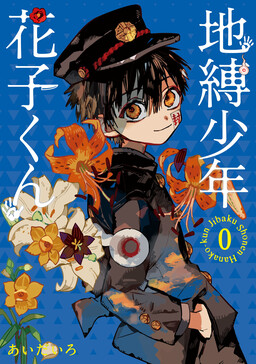
Fantasy / Supernatural
Toilet-Bound Hanako-kun
Yu's review of Toilet-Bound Hanako-kun — Nene Yashiro summons Hanako-kun, the most famous of her school's Seven Wonders, the ghost rumored to grant wishes; when she accidentally becomes bound to him as his helper, she enters a world of supernatural politics, competing spirits, and the mystery of who Hanako actually was.
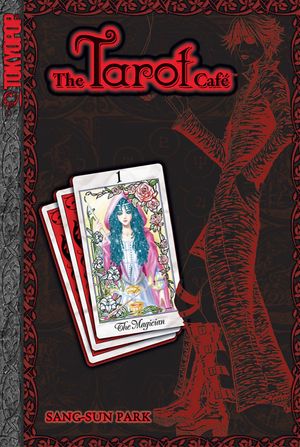
Fantasy / Mystery
Tarot Cafe
A review of Tarot Cafe — Sang-Sun Park's seven-volume Korean manhwa following Pamela, a tarot card reader who helps supernatural beings fulfill their wishes — while bound by a contract of her own that may cost her everything.
Fantasy / Slice of Life
Kamakura Story
Kamakura Story follows mystery writer Ichiro Maekawa and his young wife Akiko as they navigate married life in Kamakura — a coastal city where the supernatural is simply part of daily existence, and demons and spirits share the streets with ordinary people.
Fantasy / Comedy
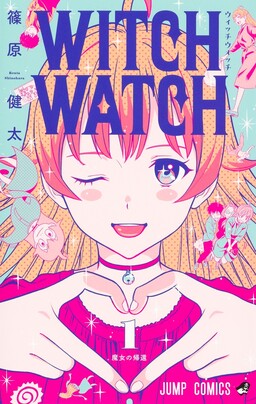
Witch Watch
Yu's review of Witch Watch — Nico is a witch who sees disaster visions; Morihito is her childhood friend and an ogre who has sworn to protect her; they live together in modern Japan, where Nico's disaster visions lead to increasingly absurd comedic situations.
Fantasy / Romance
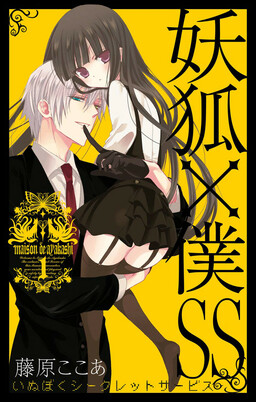
Inu x Boku SS
Yu's review of Inu x Boku SS — Ririchiyo Shirakiin, a half-youkai girl whose sharp tongue makes connection impossible, moves into Maison de Ayakashi, an apartment for those with supernatural heritage; her Secret Service agent Soushi Miketsukami is assigned to protect her and is impossibly devoted — and his devotion is not a performance.
Fantasy / Supernatural
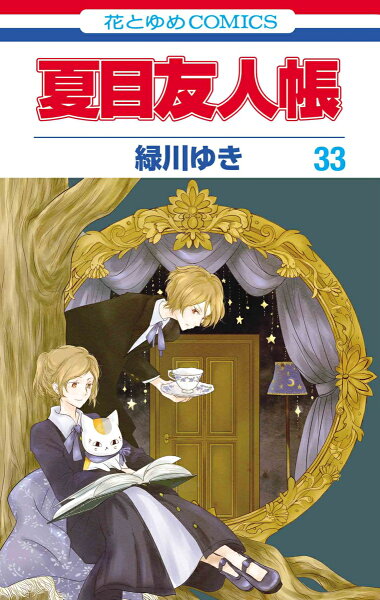
Natsume's Book of Friends
Yu's review of Natsume's Book of Friends — a teenager who can see spirits inherits a book from his deceased grandmother containing the names of spirits she had bound to her, and must return those names while navigating a world of supernatural beings and the human world he never quite fit into.
Written by
Yu
Manga Enthusiast from Japan
I grew up in Japan and manga literally saved me during a tough time in elementary school. My English isn't perfect, but my love for manga is real — and I want to share it with you.
Disclosure: This post contains affiliate links. As an Amazon Associate, I earn from qualifying purchases at no extra cost to you.