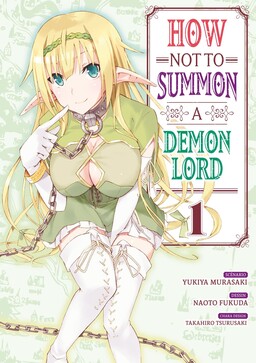
How NOT to Summon a Demon Lord Review: A Shut-In Gamer Becomes the Demon Lord He Always Played as
by Yukiya Murasaki (Story) / Naoto Fukuda (Art)
Read the first volume. If it doesn't hook you, put it down. It'll hook you.
Buy How NOT to Summon a Demon Lord on Amazon →*Affiliate link — I earn a small commission at no extra cost to you.
Quick Take
- The isekai premise is refined here — the protagonist doesn't just know the game world, he was the unbeatable final boss; the power fantasy is complete and the comedy comes from the gap between Diablo's terrifying exterior and Takuma's panicking interior
- The manga adaptation by Naoto Fukuda expands the ecchi elements of the light novel; readers should be aware this is a mature-rated series
- 25 volumes complete; one of the more satisfying isekai power fantasy series in terms of sheer completion
Who Is This Manga For?
- Readers who want isekai power fantasy with genuine comedy
- Adults who can engage with the mature content appropriately
- Fans of the "character with terrifying exterior and anxious interior" comedic archetype
- Readers who want a complete, finished isekai series rather than an ongoing one
Content Warnings & Age Rating
Age Rating: M (Mature) Content Warnings: Significant ecchi content; sexual humor and situations throughout; fantasy violence; the enslavement premise involves power dynamics that require adult framing
This is a mature-rated series. Not appropriate for younger readers.
Yu's Rating
| Category | Score |
|---|---|
| Story Depth | ★★★☆☆ |
| Art Style | ★★★★☆ |
| Character Development | ★★★★☆ |
| Accessibility for Non-Japanese Readers | ★★★★☆ |
| Reread Value | ★★★☆☆ |
Story Overview
Takuma Sakamoto played Cross Reverie as Diablo — the most powerful player in the game, the Demon Lord who no other player could defeat. When two players attempt to summon a demon and use a Collar of Enslavement to bind him to their service, something goes wrong: the spell reflects, enslaving them to Takuma instead, and he finds himself in the game world in Diablo's body.
He has Diablo's overwhelming power. He does not have Diablo's social capabilities. His real-world self is profoundly socially anxious — he never knew how to talk to people, which is why he retreated into the game. Now he must role-play being the Demon Lord, which requires projecting confidence and power he does not naturally have, while navigating relationships his real self has no experience with.
Characters
Takuma/Diablo — His internal monologue — the panicking game nerd playing the unflappable Demon Lord — is the series' primary comedy engine. His power is genuine; his comfort with using it is not.
Rem and Shera — The two summoners who end up bound to him. Their development from his accidental servants to genuine companions is the series' emotional core.
Art Style
Fukuda's manga adaptation has clean, expressive art with confident fan service. The action sequences are well-choreographed. The visual presentation of Diablo's power is effective.
Cultural Context
How NOT to Summon a Demon Lord is part of the isekai power fantasy wave of the 2010s — adapted from a light novel, the manga version emphasizes the ecchi elements that characterize the seinen light novel adaptation market. The social isolation premise — gamer who couldn't connect with people finds connection through overwhelming power — is a specific cultural fantasy of its era.
What I Love About It
The battle sequences where Diablo's absurd power solves problems that seemed insurmountable — and the comedy of Takuma's internal terror while projecting absolute confidence — are the series at its most entertaining.
What English-Speaking Fans Say
Western readers describe How NOT to Summon a Demon Lord as one of the more honest isekai power fantasies — it knows what it is, the comedy works, and the complete 25-volume run provides unusual satisfaction for a genre where many series remain ongoing. The ecchi content divides readers between those who find it adds to the series and those who would prefer less of it.
Memorable Scene ⚠️ Spoiler Warning
The first major confrontation where Diablo's power is fully deployed against an opponent who has every reason to think themselves unbeatable — and the gap between what Takuma feels inside and what Diablo projects outside — is the series' most complete expression of its central premise.
Similar Manga
- Overlord — Another gamer in an overwhelming villain role
- The Rising of the Shield Hero — Isekai with different power dynamics
- KonoSuba — Isekai comedy with similar genre awareness
- In Another World With My Smartphone — Power fantasy isekai, lighter register
Reading Order / Where to Start
Volume 1 — Takuma's summoning and the initial binding situation.
Official English Translation Status
Seven Seas published all 25 volumes. Complete and available.
Pros & Cons
Pros
- The comedic premise is well-executed and sustained
- 25 volumes is a complete and satisfying run
- The power fantasy is genuine and the comedy enhances rather than undermines it
- Diablo's internal/external gap never gets old
Cons
- The M rating means it is not for all audiences
- The ecchi content is significant and not to everyone's taste
- The plot depth is limited — power fantasy is the primary content
Format Comparison
| Format | Notes |
|---|---|
| Individual Volumes | Seven Seas; complete |
| Digital | Available |
Where to Buy
Read the first volume. If it doesn't hook you, put it down. It'll hook you.
This post contains affiliate links. If you purchase through these links, I may earn a small commission at no extra cost to you. As an Amazon Associate, I earn from qualifying purchases.
*Affiliate link — I earn a small commission at no extra cost to you.
More Manga You Might Like
Fantasy / Comedy
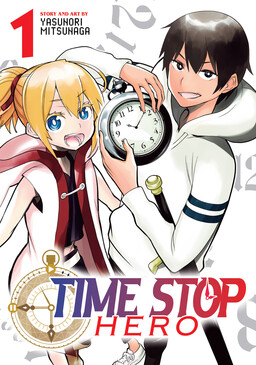
Time Stop Hero
Yu's review of Time Stop Hero — Sekai Kamino is summoned to another world and finds a watch that can stop time; rather than using it heroically, he uses it to look at things he shouldn't and avoid danger while pretending to be braver than he is; the comedy comes from his cowardly-but-oddly-effective approach and what the time-stop reveals about the world.
Fantasy
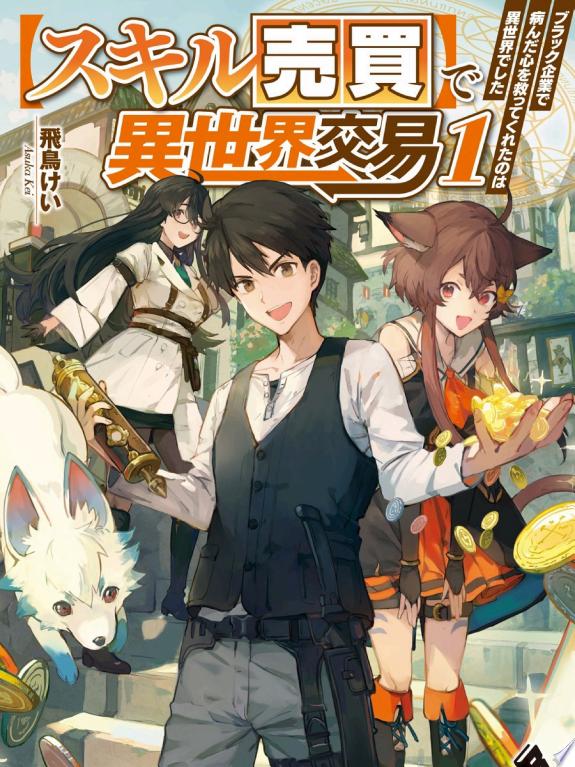
The Dungeon of Black Company
A review of Youhei Yasumura's The Dungeon of Black Company — 14 volumes in Comic Newtype. Kinji Ninomiya used financial schemes to become wealthy without working; transported to a fantasy world, he is immediately forced into brutal dungeon labor and must scheme his way out. Seven Seas Entertainment's English edition is complete.
Fantasy / Action
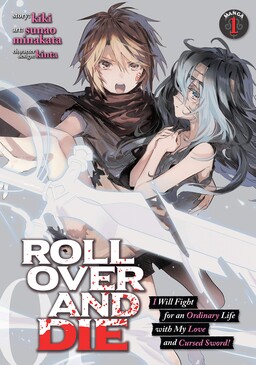
Roll Over and Die: I Will Fight for an Ordinary Life with My Love and Cursed Sword!
Yu's review of Roll Over and Die — Flum Apricot is the only member of her party without a special ability; her party abandons her to die in a dungeon; she survives through a cursed sword that works by inflicting permanent injuries on her and by using the Reversal ability that turns her weakness into something else entirely.
Fantasy / Romance
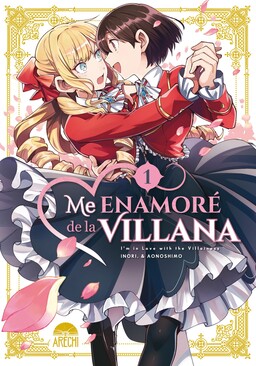
I'm in Love with the Villainess
Yu's review of I'm in Love with the Villainess — Rei Taylor, an office worker who played an otome game obsessively, reincarnates as the game's protagonist Rae Taylor; rather than pursuing the game's capture targets (the princes), she has always wanted the villainess Claire François — and Claire François is the first person she meets.
Fantasy / Comedy
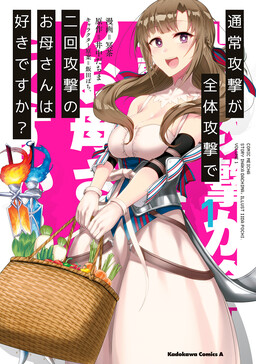
Do You Love Your Mom and Her Two-Hit Multi-Target Attacks?
Yu's review of Do You Love Your Mom and Her Two-Hit Multi-Target Attacks? — Masato Oosuki is transported into a government MMORPG test with his mother Mamako; Mamako is the most powerful person in the game and is also embarrassingly devoted to her son; the comedy of a teenage boy trying to become a hero while his overpowered mother solves everything first.
Fantasy / Isekai
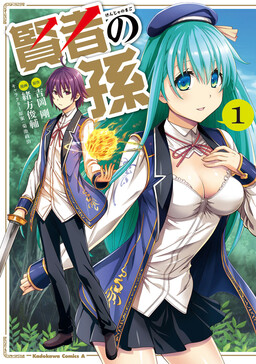
Wise Man's Grandchild
Yu's review of Wise Man's Grandchild — an ordinary man is reincarnated in a fantasy world and raised by Merlin Walford, the legendary sage who saved the kingdom; he grows up with extraordinary magical power but completely lacking common sense about the normal world; the combination creates a hero who is absurdly powerful but genuinely humble about it.
Written by
Yu
Manga Enthusiast from Japan
I grew up in Japan and manga literally saved me during a tough time in elementary school. My English isn't perfect, but my love for manga is real — and I want to share it with you.
Disclosure: This post contains affiliate links. As an Amazon Associate, I earn from qualifying purchases at no extra cost to you.