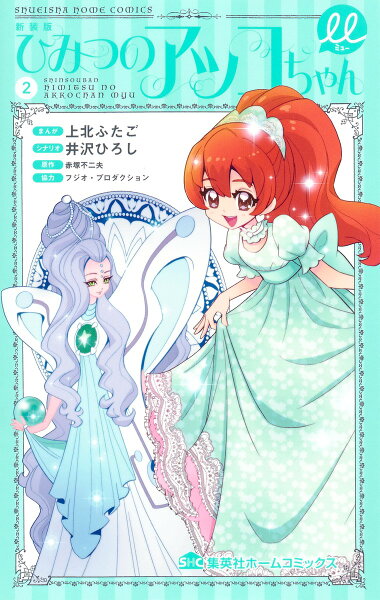
Himitsu no Akko-chan Review: The Magic Mirror That Started Japan's Magical Girl Tradition
by Fujio Akatsuka
Read the first volume. If it doesn't hook you, put it down. It'll hook you.
Buy Himitsu no Akko-chan on Amazon →*Affiliate link — I earn a small commission at no extra cost to you.
What if the most important invention in girls' manga wasn't a character — it was a mirror?
Quick Take
- Fujio Akatsuka's founding magical girl manga — the work that established the transformation sequence as the genre's defining device
- Akko's power is unusual: she transforms not into a powered-up version of herself but into other people, animals, and objects
- A short, warm classic — 3 volumes that started something much larger than themselves
Who Is This Manga For?
- Readers interested in how magical girl manga began — this is as close to the origin as it gets
- Fans of Sailor Moon or Cardcaptor Sakura who want to trace the genre's roots
- Readers of Akatsuka's comedy work who want to see a different register of his talent
- Anyone interested in girls' manga history in the 1960s
Content Warnings & Age Rating
Age Rating: All Ages Content Warnings: Magical girl transformation sequences. Warm adventure themes. No concerning content.
Appropriate for all readers.
Yu's Rating
| Category | Score |
|---|---|
| Story Depth | ★★★☆☆ |
| Art Style | ★★★★☆ |
| Character Development | ★★★☆☆ |
| Accessibility for Non-Japanese Readers | ★★★★☆ |
| Reread Value | ★★★☆☆ |
Story Overview
Akko is a young girl who breaks a mirror she loves. In the forest where she buries the mirror's pieces, a spirit appears and gives her a magic mirror as a replacement — a compact that, when she recites the correct phrase, allows her to transform into any person, animal, or thing she can name.
The series follows Akko using this power in daily life. The transformation ability is unusual among magical girl powers: she doesn't become stronger or more capable in her own form — she becomes something else entirely. To help a friend, she becomes an adult. To solve a problem involving an animal, she becomes that animal. To understand a situation from another perspective, she becomes the person at its center.
Akatsuka uses this premise to tell small, warm stories about empathy and perspective-taking — the mirror's power is, functionally, the power to understand others by becoming them. For a manga aimed at young girls in 1960s Japan, this was a quietly radical premise.
Characters
Akko: A protagonist defined by her curiosity and her willingness to use her power in service of others. Her decisions about when to transform and what to transform into drive each episode.
The mirror spirit: The source of Akko's power, with rules about how it can be used — creating the episode structure of problem, transformation, resolution.
Art Style
Akatsuka's art in Himitsu no Akko-chan is warmer and more delicate than his comedy work — suited to the girls' magazine context and the gentle emotional register of the stories. The transformation sequences are the visual highlight: clear, charming, and inventive in what they depict.
Cultural Context
Himitsu no Akko-chan ran in Ribon from 1962 to 1965. It appeared before Sailor Moon, before Cardcaptor Sakura, before most of the magical girl canon — as one of the first works to establish that girls' protagonists could have active magical powers used to solve problems. This was not obvious in 1962.
Multiple anime adaptations have aired, and the transformation compact has remained an iconic image in Japanese popular culture.
What I Love About It
I love that the power is empathy.
The mirror doesn't make Akko stronger or give her weapons or abilities. It gives her perspective — literally, by making her into others. The problems she solves are solved by understanding them from inside. For a children's manga about a girl with magic, this is an unusually honest account of what actually helps people.
What English-Speaking Fans Say
Not known in English-speaking markets, though manga scholars recognize it as foundational to the magical girl genre that has had enormous global influence. Among readers of girls' manga history, Himitsu no Akko-chan is the text you cite when explaining where the transformation sequence came from.
Memorable Scene ⚠️ Spoiler Warning
An episode where Akko transforms into an adult to solve a problem that requires adult authority — and discovers that the problem looks different from inside adulthood than it did from outside. The resolution requires her to understand both perspectives simultaneously. The scene demonstrates what the power is actually for.
Similar Manga
| Title | Its Approach | How Himitsu no Akko-chan Differs |
|---|---|---|
| Sailor Moon | Magical girl with combat powers and team | Solo magical girl whose power is perspective, not combat |
| Cardcaptor Sakura | Magical girl capturing magical cards | Simpler power, warmer emphasis on everyday problem-solving |
| Sally the Witch | Witch princess in the human world | Transformation-based rather than innate magical ability |
Reading Order / Where to Start
Volume 1. The series is short enough to read completely.
Official English Translation Status
Himitsu no Akko-chan has no official English translation.
Pros & Cons
Pros
- The founding text of the magical girl genre
- The empathy-as-power premise holds up beautifully
- Short and complete — 3 volumes is exactly right
- Akatsuka demonstrating range beyond his comedy work
Cons
- No English translation
- The 1960s format may feel slow to modern readers
- Limited by its short length — character development is thin
- The episodic structure doesn't build to a dramatic conclusion
Is Himitsu no Akko-chan Worth Reading?
For magical girl fans and manga history readers, yes — this is where the genre's most recognizable device comes from, and it's worth seeing the original. For readers wanting modern magical girl action, the gentle 1960s format is a different experience. Think of it as reading the source code of something you already love.
Format Comparison
| Format | Notes |
|---|---|
| Physical | Japanese editions available |
| Digital | Available in Japanese |
| Omnibus | Complete in collected editions |
Where to Buy
No English release yet. That just means you find it before everyone else does.
*Affiliate link — I earn a small commission at no extra cost to you.
More Manga You Might Like
Fantasy / Magical Girl
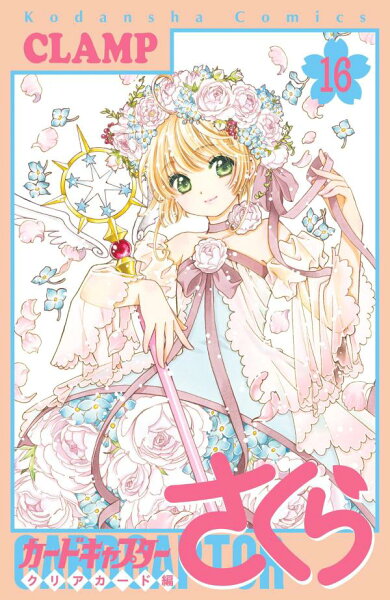
Cardcaptor Sakura
Yu's review of Cardcaptor Sakura — a ten-year-old girl accidentally releases the Clow Cards, has to capture them all, transforms them into her own, and along the way the manga quietly becomes one of CLAMP's warmest, most generous stories about love.
Fantasy
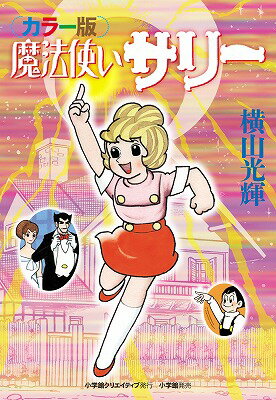
Sally the Witch
Sally the Witch is a princess from the magical world who chooses to live among ordinary humans — a manga that invented the magical girl genre and established every template that followed.

Fantasy / Comedy
Kaibutsu-kun
Kaibutsu-kun follows the prince of the Monster World who comes to the human world accompanied by his three monster retainers — Dracula, Frankenstein's monster, and a werewolf — and proceeds to cause chaos while trying to understand humans, who are funnier and stranger than any monster.
Fantasy / Slice of Life
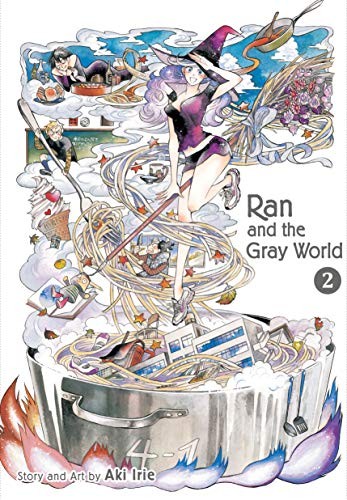
Ran and the Gray World
A review of Ran and the Gray World, the magical fantasy manga about a little girl who can transform into an adult using her late mother's shoes — and the world she discovers.
Fantasy
Unico
Unico is a small unicorn with the power to make anyone who meets him happy — which is why the gods condemn him to be carried across time by the West Wind, stripped of all memories and relationships, forbidden to stay anywhere long enough to be loved.
Fantasy / Slice of Life
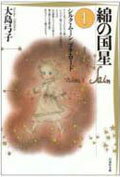
The Star of Cottonland
The Star of Cottonland follows Chi, a small stray kitten who believes with complete sincerity that she is a human child temporarily in cat form — Yumiko Oshima's beloved shojo classic about identity, belonging, and the particular consciousness of cats.
Written by
Yu
Manga Enthusiast from Japan
I grew up in Japan and manga literally saved me during a tough time in elementary school. My English isn't perfect, but my love for manga is real — and I want to share it with you.