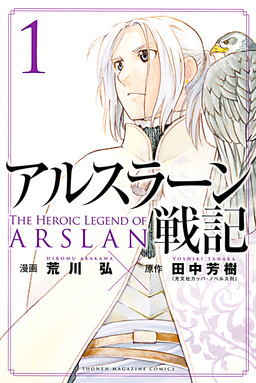
The Heroic Legend of Arslan Review: A Prince Without a Kingdom Must Become the Leader His Country Needs
by Yoshiki Tanaka / Hiromu Arakawa
Read the first volume. If it doesn't hook you, put it down. It'll hook you.
Buy The Heroic Legend of Arslan on Amazon →*Affiliate link — I earn a small commission at no extra cost to you.
Quick Take
- Hiromu Arakawa (Fullmetal Alchemist) draws Yoshiki Tanaka's (Legend of the Galactic Heroes) historical epic — the combination produces the best political fantasy manga currently running
- Arslan's journey from sheltered prince to genuine leader is developed with the character precision that Arakawa is uniquely qualified to bring to this story
- 19 volumes ongoing; the art and story quality have been consistent throughout
Who Is This Manga For?
- Readers who want epic political fantasy manga with genuine war strategy and character development
- Fans of Fullmetal Alchemist who want Arakawa's art and character work in a new context
- Anyone interested in military historical fiction in manga form
- Readers who can commit to ongoing long-form series with consistent quality
Content Warnings & Age Rating
Age Rating: T (Teen) Content Warnings: War and historical violence; slavery as a political/moral issue is explicitly addressed; political betrayal and intrigue; deaths of significant characters
More serious than the age rating suggests; the slavery content is treated as a genuine moral question.
Yu's Rating
| Category | Score |
|---|---|
| Story Depth | ★★★★★ |
| Art Style | ★★★★★ |
| Character Development | ★★★★★ |
| Accessibility for Non-Japanese Readers | ★★★★☆ |
| Reread Value | ★★★★★ |
Story Overview
The Kingdom of Pars has been conquered. Prince Arslan watches his father's army destroyed at the Battle of Atropatene through treachery from within — and his father himself captured. Arslan escapes with his loyal general Daryun and begins gathering the allies needed to retake the kingdom.
Pars's recovery requires an army Arslan doesn't have, the loyalty of regional lords who don't know him, the political support of a council that doubted him before the invasion, and the navigation of religious conflict between Pars's polytheism and the monotheistic invaders who frame conquest as sacred duty.
The series is as much about what kind of king Arslan wants to be as about the military campaign to restore the kingdom. The slavery question — Pars's economy depends on enslaved labor; the invaders promised freedom to slaves, which is part of why the conquest succeeded — is treated with genuine moral complexity rather than as a simple righteousness signal.
Characters
Arslan — His kindness is his defining characteristic, and the series asks, without easy resolution, whether kindness is sufficient for a king or whether it must be combined with something harder. His growth is not into ruthlessness but into clarity about what he will and won't do.
Daryun — The loyal general whose absolute commitment to Arslan is the series' emotional anchor; his specific form of loyalty — professional, deeply felt, expressed through action — is Arakawa's most comfortable character register.
Narsus — The disgraced strategic genius who becomes Arslan's primary advisor; his intelligence and his specific past (he was exiled for opposing slavery) connect the political question to the character ensemble.
Elam / Falangies / Gieve — The ensemble cast that grows around Arslan gives the campaign its human texture and the series its warmth.
Art Style
Arakawa's art is at full strength throughout — the battle sequences, the character designs, and the political map work all benefit from her specific ability to make large-scale conflict feel both strategically clear and humanly immediate. This is among her best-drawn work.
Cultural Context
The Heroic Legend of Arslan is based on Yoshiki Tanaka's novel series (the same author as Legend of the Galactic Heroes) and is set in a fantasy version of the ancient Near East — Sasanian Persia, with the religious conflict echoing the historical Crusades. The slavery question and the religious intolerance themes are specific to the historical period Tanaka was drawing on.
What I Love About It
Narsus painting. Arslan's strategic genius advisor, who is genuinely the most intelligent person in the kingdom, has one specific flaw: he believes he is a great painter and he absolutely is not. Every character who sees his paintings is horrified. Narsus is completely sincere. In a serious political epic, this running joke — that the man with the best strategic mind in Pars has a genuine blind spot about his own artistic talent — is deployed with perfect comic timing.
What English-Speaking Fans Say
Western readers describe The Heroic Legend of Arslan as the fantasy manga that most rewards political intelligence — the strategy and diplomacy are cited as genuinely substantive. Arakawa's character work is praised as bringing her Fullmetal Alchemist quality to a completely different type of story. The slavery question is frequently cited as the series' most serious and most respectful treatment of a difficult historical topic.
Memorable Scene ⚠️ Spoiler Warning
The confrontation between Arslan and the slaves he has freed about what freedom actually means for people who have never had it — the specific conversation, the specific honesty of both sides — is the series' most morally ambitious moment and the clearest expression of what Arslan's character is actually capable of.
Similar Manga
- Fullmetal Alchemist — Same artist, similar political-military scope
- Vinland Saga — Historical military epic with character depth
- Legend of the Galactic Heroes — Same novelist's other famous work
- Yona of the Dawn — Female-lead political fantasy, similar war strategy content
Reading Order / Where to Start
Volume 1 — the Battle of Atropatene and Arslan's exile establish the series immediately.
Official English Translation Status
Kodansha Comics is actively publishing the ongoing series. Check for latest volume count.
Pros & Cons
Pros
- Arakawa's art and character work are at full strength
- The political-military complexity is genuinely substantive
- The slavery question is treated with moral seriousness
- Ongoing with consistent quality across 19+ volumes
Cons
- Ongoing series — no resolution yet for some narrative threads
- The political complexity requires attention to a large cast
- The historical setting requires some familiarity with ancient Near Eastern context for full appreciation
Format Comparison
| Format | Notes |
|---|---|
| Individual Volumes | Kodansha Comics; standard |
| Digital | Available |
Where to Buy
Read the first volume. If it doesn't hook you, put it down. It'll hook you.
This post contains affiliate links. If you purchase through these links, I may earn a small commission at no extra cost to you. As an Amazon Associate, I earn from qualifying purchases.
*Affiliate link — I earn a small commission at no extra cost to you.
More Manga You Might Like
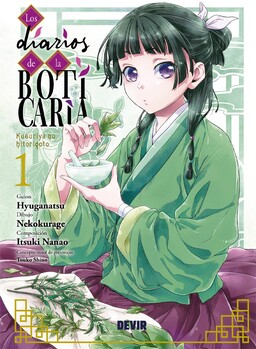
Fantasy / Mystery
The Apothecary Diaries
Yu's review of The Apothecary Diaries — Maomao, a pharmacist's daughter sold into the imperial palace as a servant, cannot help noticing that the emperor's children are being poisoned by their cosmetics; she leaves an anonymous note, it works, and she is immediately recruited as an unofficial court investigator.
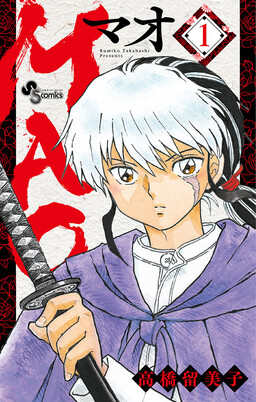
Fantasy / Supernatural
Mao
Yu's review of Mao — middle school girl Nanoka Kiba can slip between present-day Tokyo and Taisho-era Japan, where she encounters Mao, an onmyouji cursed with immortality who is searching for the source of his curse; together they investigate supernatural cases while pursuing the connection that links their lives across a century.
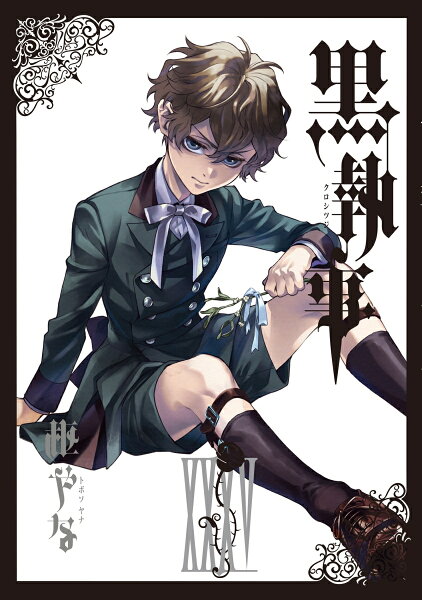
Fantasy / Mystery
Black Butler
Yu's review of Black Butler — a boy contracts a demon to avenge his murdered family, with a butler so perfect he hides exactly what he is. A Victorian gothic mystery that earns its darkness.
Fantasy / Adventure
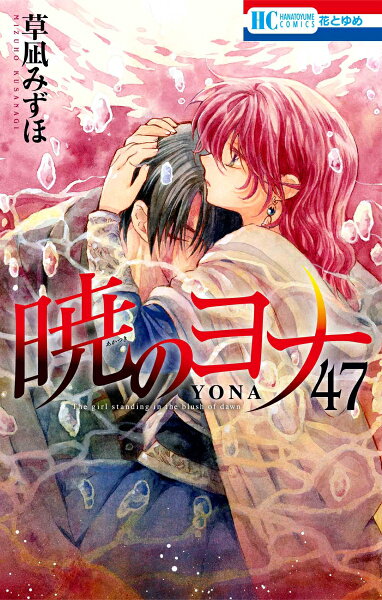
Yona of the Dawn
Yu's review of Yona of the Dawn — a sheltered princess witnesses her father's murder, flees the palace with her bodyguard, and begins the journey to reclaim her kingdom and herself.
Fantasy
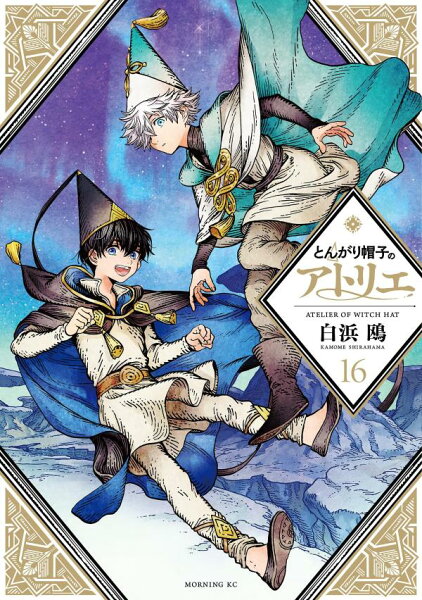
Witch Hat Atelier
Yu's review of Witch Hat Atelier — a girl born without magic witnesses the forbidden secret of how magic actually works, and must now become a witch to undo what she accidentally caused.
Fantasy / Comedy
Uncle from Another World
Yu's review of Uncle from Another World — Takafumi's uncle Yosuke wakes from a 17-year coma having been an isekai hero in another world; Takafumi discovers his uncle has magical powers but also deeply embarrassing stories about how he was treated in the other world.
Written by
Yu
Manga Enthusiast from Japan
I grew up in Japan and manga literally saved me during a tough time in elementary school. My English isn't perfect, but my love for manga is real — and I want to share it with you.
Disclosure: This post contains affiliate links. As an Amazon Associate, I earn from qualifying purchases at no extra cost to you.