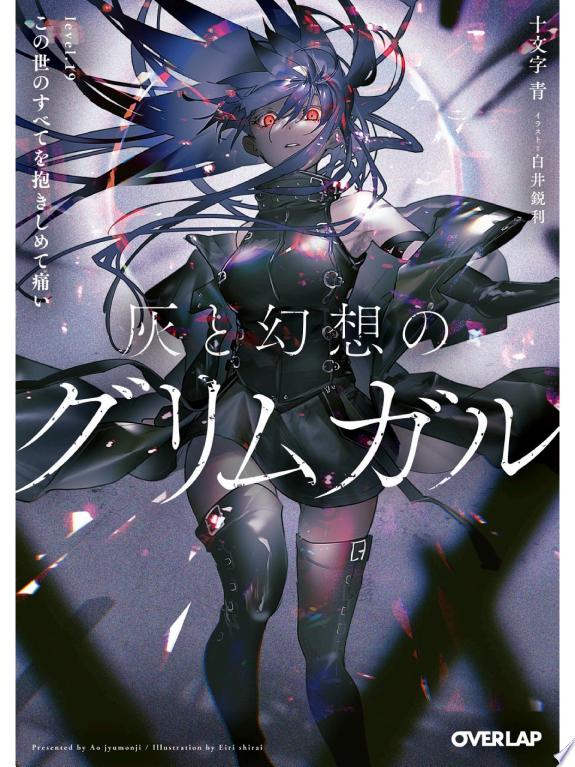
Grimgar of Fantasy and Ash Review: The Isekai Where Killing a Goblin Is Actually Hard
by Ao Jyumonji (story), Mutsumi Okubashi (art)
Read the first volume. If it doesn't hook you, put it down. It'll hook you.
Buy Grimgar of Fantasy and Ash on Amazon →*Affiliate link — I earn a small commission at no extra cost to you.
What if you woke up in a fantasy world and immediately discovered you were terrible at surviving in it?
Quick Take
- The anti-power-fantasy isekai: slow, painful, emotionally honest about what it means to fight to survive
- Death is real and permanent and affects everyone differently — the grief arcs are the series' best work
- Beautiful art that makes the world feel melancholic and alive
Who Is This Manga For?
- Isekai readers tired of overpowered protagonists who solve everything immediately
- Fans of Made in Abyss who want something a little less extreme but similarly unsparing
- Readers who want ensemble casts where every death costs something
- People who appreciate when fantasy takes its own rules seriously
Content Warnings & Age Rating
Age Rating: T (Teen) Content Warnings: Violence, permanent character deaths, extended grief arcs, mild romantic content
The deaths hit harder than most fantasy manga because the story makes you care first.
Yu's Rating
| Category | Score |
|---|---|
| Story Depth | ★★★★☆ |
| Art Style | ★★★★★ |
| Character Development | ★★★★★ |
| Accessibility for Non-Japanese Readers | ★★★★☆ |
| Reread Value | ★★★★☆ |
Story Overview
A group of people wake up in a fantasy city called Ortana with no memories of who they were before. They know their names. They don't know anything else. The city's economy runs on hunting monsters, and the newcomers are funneled into becoming Volunteer Soldiers — adventurers who kill for money.
Haruhiro and his small group discover quickly that they are terrible at this. They can barely defeat the weakest goblins. People in their extended circle die. They grieve. They improve slowly. They become something like a family.
Grimgar is a story about process: the unglamorous, week-by-week accumulation of skill and loss that real survival would require. There's no hidden power, no protagonist who turns out to be special. Haruhiro is ordinary. The group is ordinary. They get better at killing things and they keep losing people they care about, and neither fact makes the other one okay.
The mystery of where they came from and what Grimgar actually is runs underneath all of this — it surfaces slowly, and the answers are more complex than "this is a game world" or "this is another dimension."
Characters
Haruhiro — An honest portrayal of a person figuring out leadership by accident. He doesn't want to lead; he does it because someone has to. His mistakes are real and he carries them.
Manato — The group's healer in the early volumes. His presence and absence are equally important to understanding the series.
Yume and Shihoru — Two of the strongest character studies in the ensemble. Their different responses to grief and danger make them distinct in a way that most ensemble fantasy manga fails to achieve.
Art Style
Mutsumi Okubashi's art is the series' most immediately striking quality: watercolor-like tones that make the world feel soft and faded, like a memory. The monster designs are genuinely unsettling — goblins that look almost human enough to be disturbing. Combat scenes are rough and ugly in a way that reinforces the manga's refusal to glamorize violence.
This is one of the more beautiful fantasy manga in recent years, in a way that's at odds with what's actually happening on the pages.
Cultural Context
Grimgar arrived in the middle of the isekai boom and positioned itself explicitly against the dominant conventions of the genre. The "trapped in a game world" premise was everywhere; what Jyumonji did was strip out the game mechanics and power fantasies to ask what that situation would actually look like.
In Japan, the manga adaptation of the light novel caught a readership that was beginning to feel fatigued by overpowered protagonists. The emotional grounding — the grief especially — resonated with readers who wanted to feel something beyond excitement.
What I Love About It
The grief arcs. I know that sounds strange to say about a fantasy manga, but the chapters immediately following a major character death in Grimgar are some of the best-written grief in any genre I've read.
The story doesn't rush grief. It doesn't resolve it quickly with action or a new mission. The characters actually fall apart. They stop functioning normally. They argue with each other. They have moments of irrational anger that they're ashamed of later. One character can't bring themselves to visit a grave. Another visits every day. These are accurate human responses to loss, rendered in a fantasy context that somehow makes them more rather than less affecting.
I've read a lot of manga where characters die. This is one of the few where I felt what the other characters felt.
What English-Speaking Fans Say
High regard among readers who found it. The consistent comment is that it's slow — "slow" in reviews of Grimgar is either praise or criticism depending on whether you value pacing as reflection or demand forward momentum. The first death is almost universally cited as the moment readers commit or leave.
The anime adaptation (A-1 Pictures, 2016) is also well-regarded and uses the same watercolor visual approach. Many English readers came from the anime.
Memorable Scene ⚠️ Spoiler Warning
The chapter after Manato dies — where Haruhiro and the group process what happened without a battle, without a mission, just sitting with the absence — is where the manga became something different from other isekai. The panel of Haruhiro standing in Manato's empty spot in the formation, having unconsciously walked to where Manato always stood, is simple and devastating.
Similar Manga
| Title | Its Approach | How Grimgar Differs |
|---|---|---|
| Made in Abyss | Brutal fantasy with beautiful art | Grimgar is less extreme in its darkness but more character-focused in its grief |
| Re:ZERO | Isekai with emotional weight and death consequences | Grimgar is grounded and realistic where Re:ZERO is operatic |
| The Rising of the Shield Hero | Isekai with a protagonist who has to earn power | Grimgar is more interested in the ensemble than in one hero's arc |
Reading Order / Where to Start
Volume 1, straight through. The light novel series is also available in English from Yen Press and provides additional depth.
Official English Translation Status
Yen Press is publishing the manga in English. Currently ongoing at 12 volumes (more in Japanese). The light novel series is also fully available in English.
Pros & Cons
Pros
- Emotional honesty about death and grief that most fantasy avoids
- Beautiful watercolor-style art
- Ensemble cast with genuine individual development
- Slow-burn that earns its payoffs
Cons
- Very slow pacing — the first volume especially demands patience
- Ongoing in English; the full story isn't available yet
- Some readers find the passive protagonist frustrating
- The mystery of the world's origin is revealed slowly — may be unsatisfying for impatient readers
- If you need action and progression, the pacing will exhaust you
Is Grimgar of Fantasy and Ash Worth Reading?
Yes — for readers who want isekai that takes its own emotional stakes seriously. This is one of the best arguments that the genre can produce genuine literary value rather than just power fantasies. The patience it requires is rewarded.
Format Comparison
| Format | Pros | Cons |
|---|---|---|
| Physical | Watercolor art is gorgeous in print | Ongoing — collection will keep growing |
| Digital | Great for following an ongoing series | — |
| Omnibus | No omnibus available in English | — |
Where to Buy
Read the first volume. If it doesn't hook you, put it down. It'll hook you.
This post contains affiliate links. If you purchase through these links, I may earn a small commission at no extra cost to you. As an Amazon Associate, I earn from qualifying purchases.
*Affiliate link — I earn a small commission at no extra cost to you.
More Manga You Might Like
Fantasy / Isekai
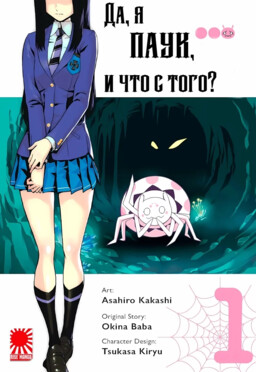
So I'm a Spider, So What?
Yu's review of So I'm a Spider, So What? — the unnamed protagonist reincarnates as the weakest possible monster in a dangerous dungeon; she survives through strategy, obsessive skill development, and a determination to stay alive through whatever the dungeon throws at her.
Fantasy / Isekai
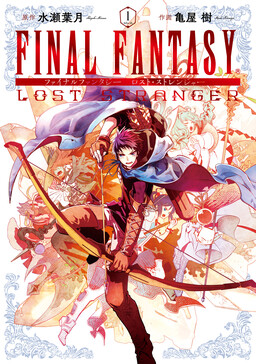
Final Fantasy: Lost Stranger
Yu's review of Final Fantasy: Lost Stranger — Shogo Sasaki, a Square Enix employee who dreamed of working on Final Fantasy and has been assigned to an unrelated project, dies in an accident and wakes in a world that operates on Final Fantasy rules; his mission becomes finding the Raise spell to revive the dead.
Fantasy / Isekai
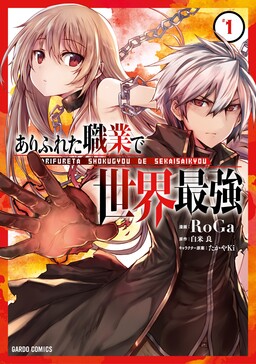
Arifureta: From Commonplace to World's Strongest
Yu's review of Arifureta — Hajime Nagumo is the weakest student when his class is summoned to another world; betrayed and pushed into a lethal dungeon alone, he survives through mutation and problem-solving and emerges as something that no longer resembles the person who went in.
Fantasy / Isekai
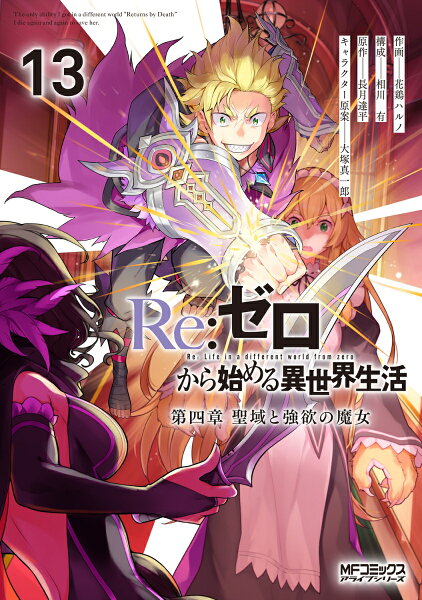
Re:Zero - Starting Life in Another World
Subaru Natsuki is a NEET in Tokyo. He buys snacks at a convenience store and walks out into a fantasy world. He has no special abilities, no useful skills, and no idea where he is. He dies within hours. Then he wakes up at the convenience store. Tappei Nagatsuki's massively popular dark isekai light novel has spawned a long-running manga adaptation across multiple arc-specific series. Yen Press publishes the English manga.
Fantasy / Comedy
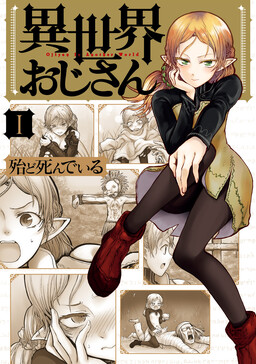
Uncle from Another World
Yu's review of Uncle from Another World — Takafumi's uncle Yosuke wakes from a 17-year coma having been an isekai hero in another world; Takafumi discovers his uncle has magical powers but also deeply embarrassing stories about how he was treated in the other world.
Fantasy / Comedy
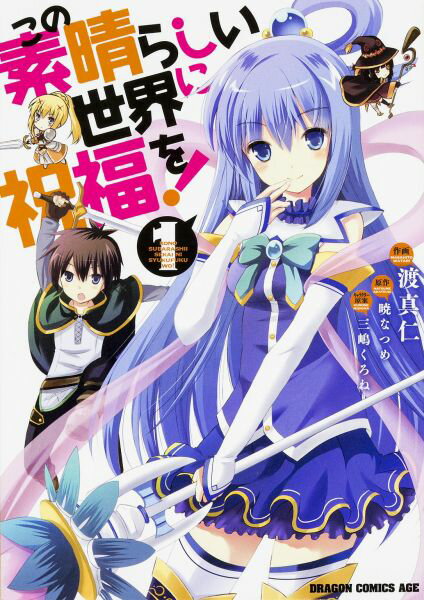
KonoSuba: God's Blessing on This Wonderful World!
Yu's review of KonoSuba — the isekai parody where every party member is disastrously incompetent at something crucial. A useless goddess, an explosion-obsessed mage, a masochistic crusader, and a pathetic protagonist who somehow keeps surviving. The funniest isekai ever made.
Written by
Yu
Manga Enthusiast from Japan
I grew up in Japan and manga literally saved me during a tough time in elementary school. My English isn't perfect, but my love for manga is real — and I want to share it with you.
Disclosure: This post contains affiliate links. As an Amazon Associate, I earn from qualifying purchases at no extra cost to you.