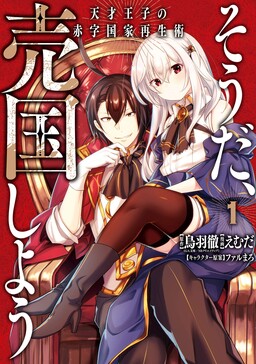
The Genius Prince's Guide to Raising a Nation Out of Debt Review: A Prince Who Wants to Retire Accidentally Saves the Country
by Tochi Aoi / Falmaro
Read the first volume. If it doesn't hook you, put it down. It'll hook you.
Buy The Genius Prince's Guide to Raising a Nation Out of Debt on Amazon →*Affiliate link — I earn a small commission at no extra cost to you.
Quick Take
- The "reluctant genius" premise generates reliable comedy while the political plot is genuinely interesting
- Wein's plans to fail keep working — the gap between intent and result drives the series
- Ongoing with 10+ volumes; political fantasy comedy for readers who want intelligence with their laughs
Who Is This Manga For?
- Readers who want fantasy with political worldbuilding and genuine comedy
- Fans of "reluctant hero" premises where the protagonist's incompetence is strategic
- Anyone who enjoyed Ascendance of a Bookworm's world-building approach in a funnier register
- Readers who want fantasy manga that treats politics as interesting
Content Warnings & Age Rating
Age Rating: T (Teen) Content Warnings: Political scheming and manipulation; fantasy battle violence; strategic deception throughout
T rating — appropriate for most readers.
Yu's Rating
| Category | Score |
|---|---|
| Story Depth | ★★★★☆ |
| Art Style | ★★★★☆ |
| Character Development | ★★★★☆ |
| Accessibility for Non-Japanese Readers | ★★★★☆ |
| Reread Value | ★★★★☆ |
Story Overview
Prince Wein Salema Arbalest is the crown prince of Natra, a small kingdom with debt and few resources. His life's goal is to sell the kingdom to a larger power, collect the proceeds, and retire somewhere comfortable.
Every plan he makes toward this end succeeds in the wrong direction. The war he engineers to make Natra less attractive to buyers turns into a victory that elevates his reputation. The economic schemes he designs to accelerate the kingdom's collapse stabilize it instead.
He is not a genius. He is a lazy person whose laziness keeps generating intelligent-looking outcomes, and nobody has figured out that these are mistakes.
Characters
Wein Salema Arbalest — His inner monologue — planning failure and then watching success — is the comedy's engine; he's smart enough to understand why his failures are working, which makes the situation worse.
Ninym Ralei — His aide, whose competence actually is genuine; her relationship with Wein grounds the comedy in real capability.
Art Style
Falmaro's adaptation art is clean and readable — the political scheming sequences are rendered with enough visual clarity that the machinations are followable, and the comedy timing is drawn with appropriate expression.
Cultural Context
The Genius Prince's Guide adapts Tochi Aoi's light novel series. The "reluctant political genius" premise has roots in classical comedy of errors and in the specific Japanese isekai/fantasy genre tradition. The twist — that the protagonist genuinely wants to fail — inverts the wish-fulfillment structure while keeping the wish-fulfillment outcome.
What I Love About It
Ninym's quiet awareness of what's actually happening. Wein thinks he's concealing his plans. She knows exactly what he's trying to do and why it won't work. The conversation between their perspectives generates a secondary comedy layer.
What English-Speaking Fans Say
Western readers describe The Genius Prince's Guide as the political fantasy comedy that has actual political content — specifically noted for the economic and diplomatic scheming being genuinely interesting, for Wein being funnier than typical "reluctant hero" protagonists because his reluctance is active rather than passive, and for the ongoing series maintaining consistency.
Memorable Scene ⚠️ Spoiler Warning
The first time Wein's plan to lose a war produces an unexpected victory — when the gap between intent and result is revealed — establishes the series' comic structure and Wein's particular problem.
Similar Manga
- Ascendance of a Bookworm — Fantasy world-building with determined protagonist
- Overlord — Reluctant hero accumulating power in different register
- Spice and Wolf — Political economy in fantasy with similar intelligence
- How a Realist Hero Rebuilt the Kingdom — Political fantasy in different tone
Reading Order / Where to Start
Volume 1 — Wein's first scheme and its first unintended success.
Official English Translation Status
Yen Press publishes the ongoing English series. 10+ volumes available.
Pros & Cons
Pros
- Political content genuinely interesting
- Comedy premise executed consistently
- Ninym is an excellent supporting character
- World-building has depth
Cons
- Ongoing series — no ending yet
- Light novel adaptation may miss nuance
- Comedy premise can feel repetitive
Format Comparison
| Format | Notes |
|---|---|
| Individual Volumes | Yen Press; ongoing |
| Digital | Available |
Where to Buy
Read the first volume. If it doesn't hook you, put it down. It'll hook you.
This post contains affiliate links. If you purchase through these links, I may earn a small commission at no extra cost to you. As an Amazon Associate, I earn from qualifying purchases.
*Affiliate link — I earn a small commission at no extra cost to you.
More Manga You Might Like

Fantasy / Isekai
Tsukimichi: Moonlit Fantasy
Yu's review of Tsukimichi: Moonlit Fantasy — Makoto Misumi is transported to another world, but the goddess who was supposed to guide him finds him unattractive and banishes him to the wasteland at the world's edge; he then proceeds to build his own civilization there, befriending monsters and demi-humans while becoming absurdly powerful in ways even the gods didn't expect.

Fantasy / Comedy
Tearmoon Empire
Yu's review of Tearmoon Empire — Princess Mia was guillotined by revolutionaries for her selfish, incompetent rule; she wakes up at age twelve with her diary showing her future death and the determination to avoid it; the comedy comes from her self-serving attempts to be 'better' creating a reputation for saintly wisdom she does not actually possess.

Fantasy / Romance
The Magical Revolution of the Reincarnated Princess and the Genius Young Lady
Yu's review of The Magical Revolution — Anisphia, a princess reincarnated from another world who cannot use conventional magic, invents 'magicology' using her previous world's knowledge; she rescues Euphyllia, a noble genius publicly disgraced, and the two women work together — and fall in love.

Fantasy
Otome Game's Heroine Aims to Be a Villainess
Yu's review of Otome Game's Heroine Aims to Be a Villainess — a girl reincarnates as the heroine of an otome game but, having no memory of the game's romantic routes and only the villainess's memorable scenes, she decides to become the villainess instead; the reverse of the usual villainess-isekai premise.
Fantasy / Comedy
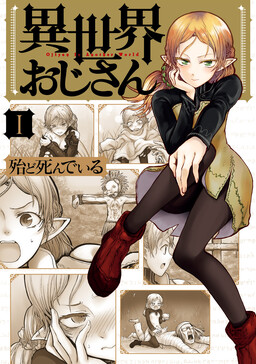
Uncle from Another World
Yu's review of Uncle from Another World — Takafumi's uncle Yosuke wakes from a 17-year coma having been an isekai hero in another world; Takafumi discovers his uncle has magical powers but also deeply embarrassing stories about how he was treated in the other world.
Fantasy / Comedy
Welcome to Demon School! Iruma-kun
Yu's review of Welcome to Demon School! Iruma-kun — Iruma Suzuki is sold to a demon by his neglectful parents and becomes the grandson of the great demon Sullivan; enrolled in a demon school where humans are supposedly food, Iruma must hide his human nature while navigating the competitive and colorful demon school environment.
Written by
Yu
Manga Enthusiast from Japan
I grew up in Japan and manga literally saved me during a tough time in elementary school. My English isn't perfect, but my love for manga is real — and I want to share it with you.
Disclosure: This post contains affiliate links. As an Amazon Associate, I earn from qualifying purchases at no extra cost to you.