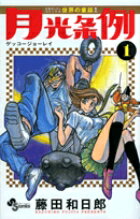
Gekkou Jourei Review: The Fairy Tale Manga That Sent Children's Stories to a Fantasy Court
by Kazuhiro Fujita
Read the first volume. If it doesn't hook you, put it down. It'll hook you.
Buy Gekkou Jourei on Amazon →*Affiliate link — I earn a small commission at no extra cost to you.
The fairy tales were always there. The trouble was that the moonlight made them remember they'd been ignored.
Quick Take
- Kazuhiro Fujita's 29-volume fantasy series from Weekly Shonen Sunday — fairy tale characters driven mad by a particular moonlight
- The third major work from the author of Ushio to Tora and Karakuri Circus
- Combines fantasy adventure with literary fairy-tale references in Fujita's distinctive register
Who Is This Manga For?
- Kazuhiro Fujita fans who want the third major work after Ushio to Tora and Karakuri Circus
- Fantasy adventure readers who want literary references woven into the action
- Sunday classic enthusiasts who want one of the magazine's strong 2000s-2010s fantasy series
- Anyone interested in how fairy tales become source material for serious fantasy
Content Warnings & Age Rating
Age Rating: T (Teen) Content Warnings: Fantasy violence, dark fairy tale themes (madness, transformation), occasional intensity.
Suitable for most readers familiar with the genre.
Yu's Rating
| Category | Score |
|---|---|
| Story Depth | ★★★★☆ |
| Art Style | ★★★★☆ |
| Character Development | ★★★★☆ |
| Accessibility for Non-Japanese Readers | ★★★☆☆ |
| Reread Value | ★★★★☆ |
Story Overview
Iwasaki Tsukihiko is a high schooler whose ordinary life ends when a particular moonlight reveals a parallel reality where fairy-tale characters exist as actual beings — and where many of them have been driven mad by their stories' specific contradictions and resentments. The "Lunar Edict" (Gekkou Jourei) is the magical law that governs how these characters can be returned to their proper selves, and Tsukihiko is one of the rare humans who can apply it.
The structure is episodic with strong continuity — each major arc deals with a fairy tale character (Cinderella, Snow White, Momotaro, others) whose grievance with their story has produced madness, and Tsukihiko's task is to understand the grievance and resolve it. Across 29 volumes, the cast accumulates and the broader stakes of the lunar conflict become clear.
What makes the series satisfying is Fujita's commitment to taking each fairy tale seriously as a story. The mad versions of characters aren't simply twisted — they have real grievances based on the actual specifics of their stories, and the resolution requires Tsukihiko (and the reader) to engage with the source material.
Characters
Iwasaki Tsukihiko: The protagonist whose growing into his role as enforcer of the Lunar Edict is the series' through-line.
The fairy tale characters: Each developed as a real character with real stakes — Cinderella, Snow White, others, drawn with respect for what their stories actually contain.
The supporting cast: Tsukihiko's allies and rivals across the lunar conflict develop across the series.
Art Style
Fujita's art is unmistakable — angular faces, dynamic action sequences, the distinctive sense of motion that characterized Ushio to Tora and Karakuri Circus. The fairy-tale designs incorporate iconic elements while making each character feel like a Fujita design.
Cultural Context
Gekkou Jourei ran from 2008 to 2014 in Weekly Shonen Sunday, completing Fujita's three major Sunday works alongside Ushio to Tora (1990-1996) and Karakuri Circus (1997-2006). The series exists in conversation with both — sharing themes of monstrous-but-meaningful adversaries, generational conflict, and the importance of stories.
The fairy-tale-as-source-material approach has precedent in many works (Disney, Once Upon a Time, others), but Fujita's specifically Japanese take — Western fairy tales alongside Japanese folktales like Momotaro — gives the series its distinctive cultural texture.
What I Love About It
I love that the fairy-tale characters have grievances.
A simpler version of this story would treat fairy-tale characters as enemies to be defeated. Fujita does something more interesting: each character's madness comes from a real complaint with their story, and resolution requires acknowledging the complaint. Cinderella has things to say about her treatment. Snow White has thoughts about how her story actually went. The respect for the source material as material with its own perspective is the series' creative core.
What English-Speaking Fans Say
Limited international awareness without translation. Among Fujita fans familiar with his catalog through the partially-translated Ushio to Tora and Karakuri Circus, regarded as the worthy third leg of his Sunday tripod.
Memorable Scene ⚠️ Spoiler Warning
A late-arc resolution where a fairy tale character's grievance is finally heard rather than simply suppressed — and the moment of being heard transforms the character from antagonist to ally. The scene is the series' clearest statement of its method.
Similar Manga
| Title | Its Approach | How Gekkou Jourei Differs |
|---|---|---|
| Ushio to Tora | Fujita's youkai-and-boy fantasy classic | Gekkou Jourei is fairy-tale-and-teenager rather than youkai-and-boy |
| Karakuri Circus | Fujita's puppet-clown fantasy epic | Gekkou Jourei is more episodic and less mythic-tragedy |
| Inuyasha | Sunday-era fantasy with cross-cultural blending | Gekkou Jourei has more literary referentiality |
Reading Order / Where to Start
Volume 1. The lunar edict's logic and Tsukihiko's role establish across early volumes.
Official English Translation Status
Gekkou Jourei has no official English translation.
Pros & Cons
Pros
- The third major work from one of Sunday's best fantasy authors
- Fairy tale characters treated with literary respect
- 29 volumes of sustained fantasy worldbuilding
- Episodic structure with strong continuity
Cons
- No English translation
- Familiarity with various fairy tales enhances appreciation significantly
- Fujita's signature style is an acquired taste
- 29-volume commitment for non-fans
Is Gekkou Jourei Worth Reading?
For Kazuhiro Fujita fans and fantasy readers who appreciate literary referentiality, yes — this is one of Sunday's strong 2000s-2010s fantasy series. For readers without prior Fujita interest or fairy-tale familiarity, the entry barriers are real. As Fujita's third major work, it earns its place in his catalog.
Format Comparison
| Format | Notes |
|---|---|
| Physical | Japanese editions available |
| Digital | Available in Japanese |
| Omnibus | Collected editions available |
Where to Buy
No English release yet. That just means you find it before everyone else does.
*Affiliate link — I earn a small commission at no extra cost to you.
More Manga You Might Like
Fantasy / Adventure
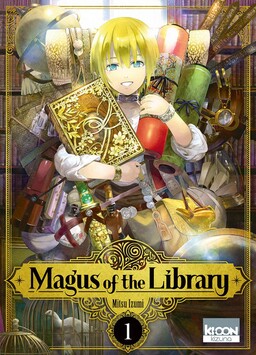
Magus of the Library
Yu's review of Magus of the Library — Theo is a boy of mixed race in a world where the Great Library of the Central Archive controls all knowledge; he loves books but is barred from reading in his village's library because of his half-elf heritage; when a Kafna named Sedona arrives, she sees in him a potential that could change his path.
Fantasy / Adventure
Magi: The Labyrinth of Magic
A review of Shinobu Ohtaka's Magi — the 37-volume Weekly Shōnen Sunday adventure (2009–2017) that starts as an Arabian Nights riff and ends as one of the most politically serious long-form shōnen of its decade. Complete in English from VIZ.
Fantasy / Adventure
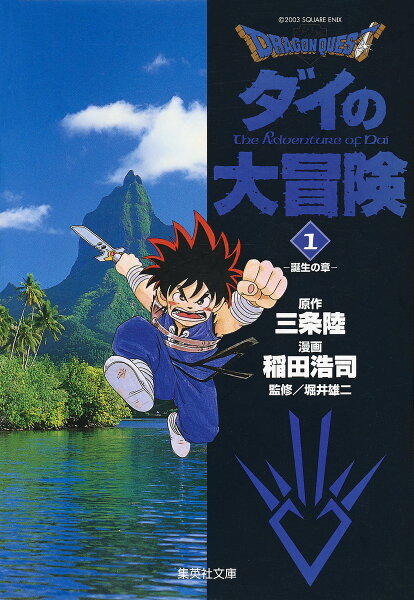
Dragon Quest: The Adventure of Dai
Yu's review of Dragon Quest: The Adventure of Dai — a boy raised on a monster island who always dreamed of being a hero discovers he may be the descendant of a legendary warrior, and sets out to defeat the demon lord threatening the world.
Fantasy / Adventure
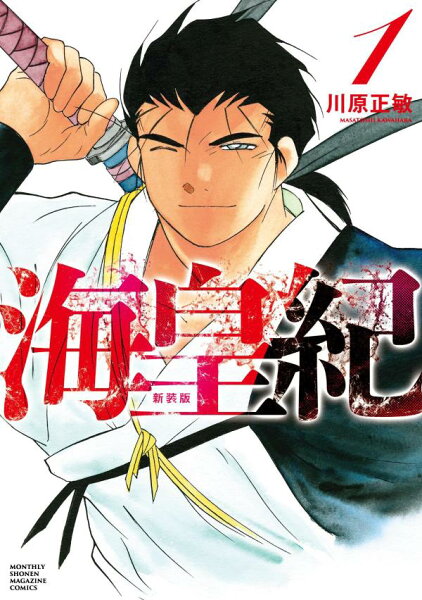
Kaiouki
Kaiouki is Kazuko Kawahara's 45-volume Monthly Shonen Magazine fantasy — Fan Gunnar, a young naval tactician in a fantasy world where political dynasties depend on naval supremacy. A long-form epic that treated maritime warfare with strategic seriousness rare in fantasy manga.
Fantasy / Adventure
Tsubasa Reservoir Chronicle
Yu's review of Tsubasa Reservoir Chronicle — a young excavator must travel across parallel dimensions to recover the scattered feathers containing the memories of Princess Sakura, paying an impossible price to do so.
Fantasy / Adventure
Little Witch Academia
Yu's review of Little Witch Academia — Atsuko Kagari dreamed of being a witch after seeing a performance by the legendary Shiny Chariot; without any magical lineage or natural talent, she enrolls at Luna Nova Magical Academy through pure will; her determination to become what she dreams of is the series' complete premise.
Written by
Yu
Manga Enthusiast from Japan
I grew up in Japan and manga literally saved me during a tough time in elementary school. My English isn't perfect, but my love for manga is real — and I want to share it with you.