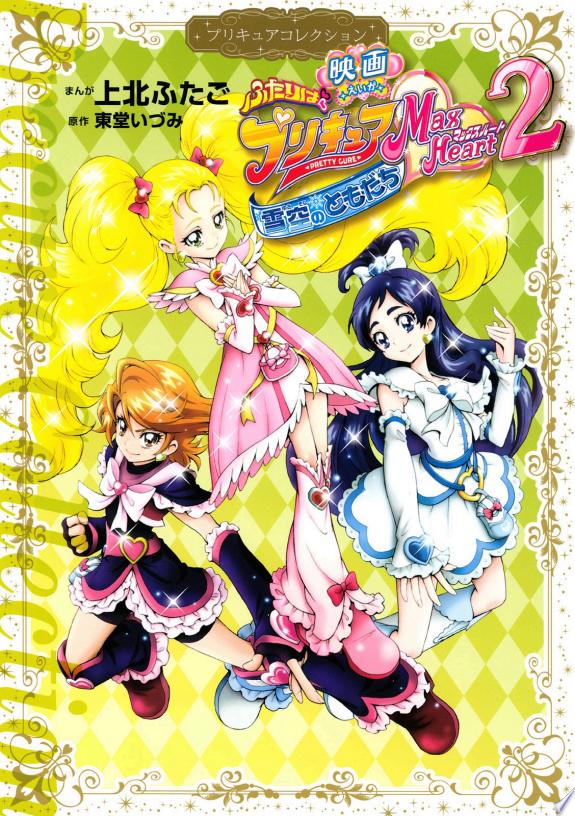
Futari wa Pretty Cure Review: The Magical Girl Duo That Fought With Their Fists First
by Futago Kamikita
Read the first volume. If it doesn't hook you, put it down. It'll hook you.
Buy Futari wa Pretty Cure on Amazon →*Affiliate link — I earn a small commission at no extra cost to you.
Two girls. No wands. Just punches.
Quick Take
- Futago Kamikita's manga adaptation of the 2004 Pretty Cure anime — Nagisa and Honoka as Cure Black and Cure White
- A magical girl series that deliberately moved toward action: the Pretty Cure fight, they don't just transform
- 2 volumes, compact, a companion piece to the anime rather than a standalone expansion
Who Is This Manga For?
- Pretty Cure fans who want the founding series in manga form
- Magical girl readers who want action-forward combat rather than grace-based spectacle
- Anime adaptation readers who want the source art alongside the animated version
- Anyone curious about how the genre shifted when Pretty Cure changed what magical girl protagonists could do
Content Warnings & Age Rating
Age Rating: All Ages Content Warnings: Magical girl combat, action battle sequences. No concerning content.
Appropriate for all readers.
Yu's Rating
| Category | Score |
|---|---|
| Story Depth | ★★★☆☆ |
| Art Style | ★★★★☆ |
| Character Development | ★★★☆☆ |
| Accessibility for Non-Japanese Readers | ★★★★☆ |
| Reread Value | ★★★☆☆ |
Story Overview
Nagisa Misumi and Honoka Yukishiro — athletic and popular vs. studious and composed — are unlikely friends who receive the power to transform into the warrior duo Cure Black and Cure White. Their mission: protect the Prism Stones from the forces of the Dark Zone.
The premise is conventional magical girl structure, but the execution was a deliberate departure: Pretty Cure fight physically. They punch. They kick. They grapple. The grace and sparkle of the magical girl transformation is still present, but what happens after transformation is action rather than magic-beam elegance. This was the series' innovation and why it became a franchise.
The manga adaptation condenses the anime's narrative into 2 volumes, which means the story moves quickly — the partnership between Nagisa and Honoka is established, the threat is clear, and the combat sequences are the focus. As a companion to the anime, this is exactly what it should be; as a standalone experience, the condensation leaves less room for the character development the anime had time for.
Characters
Nagisa (Cure Black): The athletic, impulsive half — her physical confidence translates directly into combat style.
Honoka (Cure White): The composed, intellectual half — her precision complements Nagisa's power in both partnership and battle.
The partnership: Two very different people who become more effective together than either is alone — the Pretty Cure formula.
Art Style
Kamikita's art has the clean energy of 2000s Nakayoshi action — dynamic battle sequences, character designs that translate the anime aesthetic to manga effectively, and expressive faces for the character moments between fights.
Cultural Context
Futari wa Pretty Cure launched in 2004 as an anime, with the Kamikita manga running alongside in Nakayoshi. The series was a deliberate effort to create magical girl protagonists who were active combatants rather than passive magic-users — a response to the perceived passivity of the genre's conventions.
The franchise has continued with new seasons and series. The original Pretty Cure is the foundation of one of anime's major ongoing franchises.
What I Love About It
I love the decision to make them fighters.
The magical girl genre in 2004 was defined by transformation sequences, grace, and emotion as power. Pretty Cure said: what if they just punched the enemy? The simplicity of that decision opened the genre to an entire direction it hadn't explored. You can trace the active magical girl protagonist back to this moment.
What English-Speaking Fans Say
Known through the anime rather than the manga outside Japan. The Pretty Cure franchise has international fans, and the original series is recognized as the foundation. The manga is regarded as a companion piece rather than the primary experience.
Memorable Scene ⚠️ Spoiler Warning
The first time Cure Black and Cure White fight together as an actual team — not just two fighters in the same space, but genuinely coordinated, using each other's strengths in real time. The scene establishes what the partnership is physically capable of and why the two of them together are something neither is separately.
Similar Manga
| Title | Its Approach | How Futari wa Pretty Cure Differs |
|---|---|---|
| Sailor Moon | Magical girl with team and cosmic stakes, grace-based combat | Physical punching rather than magic beams — the departure is deliberate |
| Cardcaptor Sakura | Magical girl with card collection, warm relationships, non-combat emphasis | Action-forward combat is the center rather than the periphery |
| Lyrical Nanoha | Magical girl action with heavy combat focus and power escalation | Pretty Cure stays grounded in physical combat rather than escalating to energy attacks |
Reading Order / Where to Start
Volume 1. The 2 volumes read naturally in sequence and the anime should be watched alongside for full context.
Official English Translation Status
Futari wa Pretty Cure has no official English translation of the manga.
Pros & Cons
Pros
- The founding work of a major franchise — historically important
- The action-forward approach is still distinctive
- The Nagisa/Honoka partnership is well-established in 2 volumes
- Short — minimal commitment
Cons
- No English translation
- 2 volumes is very condensed — the anime has significantly more development
- The story is conventional outside the combat innovation
- Won't satisfy readers who want character depth — this is the sketch, the anime is the full picture
Is Futari wa Pretty Cure Worth Reading?
For Pretty Cure fans and readers interested in how the genre shifted in 2004, yes — the manga gives you the visual aesthetic and the partnership in a short package. For readers who haven't seen the anime, this is probably the wrong starting point; watch the anime first. As a companion piece, it delivers. As a standalone work, it's thinner than it should be.
Format Comparison
| Format | Notes |
|---|---|
| Physical | Japanese editions available |
| Digital | Available in Japanese |
| Omnibus | Not applicable (2 volumes) |
Where to Buy
No English release yet. That just means you find it before everyone else does.
*Affiliate link — I earn a small commission at no extra cost to you.
More Manga You Might Like

Fantasy / Action
Solo Leveling
Yu's review of Solo Leveling — Sung Jinwoo is the weakest hunter in a world where gates to dungeons have opened and hunters fight the monsters within; after a near-fatal mission, he receives a mysterious system that allows only him to grow stronger — endlessly, without limit.
Fantasy / Horror
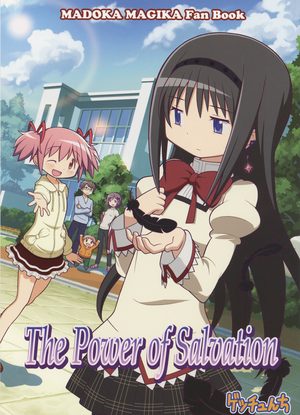
Puella Magi Madoka Magica
Yu's review of Puella Magi Madoka Magica — Madoka Kaname is invited to become a magical girl by a small creature named Kyubey; she hesitates, and across three volumes discovers why hesitating was the only reasonable thing to do.

Fantasy / Action
Lucifer and the Biscuit Hammer
Yu's review of Lucifer and the Biscuit Hammer — Yuuhi Amamiya, a university student who doesn't care about much of anything, is told by a lizard that he is a 'Beast Knight' destined to save the world; he's more interested in the plan of Princess Samidare to save the world herself — so she can destroy it after.
Fantasy / Magical Girl
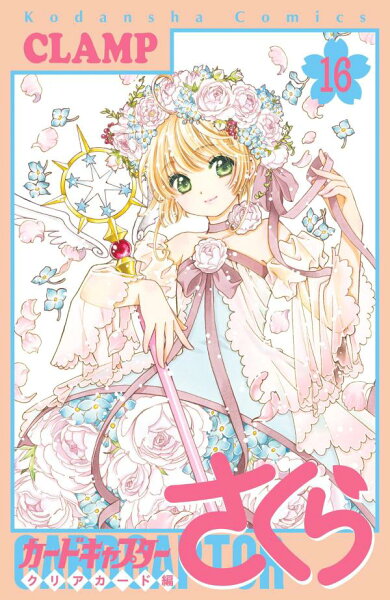
Cardcaptor Sakura
Yu's review of Cardcaptor Sakura — a ten-year-old girl accidentally releases the Clow Cards, has to capture them all, transforms them into her own, and along the way the manga quietly becomes one of CLAMP's warmest, most generous stories about love.
Fantasy / Horror
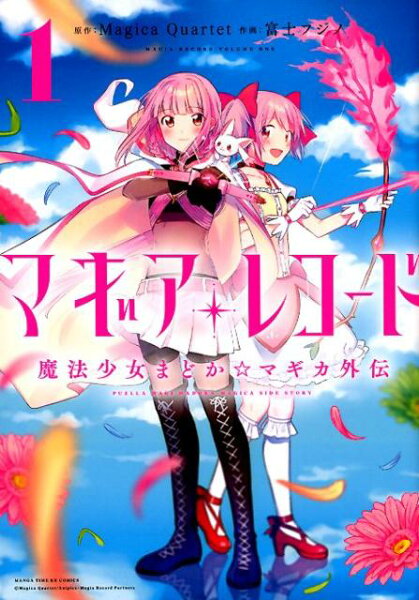
Magia Record: Puella Magi Madoka Magica Side Story
Yu's review of Magia Record — a side story set in the Madoka Magica universe follows Iroha Tamaki, a magical girl searching for her missing sister, in the city of Kamihama where magical girls gather seeking a rumor about salvation; maintains the original series' dark psychological atmosphere while building an independent narrative.
Fantasy
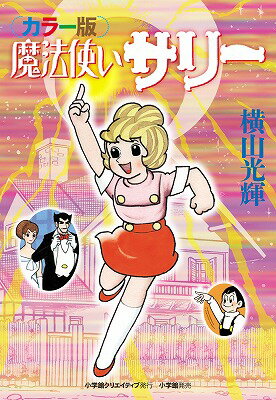
Sally the Witch
Sally the Witch is a princess from the magical world who chooses to live among ordinary humans — a manga that invented the magical girl genre and established every template that followed.
Written by
Yu
Manga Enthusiast from Japan
I grew up in Japan and manga literally saved me during a tough time in elementary school. My English isn't perfect, but my love for manga is real — and I want to share it with you.