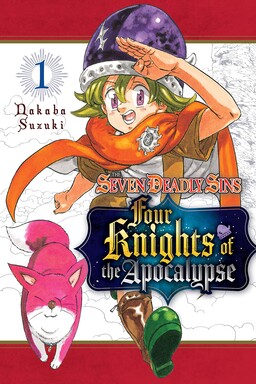
Four Knights of the Apocalypse Review: The Seven Deadly Sins Sequel Follows the Next Generation
by Nakaba Suzuki
Read the first volume. If it doesn't hook you, put it down. It'll hook you.
Buy Four Knights of the Apocalypse on Amazon →*Affiliate link — I earn a small commission at no extra cost to you.
Quick Take
- Nakaba Suzuki's direct sequel to Seven Deadly Sins with a new protagonist — Percival's journey reads well without the prior series, though fans of the original have additional context
- The Arthurian mythology framework is more prominent here than in the original, with Camelot as a central location and conflict
- Ongoing; the series has established its own identity distinct from its predecessor
Who Is This Manga For?
- Readers who loved Seven Deadly Sins and want to continue in the same world
- Anyone who wants Arthurian legend-based action fantasy in manga form
- Fans of optimistic shonen protagonists with the specific Suzuki action aesthetic
- Readers who can commit to an ongoing series from an established creator
Content Warnings & Age Rating
Age Rating: T (Teen) Content Warnings: Fantasy action violence; prophecy-based plot with stakes for existing characters; Arthurian mythology with Suzuki's specific interpretation
T rating — action fantasy within teen standards.
Yu's Rating
| Category | Score |
|---|---|
| Story Depth | ★★★★☆ |
| Art Style | ★★★★☆ |
| Character Development | ★★★★☆ |
| Accessibility for Non-Japanese Readers | ★★★★☆ |
| Reread Value | ★★★☆☆ |
Story Overview
Percival has never left the mountain where he lives with his grandfather. He knows nothing of the outside world — no wars, no prophecies, no Camelot. His grandfather has kept him protected from all of it.
A man with a cross-shaped scar kills his grandfather and sets Percival on the road. What he finds is a Britannia in conflict — Arthur Pendragon and his new Camelot have become a force neither wholly good nor wholly evil, and a prophecy circulates about four knights whose arrival signals the apocalypse.
Percival is identified as one of the Four. Whether the prophecy means he destroys the world or saves it is the question the series runs.
Characters
Percival — A protagonist whose naivety is genuine rather than performed — he actually has never encountered anything outside his mountain, which makes his optimism real rather than a genre convention. His power (hope itself, manifested) is thematically consistent.
Tristan — The son of Meliodas and Elizabeth from the original series; his appearance provides continuity for Seven Deadly Sins readers while functioning as a character in his own right.
The other Knights — The series' expanding cast that develops around Percival as they travel toward whatever the prophecy means.
Art Style
Suzuki's art is more refined here than in Seven Deadly Sins' early volumes — the action sequences have the kinetic clarity of a creator who has done many of them before, the fantasy world designs are more detailed, and the character designs are immediately distinguishable. The art suits both the comedy and the serious action.
Cultural Context
Four Knights of the Apocalypse runs in Weekly Shonen Magazine, the same publication as Seven Deadly Sins. The Arthurian mythology framework — Percival, Tristan, Camelot, the Round Table — is the original legend's material filtered through Suzuki's specific interpretation, which has always been more focused on power and conflict than the ethical dimensions of the source.
What I Love About It
Percival's power is hope. Not a specific magical ability that generates hopeful effects — the series eventually makes clear that Percival's power is something that exists because of what he fundamentally is. For a shonen protagonist concept, that's more thematically resonant than the standard "special hidden ability" reveal.
What English-Speaking Fans Say
Western readers describe Four Knights of the Apocalypse as a strong successor to Seven Deadly Sins — specifically noted for Percival being a genuinely likable protagonist without the original's problematic elements, for the Arthurian framework being more developed than expected, and for the series standing alone well enough for new readers. Actively recommended for Seven Deadly Sins fans.
Memorable Scene ⚠️ Spoiler Warning
Tristan's first serious battle — where the son of the Dragon's Sin and the Goddess demonstrates his own nature separate from his parents — is the series' strongest statement that this is its own story and not simply Seven Deadly Sins with different names.
Similar Manga
- Seven Deadly Sins — Direct predecessor series
- Fairy Tail — Similar fantasy adventure scale and ensemble structure
- Black Clover — Optimistic protagonist in magic-based fantasy world
- Magi — Mythological framework action fantasy with similar world scale
Reading Order / Where to Start
Volume 1 — Percival's mountain life, his grandfather's death, and his first steps into the outside world. Readable without Seven Deadly Sins, though that series provides context for Camelot.
Official English Translation Status
Kodansha Comics publishes the ongoing English series. Current volumes available in print and digital.
Pros & Cons
Pros
- Strong standalone despite being a sequel
- Percival's power concept is thematically coherent
- Arthurian mythology more developed than the original
- Suzuki's action art at its most refined
Cons
- Ongoing — no completion guarantee
- Some Seven Deadly Sins context helpful for Camelot arc
- Mid-series pacing varies
Format Comparison
| Format | Notes |
|---|---|
| Individual Volumes | Kodansha Comics; ongoing |
| Digital | Full availability |
Where to Buy
Read the first volume. If it doesn't hook you, put it down. It'll hook you.
This post contains affiliate links. If you purchase through these links, I may earn a small commission at no extra cost to you. As an Amazon Associate, I earn from qualifying purchases.
*Affiliate link — I earn a small commission at no extra cost to you.
More Manga You Might Like

Fantasy
The Iceblade Sorcerer Shall Rule the World
Yu's review of The Iceblade Sorcerer Shall Rule the World — Ray White is the legendary Iceblade Sorcerer, one of seven great mages; he enrolls at the Royal Magic Academy as an ordinary student, hiding his identity; the academy is divided between noble students who look down on commoners; Nana Mikoshiba's magic school manga about the overpowered commoner who reveals himself gradually.
Fantasy / Comedy
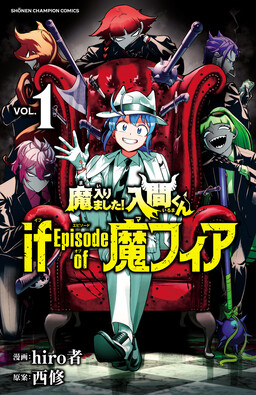
Welcome to Demon School! Iruma-kun
Yu's review of Welcome to Demon School! Iruma-kun — Iruma Suzuki is sold to a demon by his neglectful parents and becomes the grandson of the great demon Sullivan; enrolled in a demon school where humans are supposedly food, Iruma must hide his human nature while navigating the competitive and colorful demon school environment.
Fantasy / Action
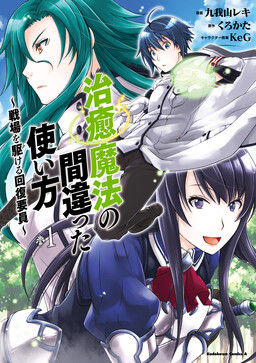
The Wrong Way to Use Healing Magic
Yu's review of The Wrong Way to Use Healing Magic — Usato is accidentally summoned to another world along with two heroes; the kingdom's healer Rose assigns herself to train him personally, using methods that include physical conditioning so extreme it would hospitalize a normal person.

Fantasy / Adventure
Wolf & Parchment: New Theory Spice & Wolf
Yu's review of Wolf & Parchment — Col is a young man who wants to spread a new interpretation of scripture across the world; he is accompanied by Myuri, the daughter of Holo and Lawrence from Spice & Wolf, a wolf deity who has inherited her mother's spirit and her father's love of adventure.
Fantasy / Romance
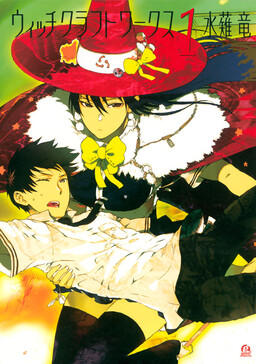
Witch Craft Works
Yu's review of Witch Craft Works — Honoka Takamiya is an ordinary high school student who accidentally discovers that Ayaka Kagari, the school's most beautiful and admired girl, is a powerful witch who has been his secret bodyguard; the revelation upends his understanding of his entire life.
Fantasy / Isekai
Wistoria: Wand and Sword
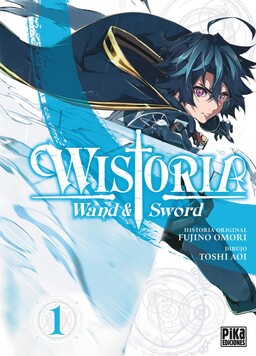
Yu's review of Wistoria: Wand and Sword — Will Serfort enrolled in a magical academy despite being unable to use magic; he compensates with sword training at inhuman intensity; he carries a vow to become a Magia Vander and reach the top of the magical world by sheer physical effort where everyone else uses spells.
Written by
Yu
Manga Enthusiast from Japan
I grew up in Japan and manga literally saved me during a tough time in elementary school. My English isn't perfect, but my love for manga is real — and I want to share it with you.
Disclosure: This post contains affiliate links. As an Amazon Associate, I earn from qualifying purchases at no extra cost to you.